 003
TechTesla
Late, Early, Not Yet
Tesla has shown nine vehicles with a date attached. We measured each one against the first date it was promised, then did the same for eleven years of self-driving forecasts.
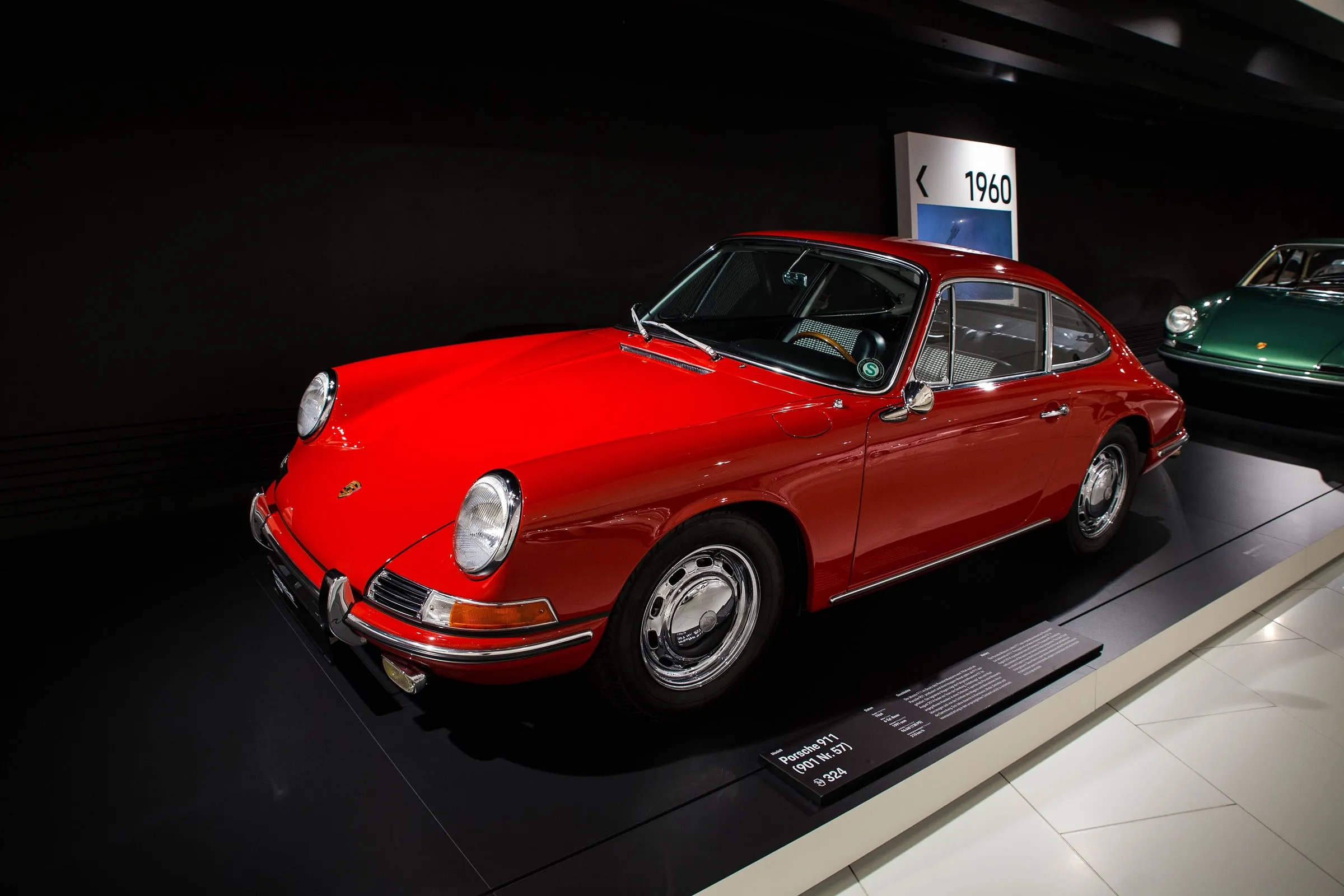
No. 009 · Porsche
Sixty-three years, eight generations, one roofline.
Clemens Vasters / CC BY 2.0
The first 911 was 4,163 mm long and 1,320 mm tall. The one Porsche sells today is 4,542 mm long and 1,302 mm tall. In between came eight generations, water cooling, turbochargers and a hybrid. The car grew 38 centimetres longer, 24 wider and 440 kilograms heavier. Its roof moved less than two.
1964 against 2024
1964
2024
The six between
The roof
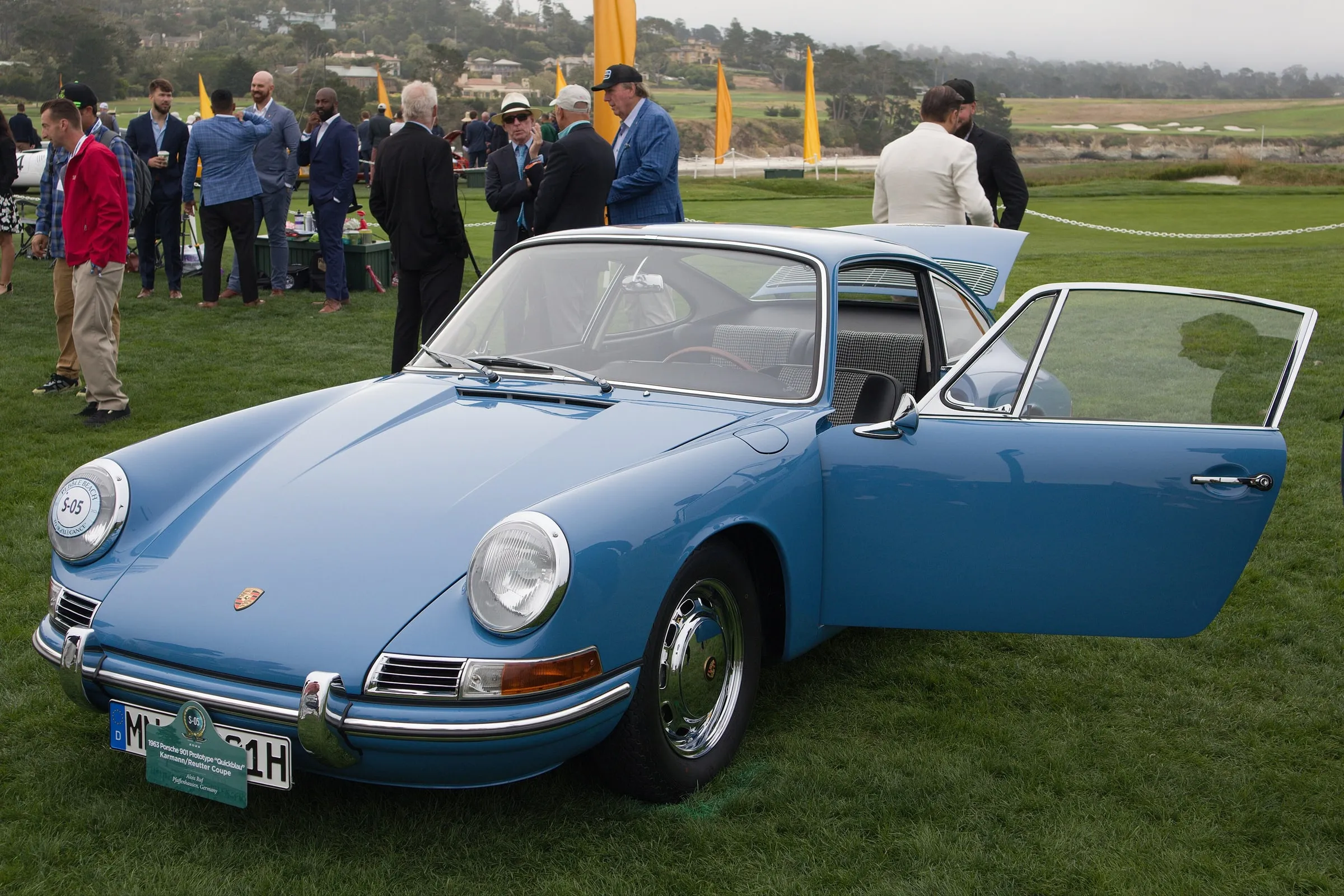
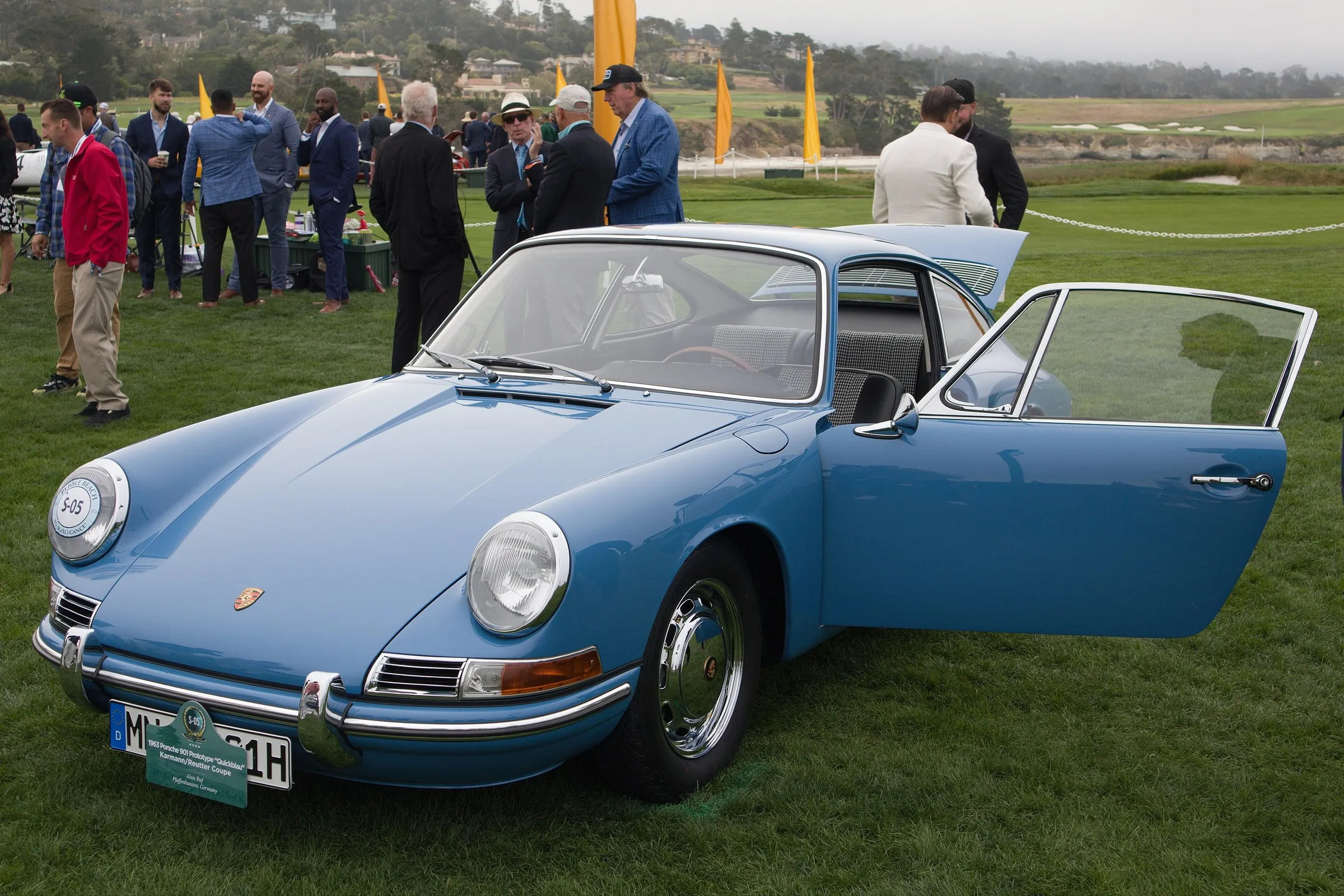
01 · Frankfurt, 1963
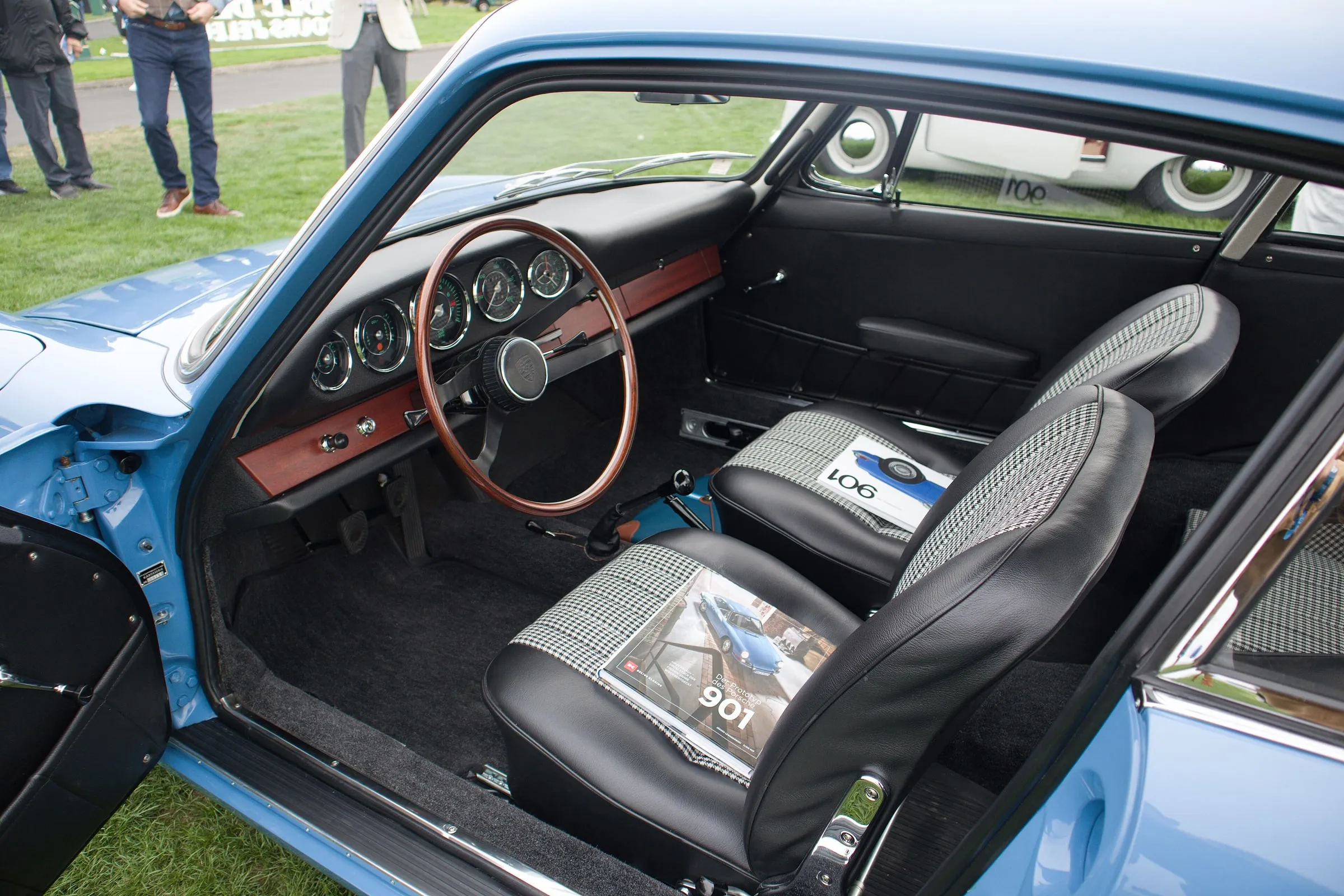
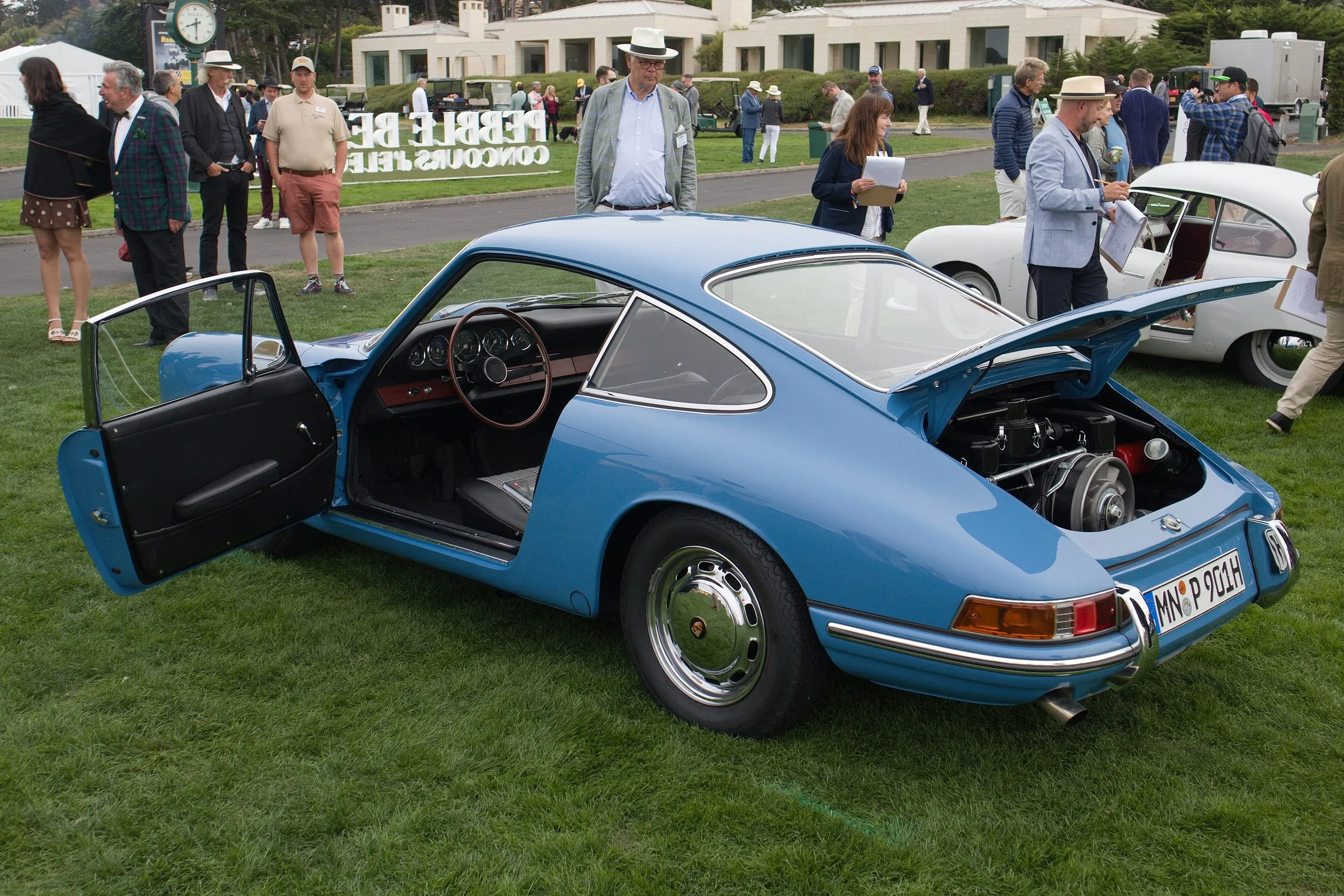
The 901 prototype at Pebble Beach, 2023. Prova MO / CC BY-SA 4.0
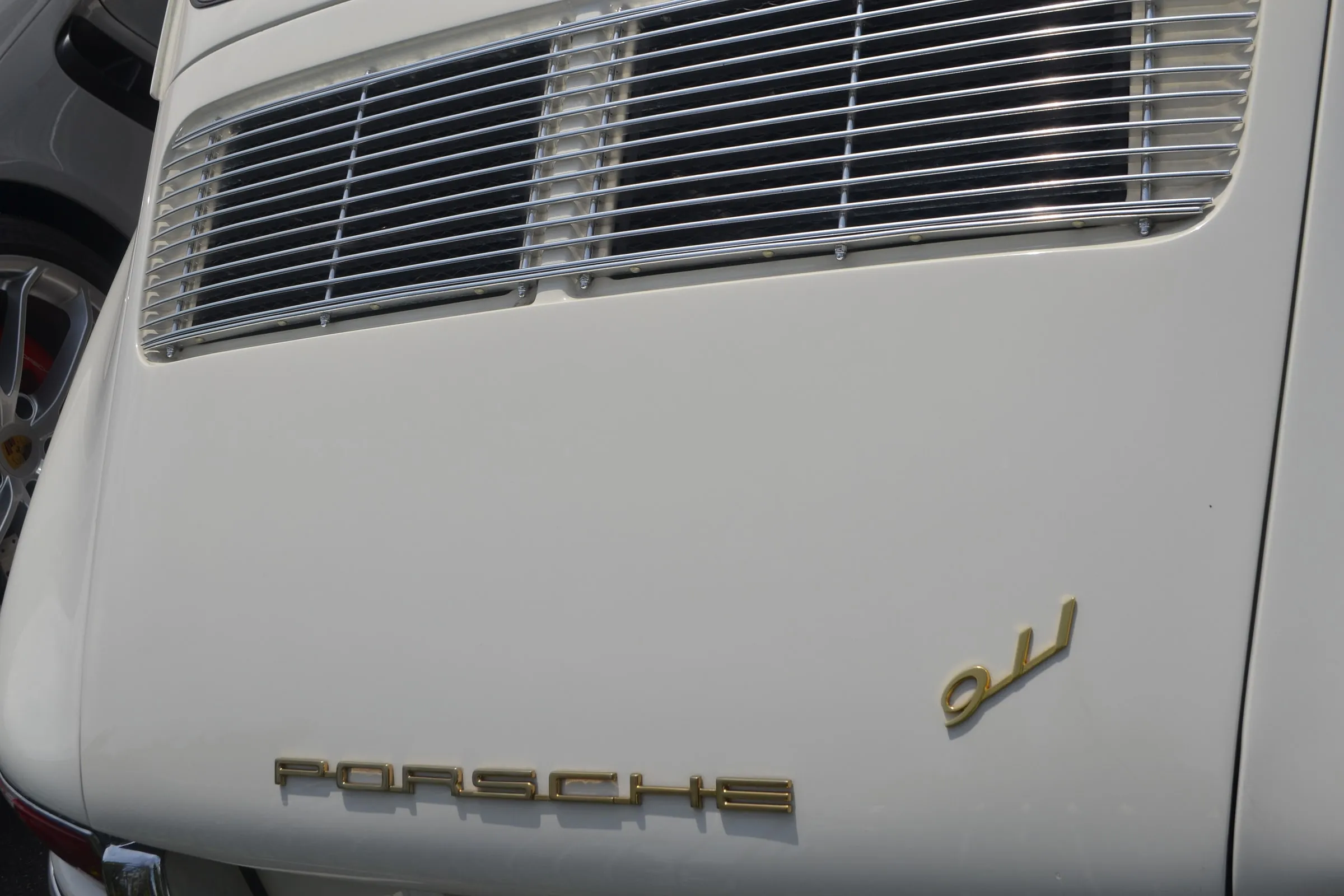
Porsche showed its new six-cylinder coupé at the Frankfurt motor show in September 1963 as the 901. Production began a year later. In October 1964 Peugeot objected that it owned three-digit model names with a zero in the middle, so Porsche changed the middle digit to a one. Eighty-two cars had already been built as 901s.
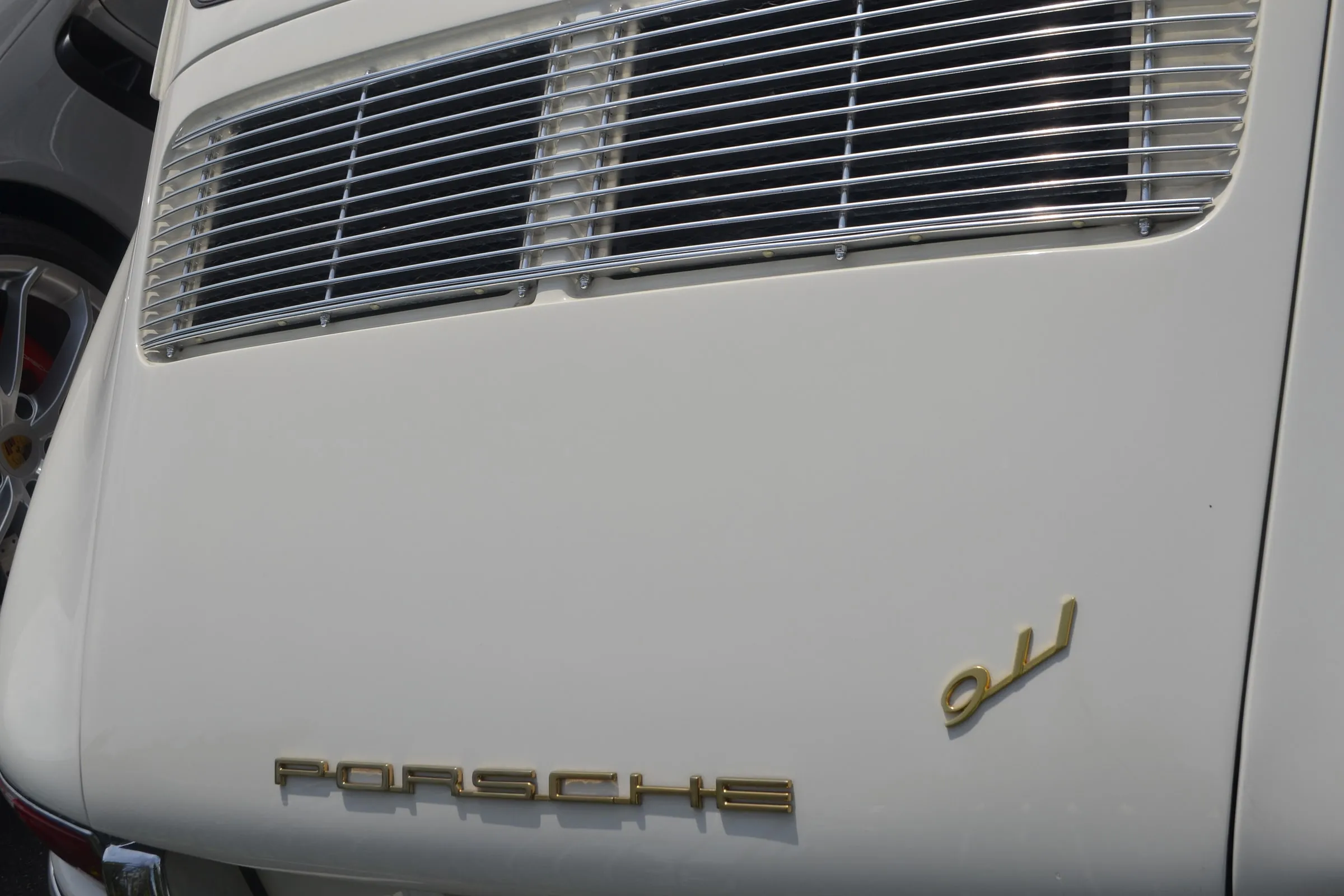
The 901 prototype, shown at Pebble Beach sixty years after Frankfurt, and the badge that replaced its name.
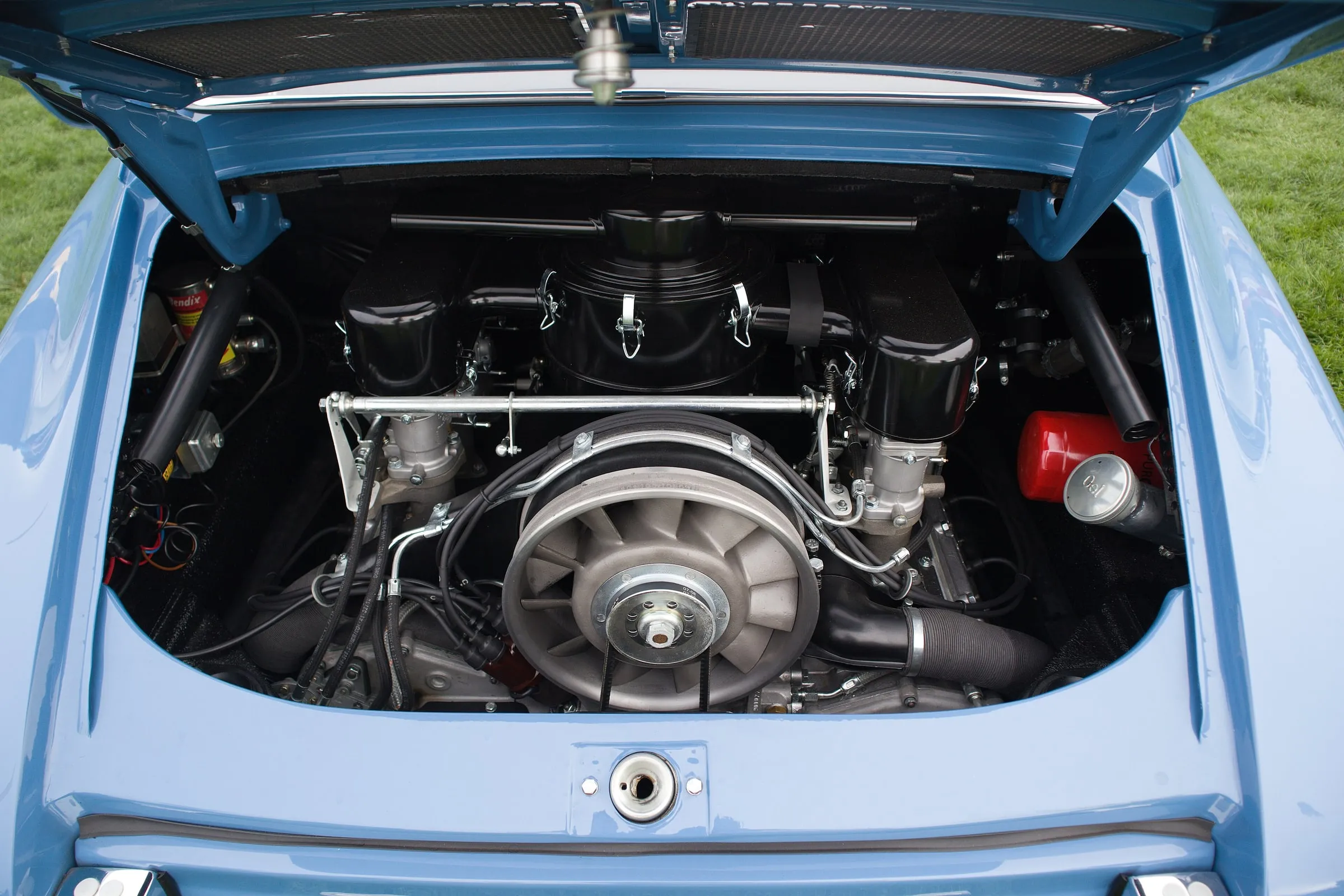
The car’s 2.0-litre air-cooled flat-six made 130 PS. It sat behind the rear axle, as every 911 engine since has, and the body over it fell away in one long curve from the top of the windscreen to the tail. Porsche’s designers call that roofline the flyline. Each new generation has been allowed to change almost everything beneath it.
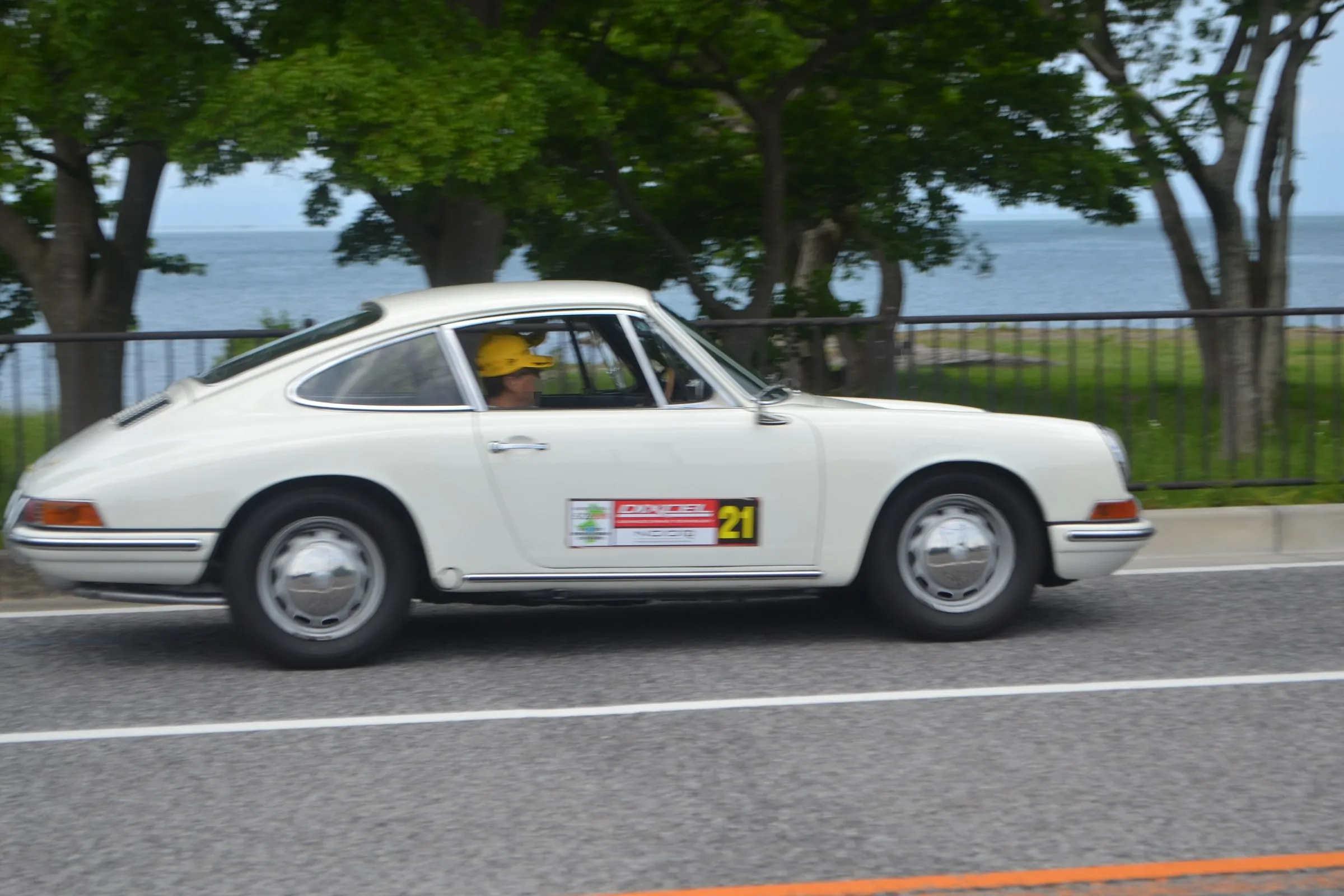
Irish Green was one of the 911’s first paint colours. When Porsche built its millionth 911 in Zuffenhausen on 11 May 2017, a Carrera S modelled on Ferry Porsche’s own early car, it chose the same colour.
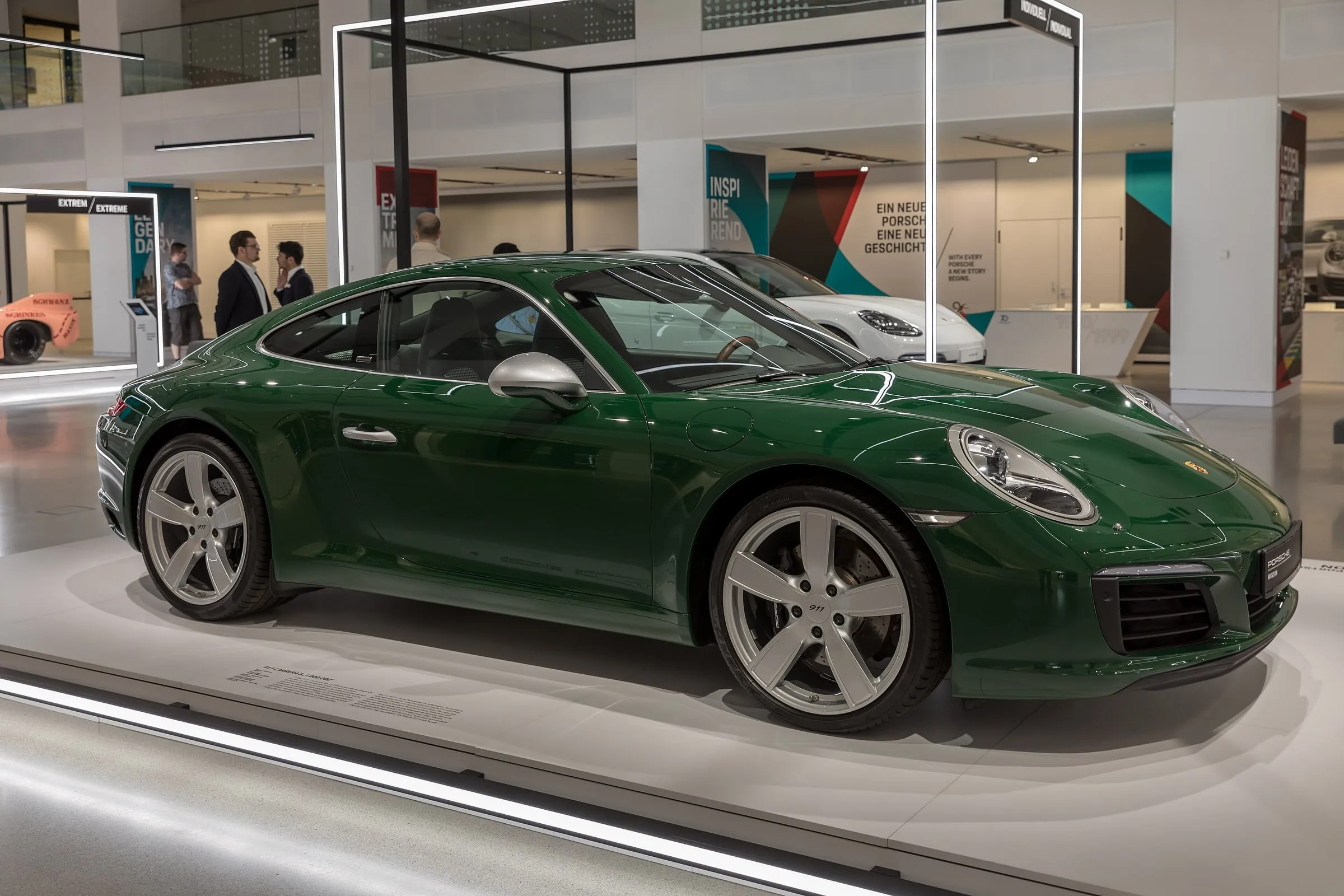
02 · Eight generations
Each one kept the engine at the back and the curve over it. Everything else was open to change.
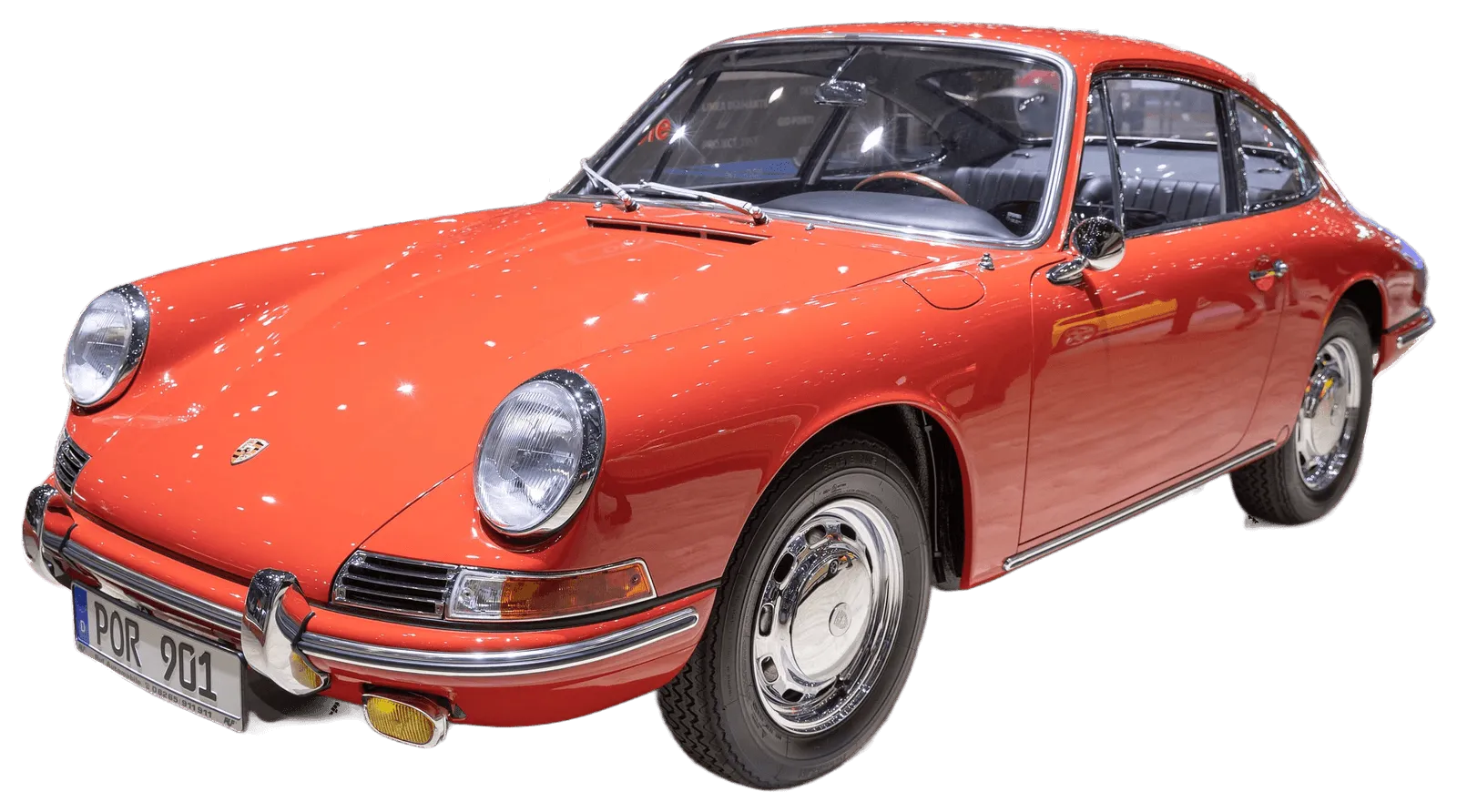
Original 911 · 1963–73
Shown at Frankfurt in 1963 as the 901. Peugeot objected to the zero in the middle, so it became the 911.
Matti Blume / CC BY-SA 4.0
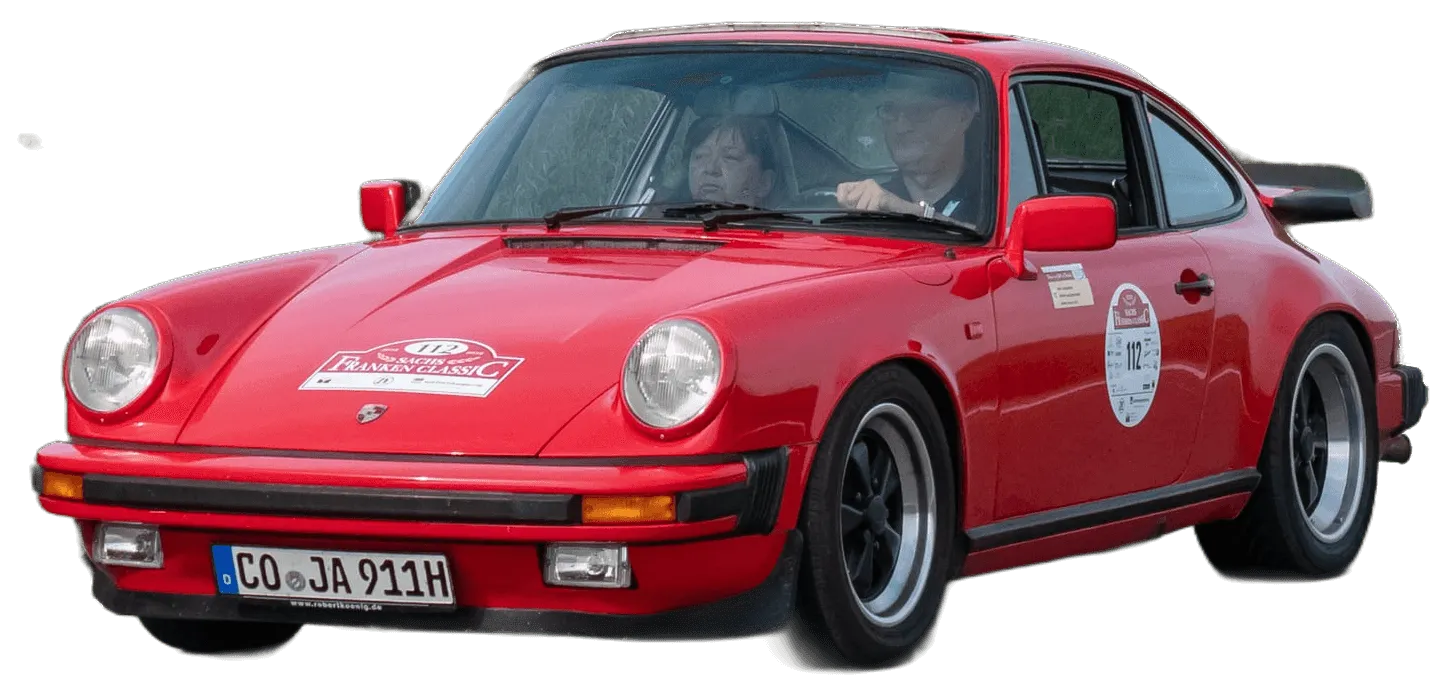
G-series · 1973–89
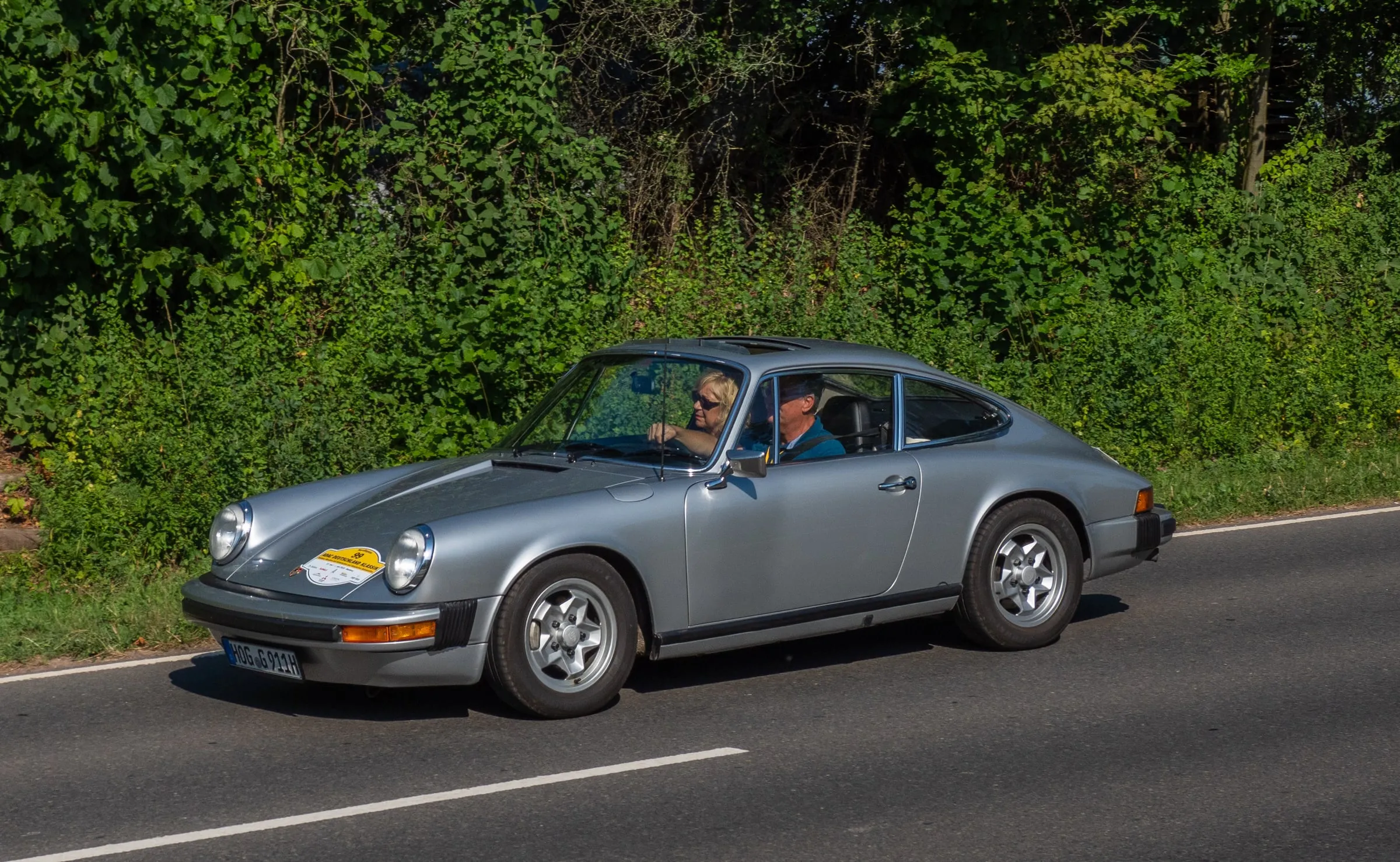
Impact bumpers, added for an American rule that cars survive a 5 mph knock, made it 128 mm longer at a stroke. It stayed on sale for sixteen years.
Ermell / CC BY-SA 4.0
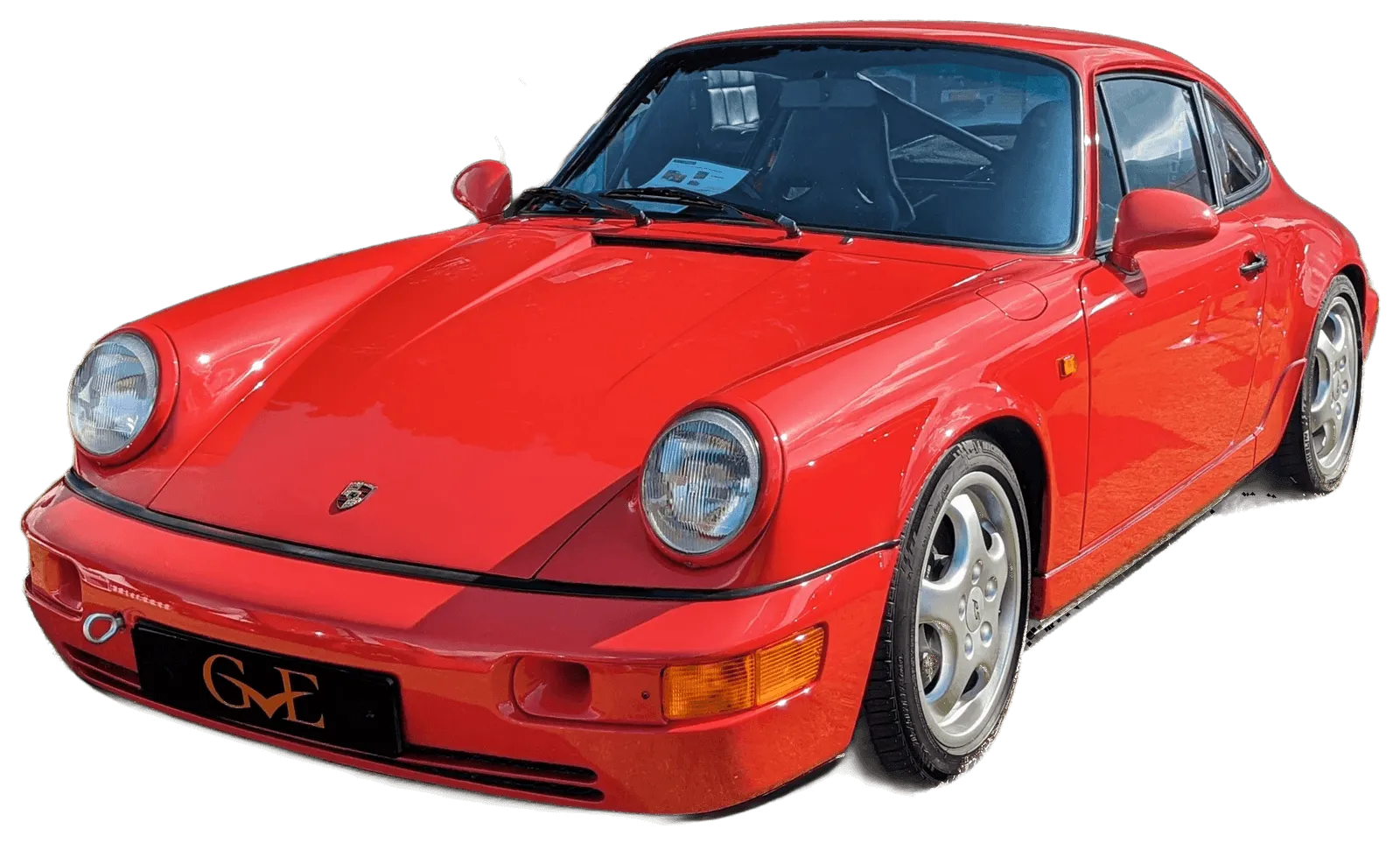
964 · 1988–94
A 3.6-litre engine took the base car to 250 PS. The last G-series Carrera 3.2 had made 231.
Calreyn88 / CC BY 4.0
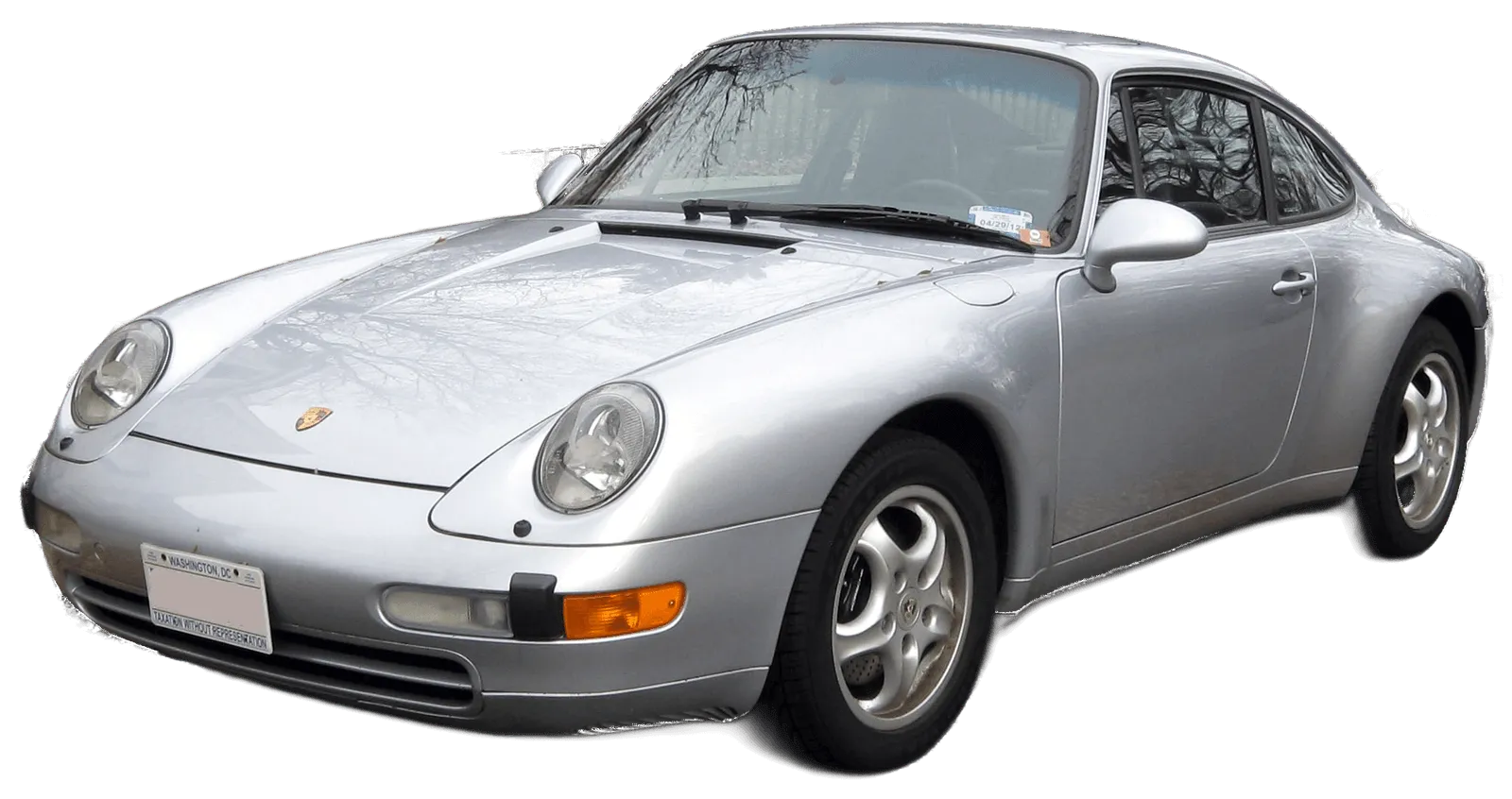
993 · 1993–98
The final air-cooled 911. The last one left the factory at the end of March 1998.
IFCAR / Public domain
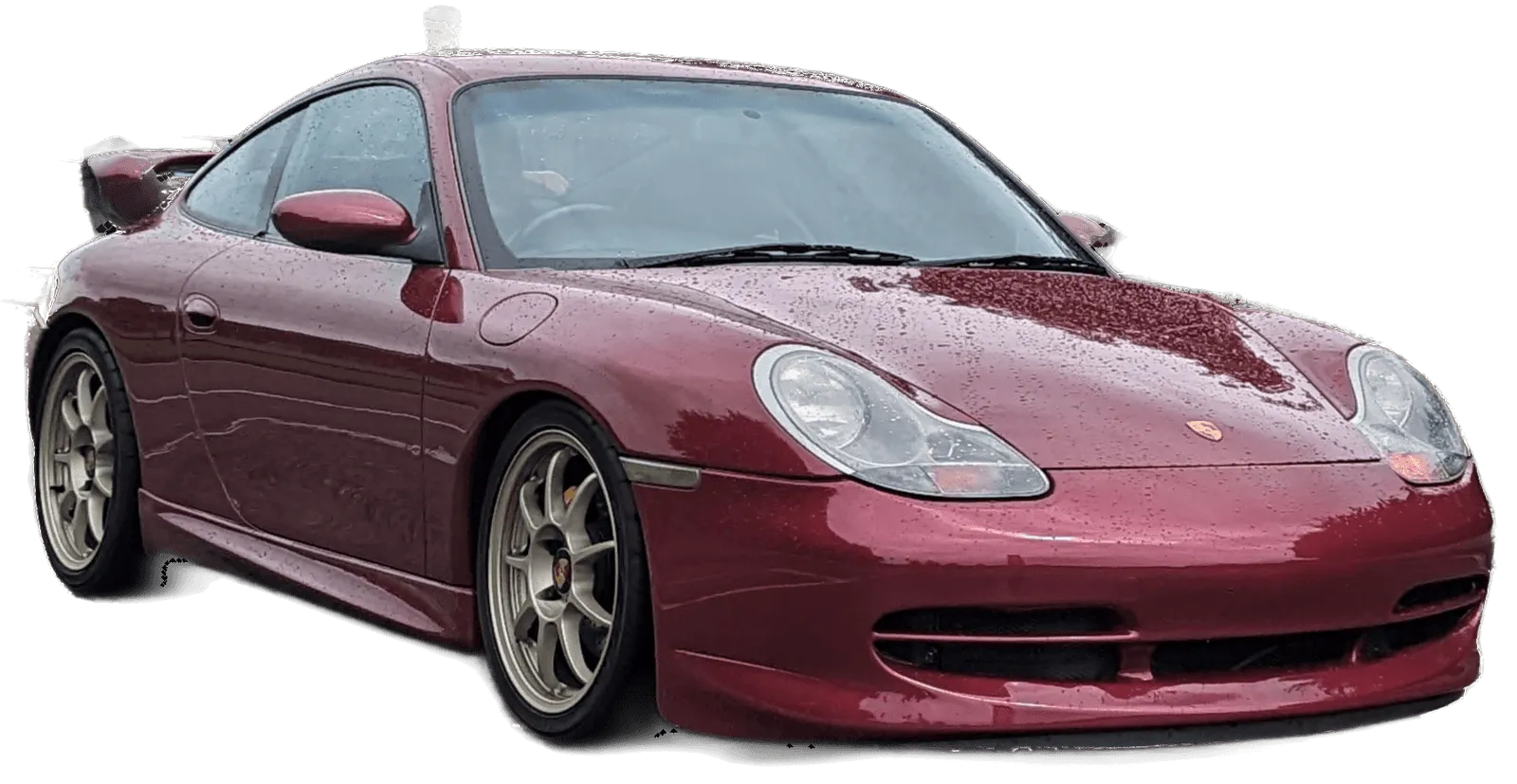
996 · 1997–2005
The first 911 cooled by water weighed less than the 993 it replaced, and sold more than twice as many cars.
Calreyn88 / CC BY-SA 4.0
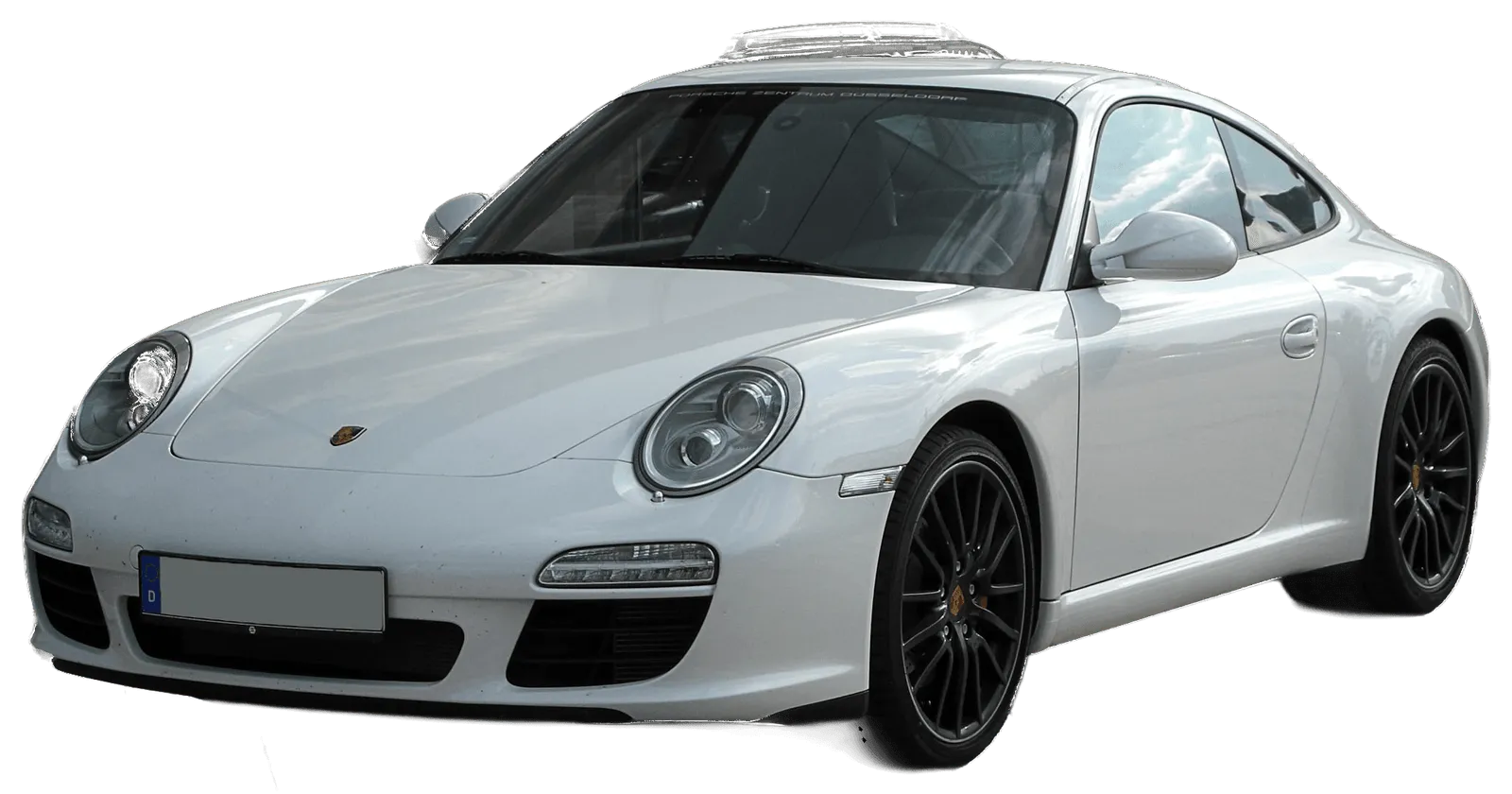
997 · 2004–12
Every generation since the 964 has sold more cars than the one before it. The 997 found 213,004 buyers.
M 93 / CC BY-SA 3.0
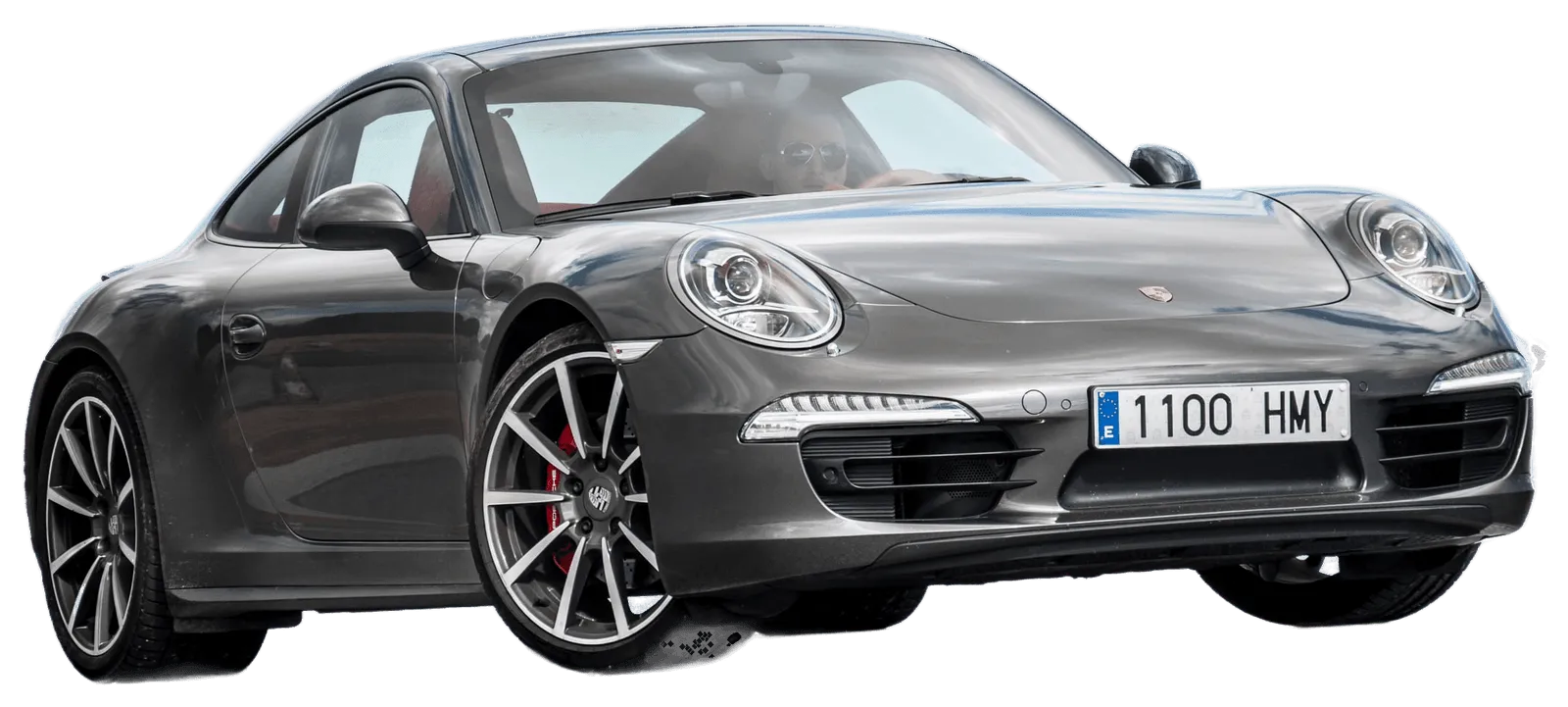
991 · 2011–19
The wheelbase grew by 100 mm, and 233,540 cars were built, more than any other generation.
David Villarreal Fernández / CC BY-SA 2.0
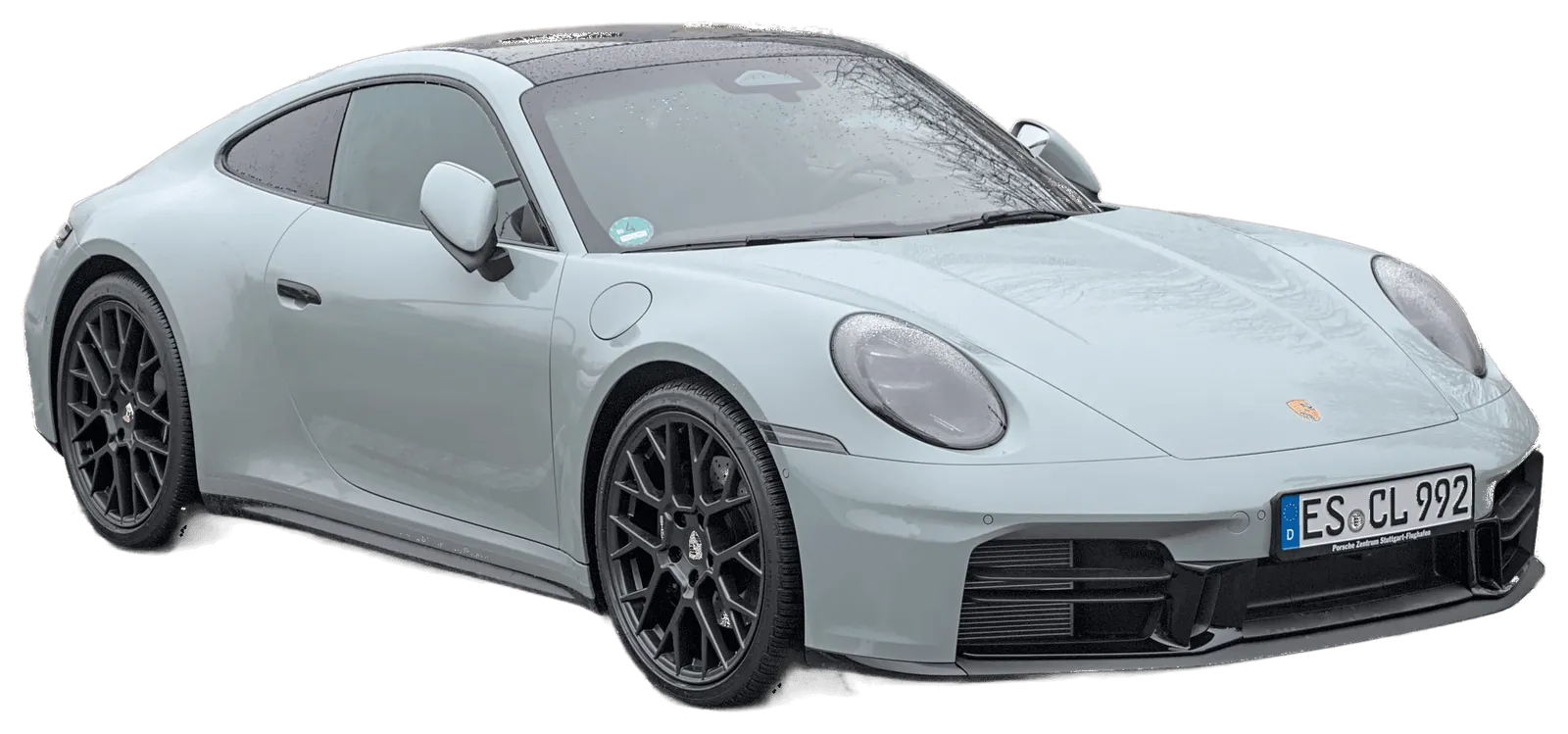
992 · 2019 to now
Pictured in its 2024 form. In 2025 Porsche delivered 51,583 911s, a record for the model.
Alexander Migl / CC BY-SA 4.0
03 · Size
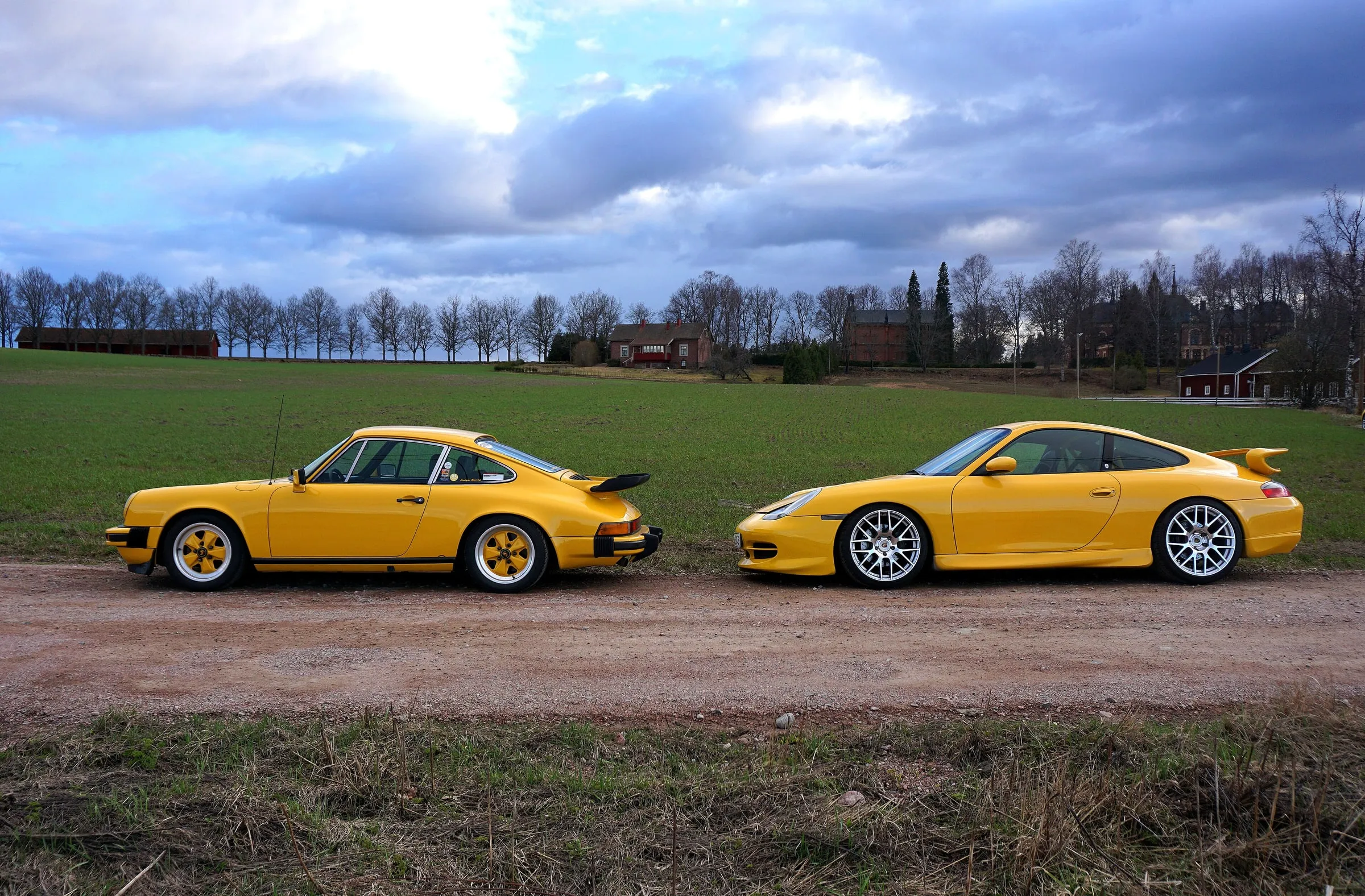
The 911 grew at the ends and between the wheels. The G-series’ impact bumpers, added in 1973 to meet an American rule that cars survive a 5 mph knock undamaged, made it 128 mm longer at a stroke; the 964 and 993 pulled some of that back. The wheelbase stretched by 57 mm for 1969, by 78 mm with the water-cooled 996, and by another 100 mm with the 991 in 2011.
Width grew in steps too, from 1,610 mm to 1,852 mm. Height went the other way. Every base 911 has stood between about 1,300 and 1,320 mm tall. A 911 has always been a low car, and its designers have spent sixty years keeping it that way.
Fig. 1 · Size
Change in each base coupé’s exterior dimensions against the 1964 car, millimetres, by year of introduction.
| Original 911 | 1964 | 4,163 | 1,610 | 1,320 | 2,211 |
|---|---|---|---|---|---|
| G-series | 1973 | 4,291 | 1,610 | 1,320 | 2,271 |
| 964 | 1989 | 4,250 | 1,652 | 1,310 | 2,272 |
| 993 | 1993 | 4,245 | 1,735 | 1,311 | 2,272 |
| 996 | 1997 | 4,430 | 1,765 | 1,305 | 2,350 |
| 997 | 2004 | 4,427 | 1,808 | 1,310 | 2,350 |
| 991 | 2011 | 4,491 | 1,808 | 1,303 | 2,450 |
| 992 | 2019 | 4,519 | 1,852 | 1,300 | 2,450 |
| 992.2 | 2024 | 4,542 | 1,852 | 1,302 | 2,450 |
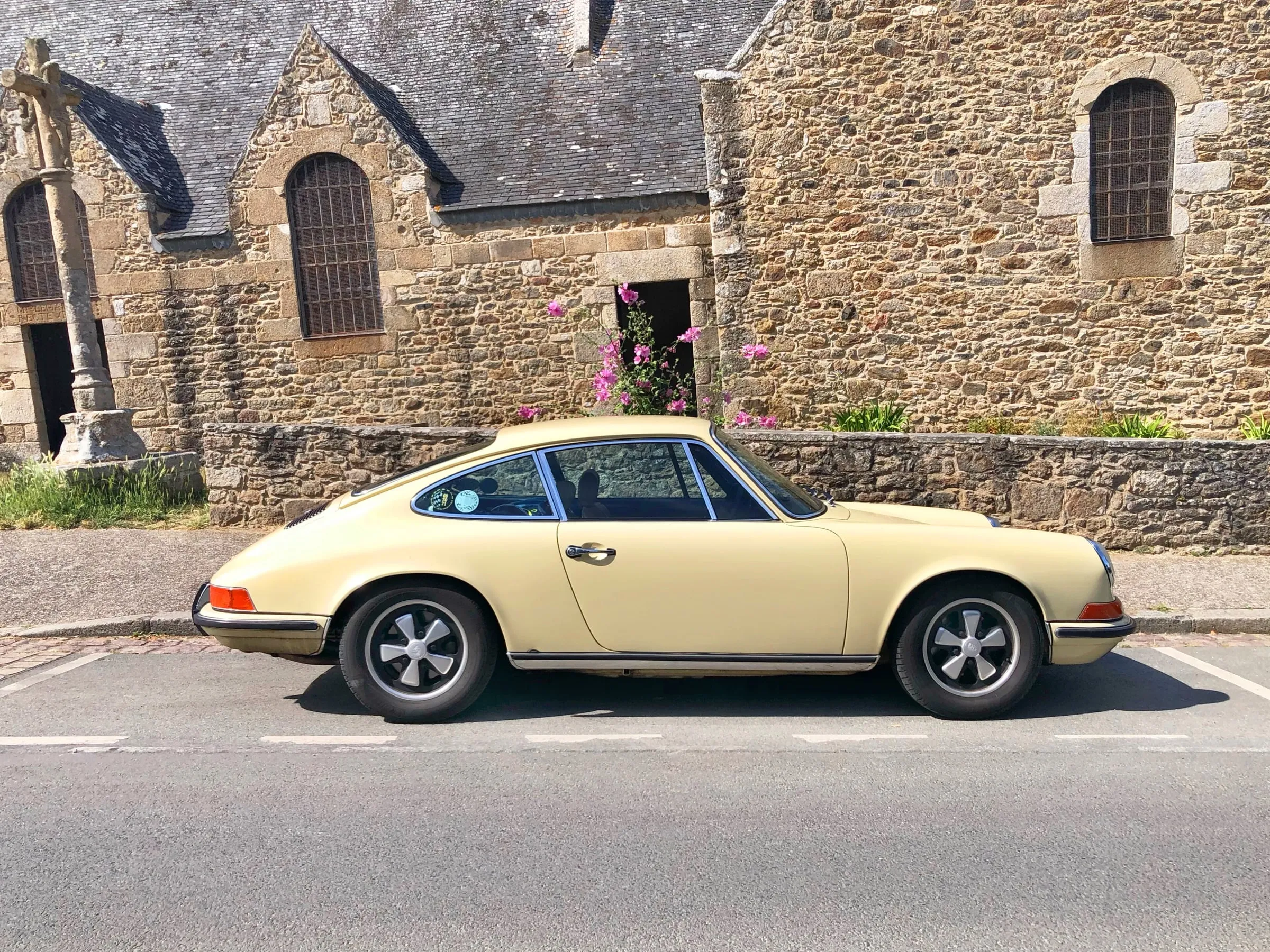
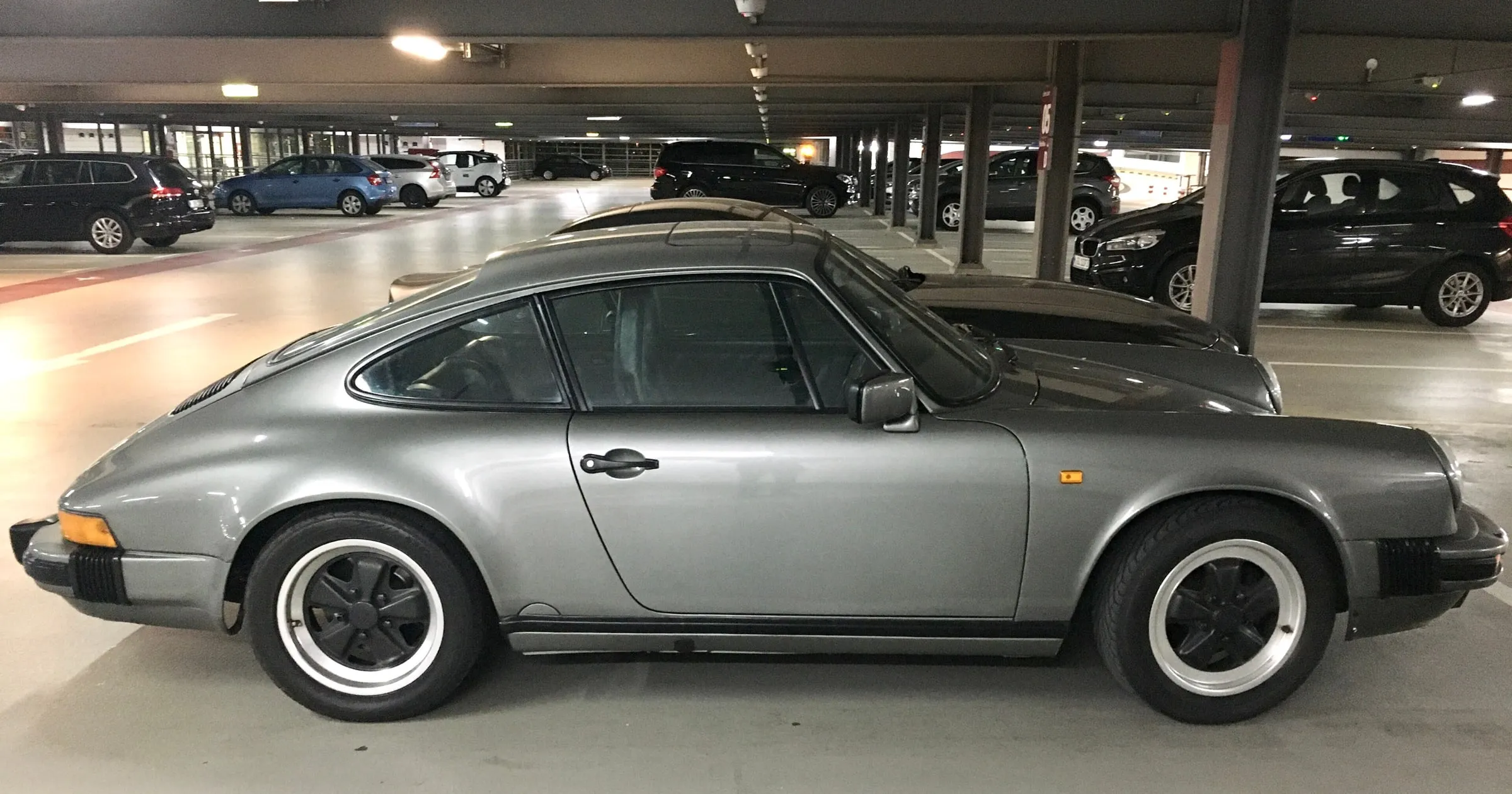
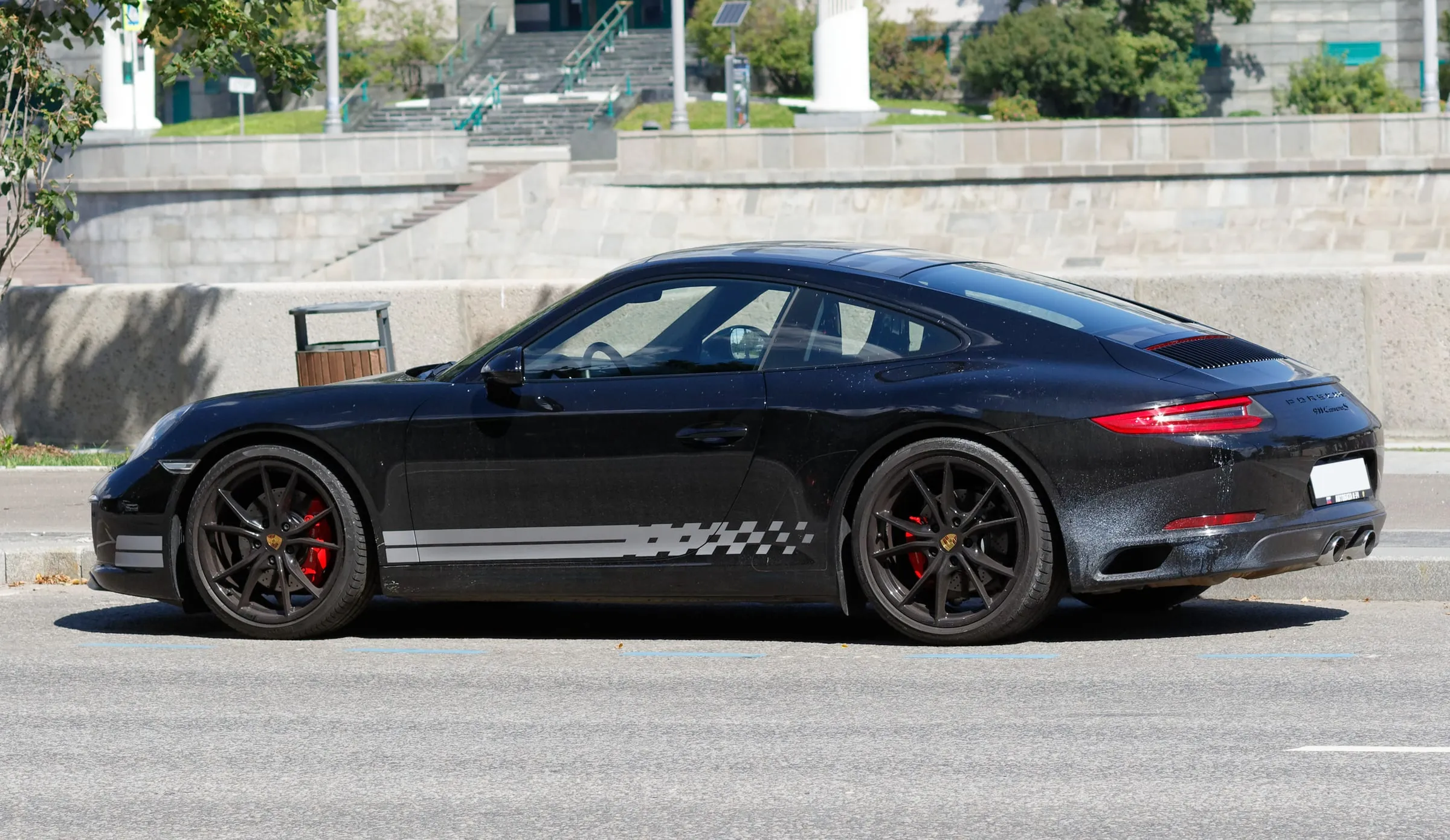
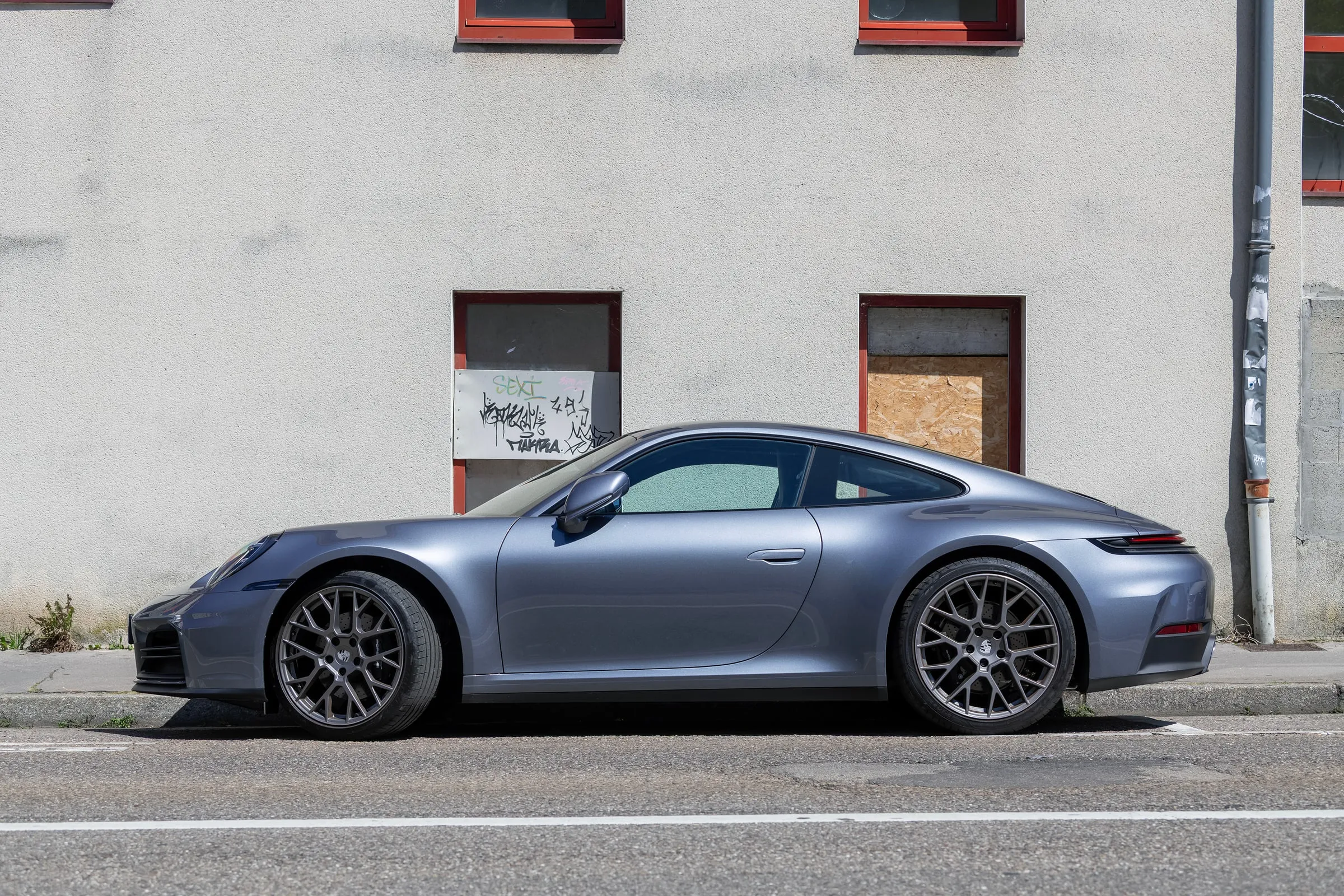
Side on, sixty years apart.
04 · Power
The cheapest 911 has roughly tripled its output. The strongest has climbed faster.
The cheapest 911 has roughly tripled its output, from 130 PS in 1964 to 394 PS in today’s Carrera. The most powerful version of each generation has climbed faster, from the 210 PS of the 1972 Carrera RS 2.7 to the 711 PS of the 2025 Turbo S. That car makes five and a half times the original’s power.
The gap between the two has widened with almost every generation. In the first 911, the strongest model had 80 PS more than the base car. In the 992.2 the gap is 317 PS, more than twice what the whole original engine made.
Fig. 2 · Power
Base model and most powerful road model in each generation, metric horsepower (PS).
| Original 911 | 911 2.0 | 1964 | 130 | Carrera RS 2.7 | 1972 | 210 |
|---|---|---|---|---|---|---|
| G-series | 911 2.7 | 1973 | 150 | Turbo 3.3 | 1977 | 300 |
| 964 | Carrera 2 | 1989 | 250 | Turbo 3.6 | 1993 | 360 |
| 993 | Carrera | 1993 | 272 | Turbo S | 1997 | 450 |
| 996 | Carrera | 1997 | 300 | GT2 | 2004 | 483 |
| 997 | Carrera | 2004 | 325 | GT2 RS | 2010 | 620 |
| 991 | Carrera | 2011 | 350 | GT2 RS | 2017 | 700 |
| 992 | Carrera | 2019 | 385 | Turbo S | 2020 | 650 |
| 992.2 | Carrera | 2024 | 394 | Turbo S | 2025 | 711 |
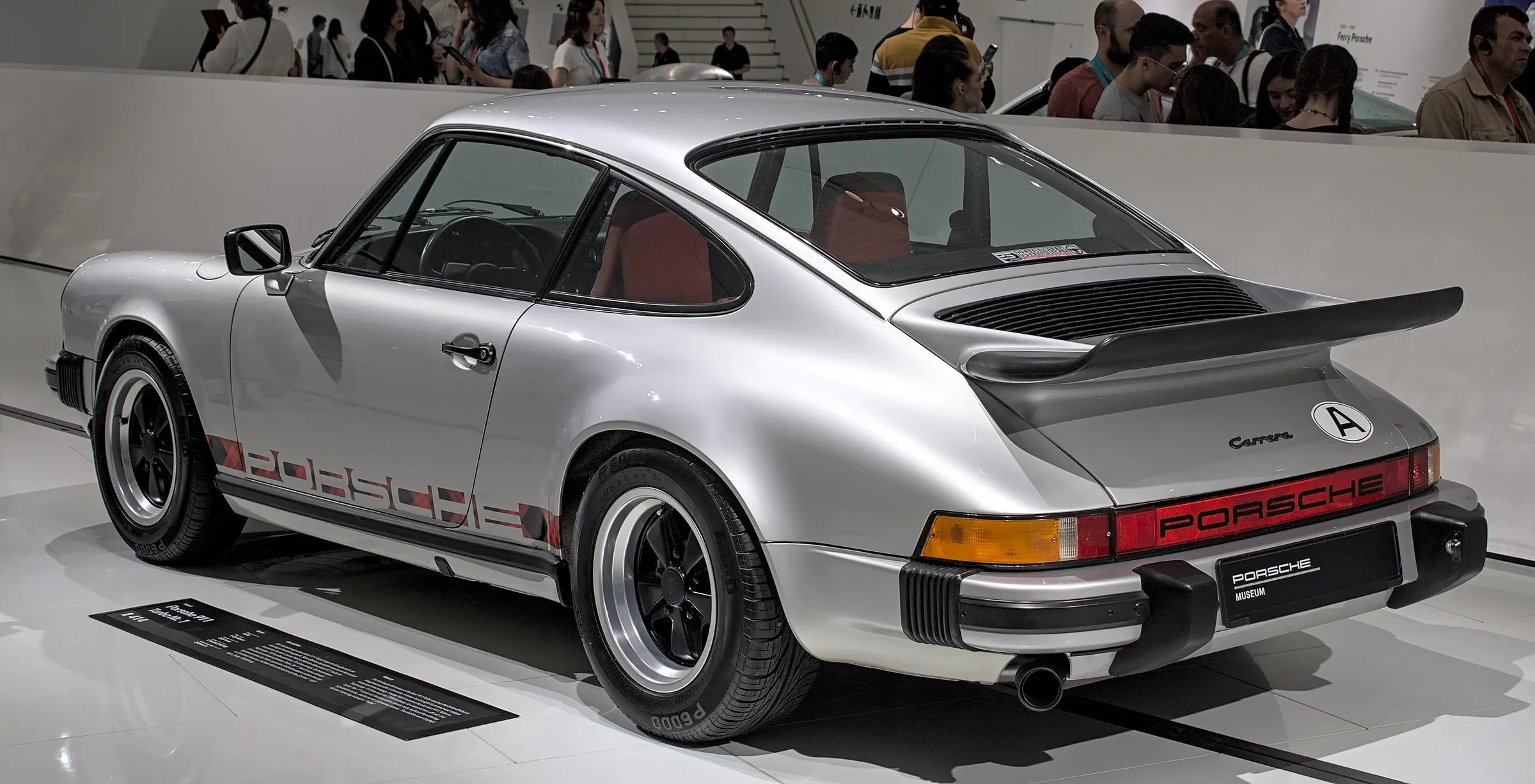
The most powerful road 911 of every generation, from the ducktailed RS to this year’s Turbo S.
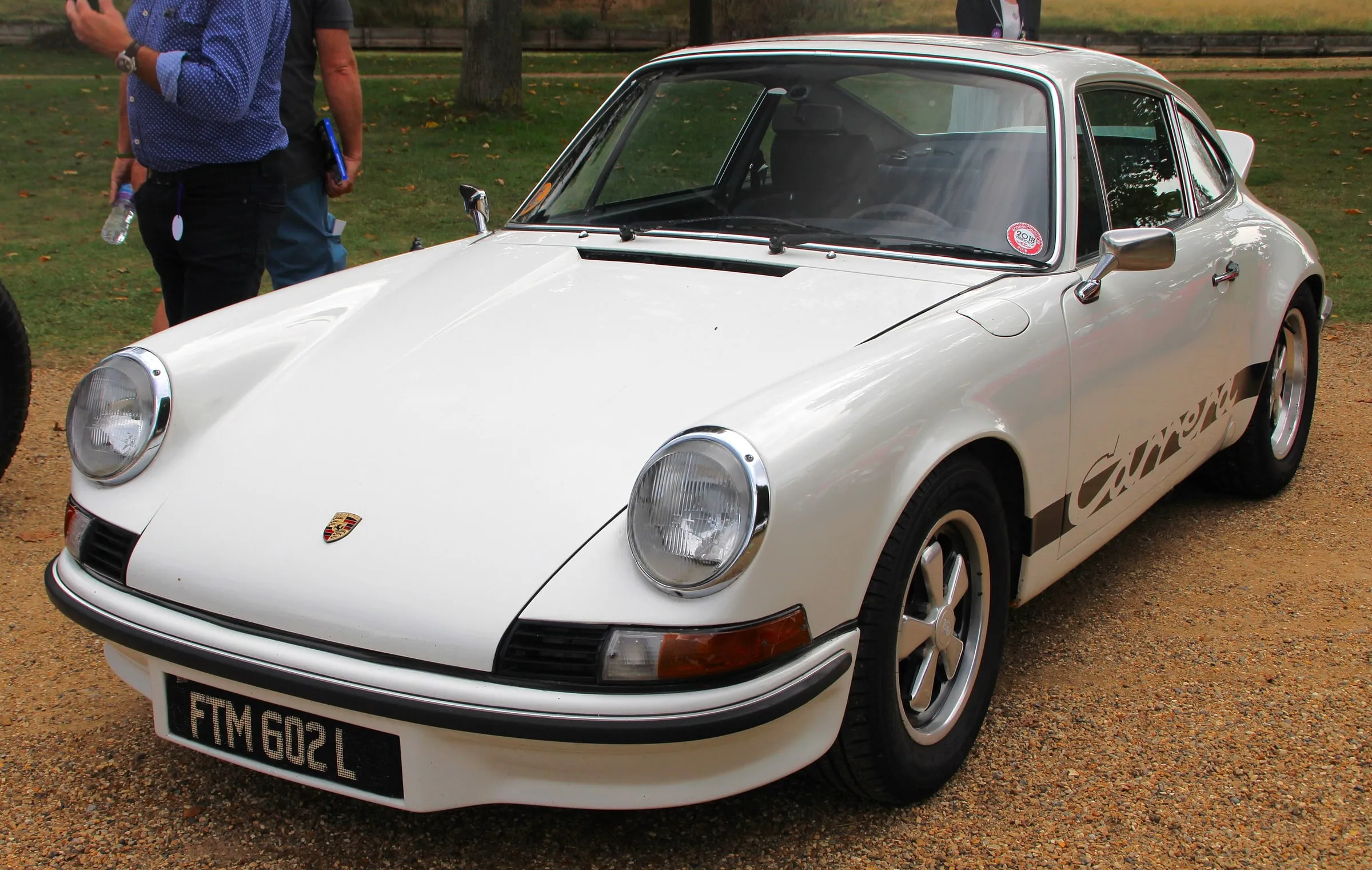 1972 · Carrera RS 2.7 · 210 PS
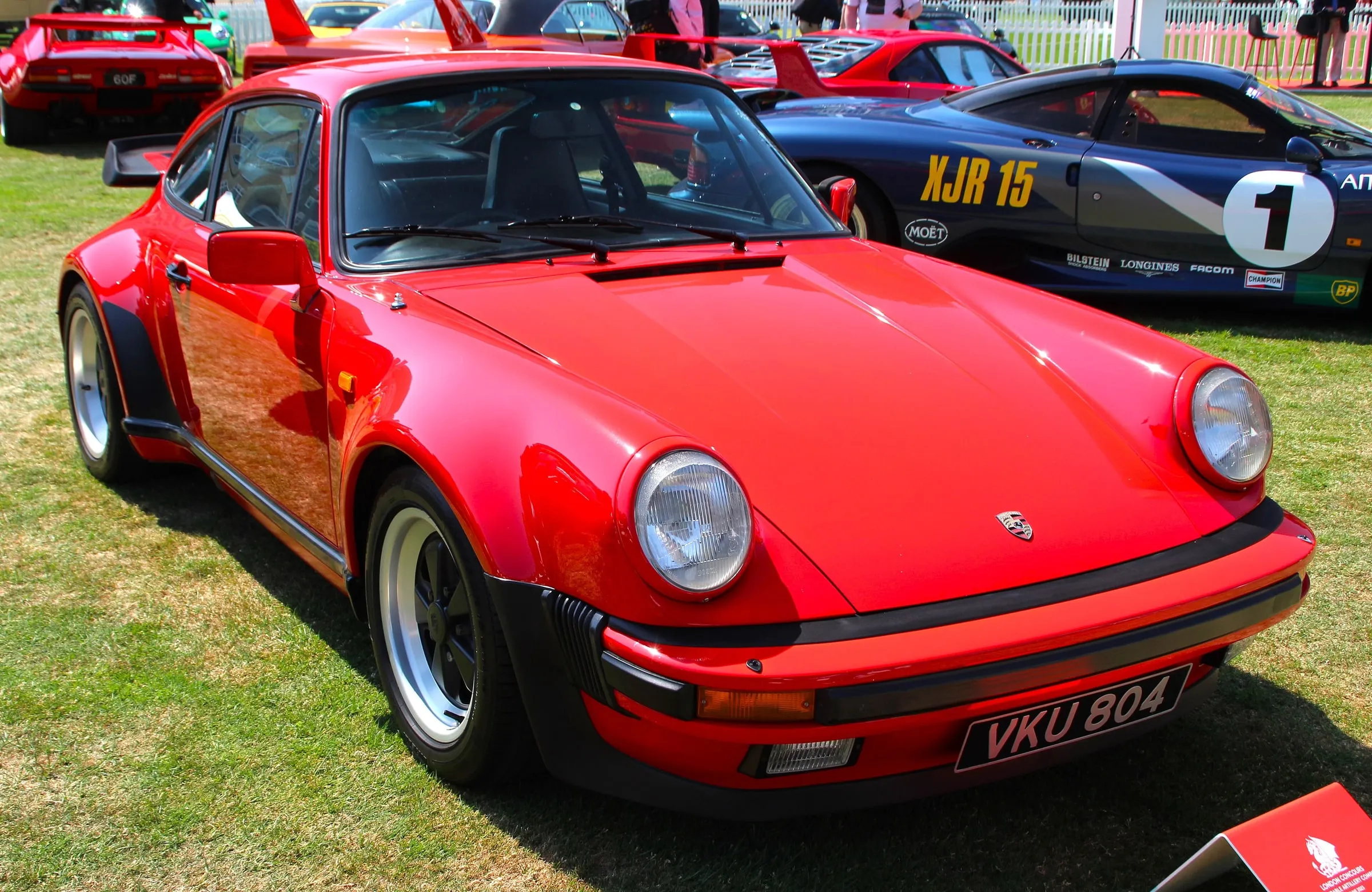 1977 · Turbo 3.3 · 300 PS
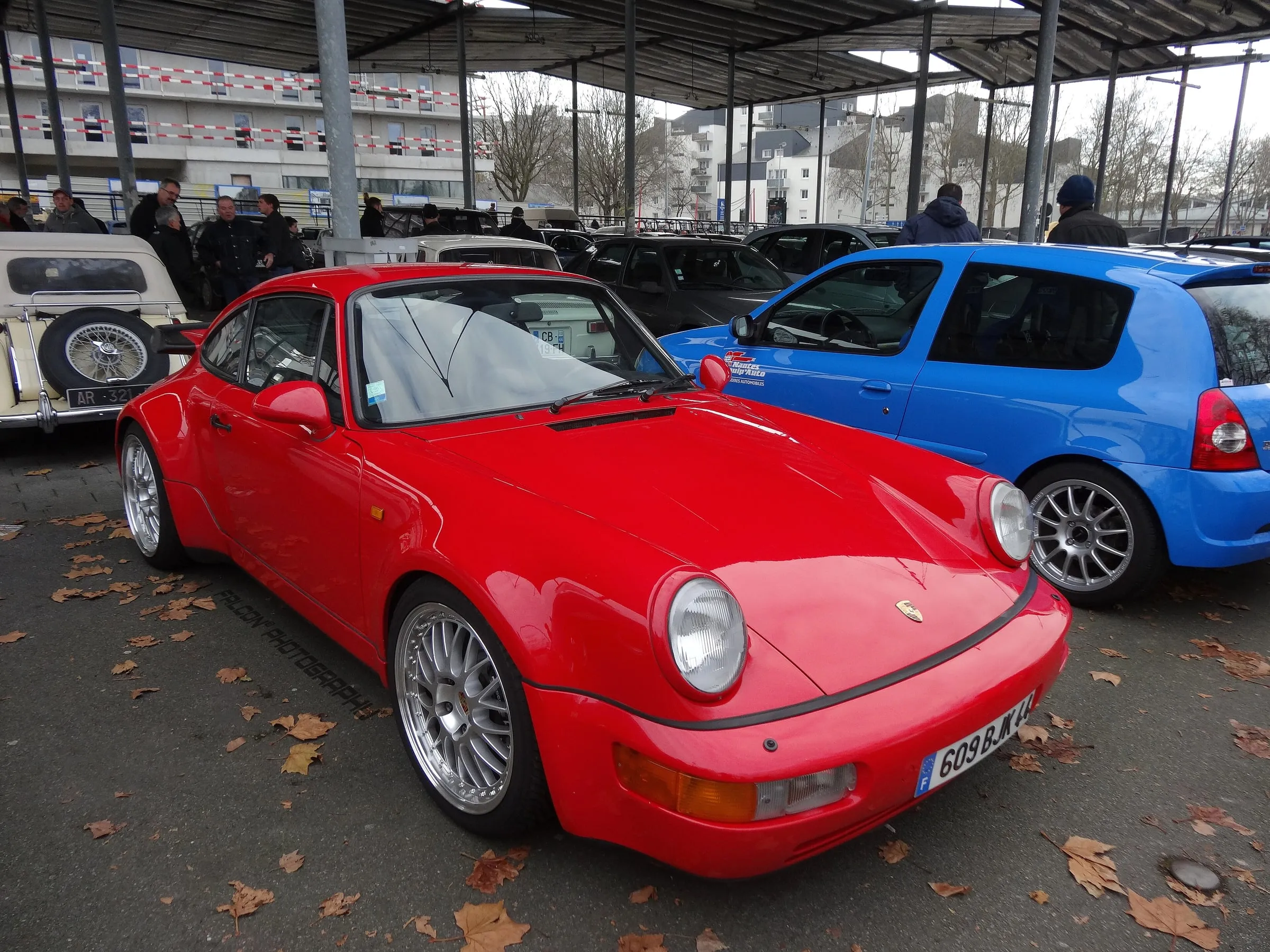 1993 · 964 Turbo 3.6 · 360 PS
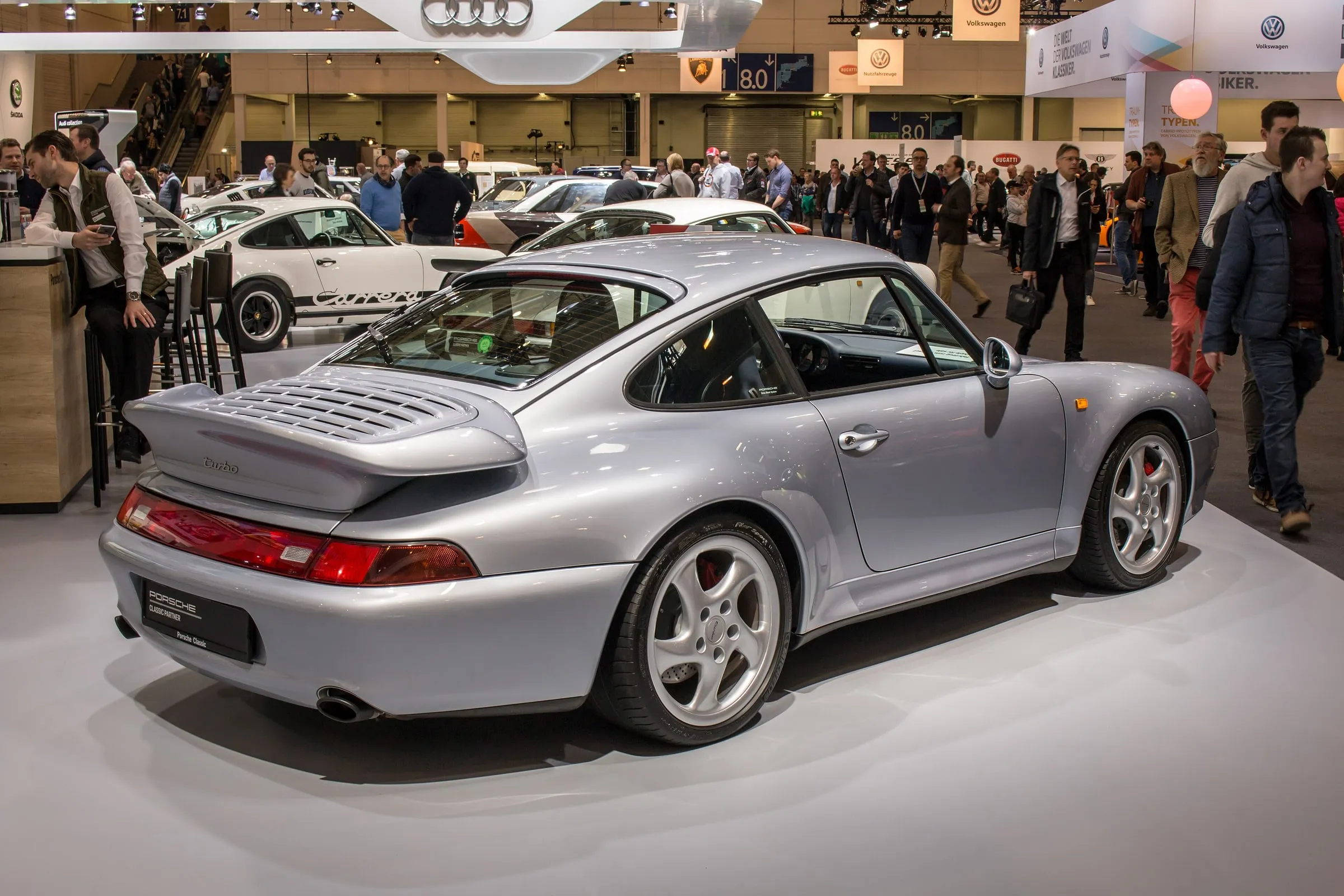 1997 · 993 Turbo S · 450 PS
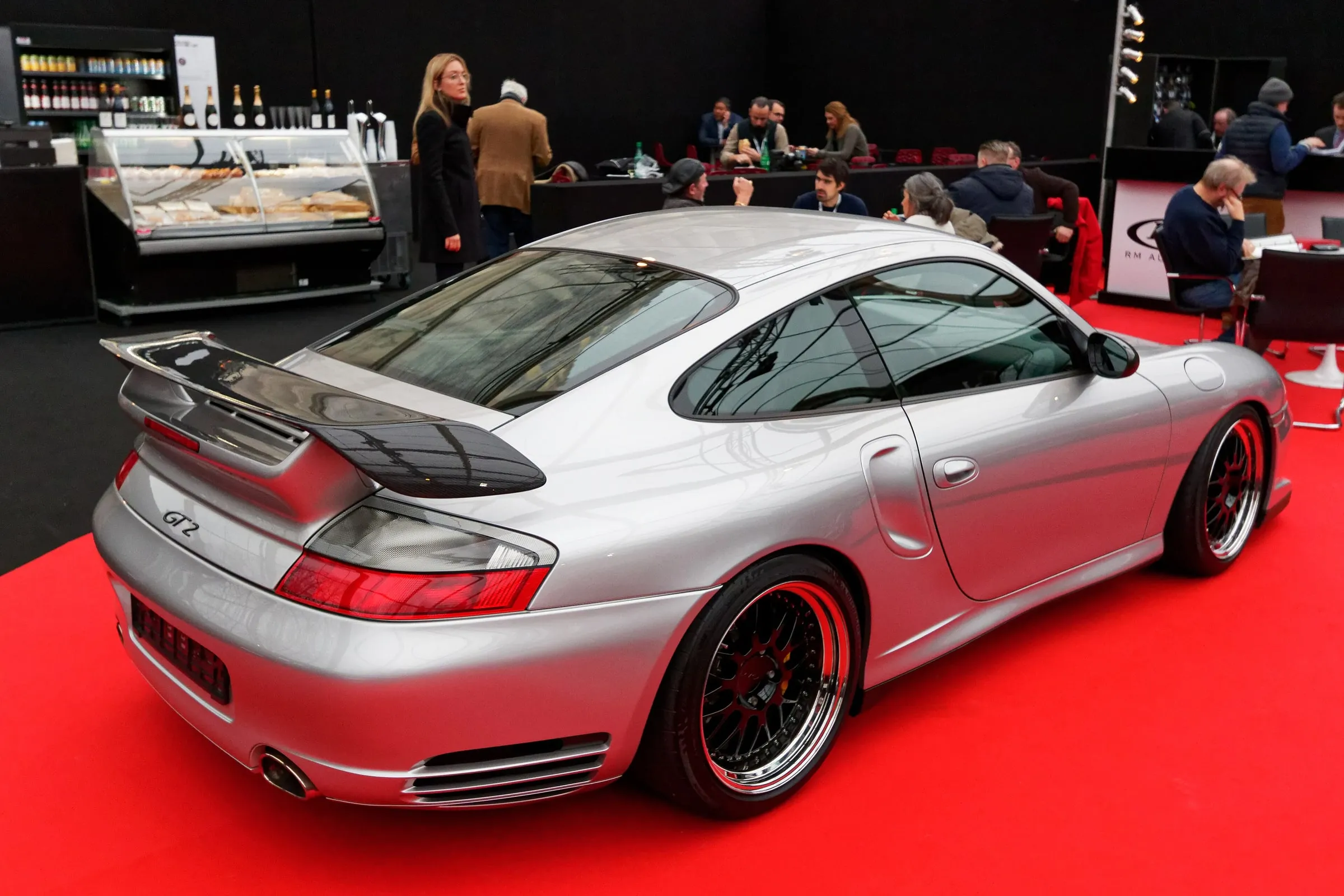 2004 · 996 GT2 · 483 PS
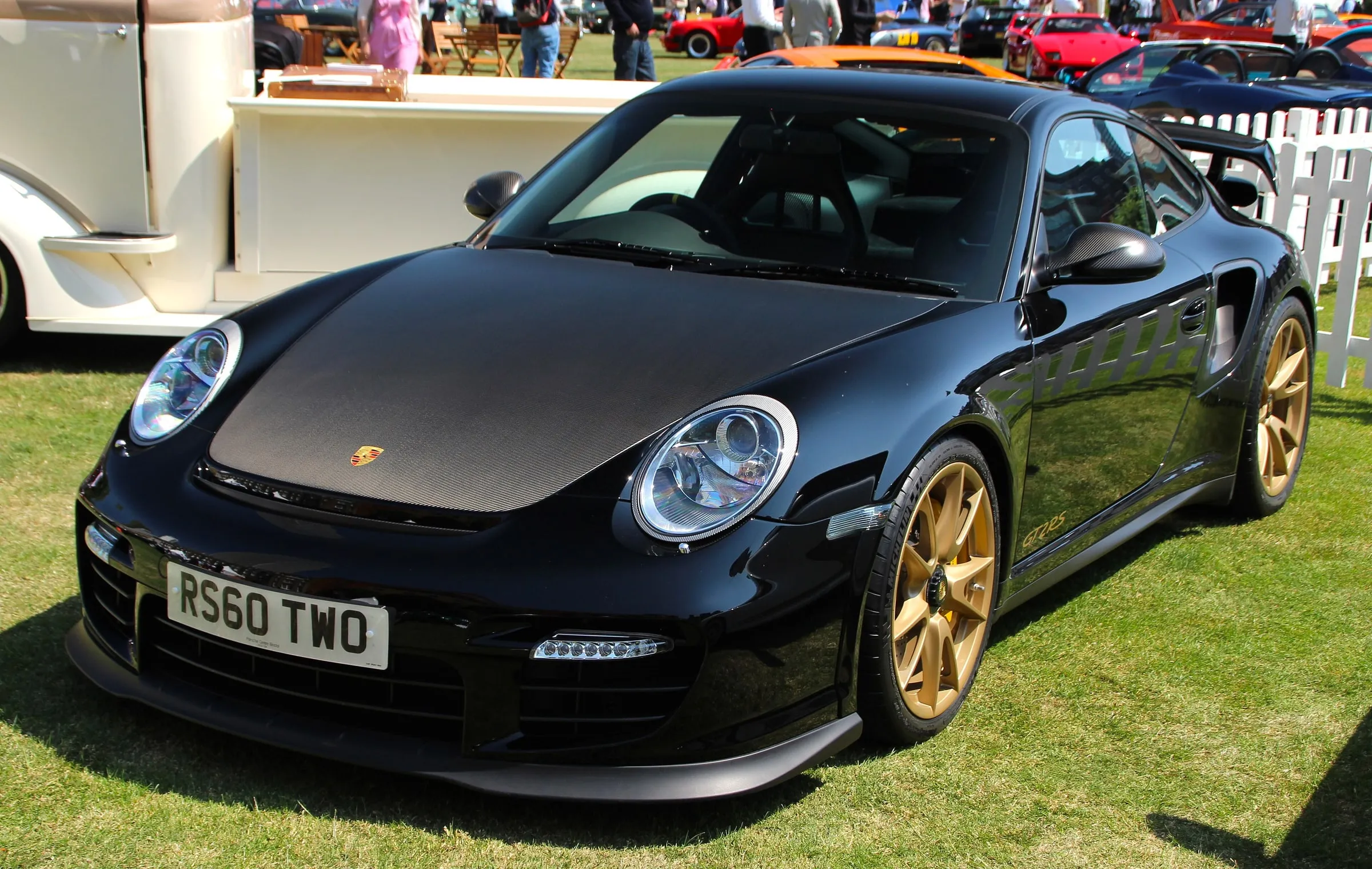 2010 · 997 GT2 RS · 620 PS
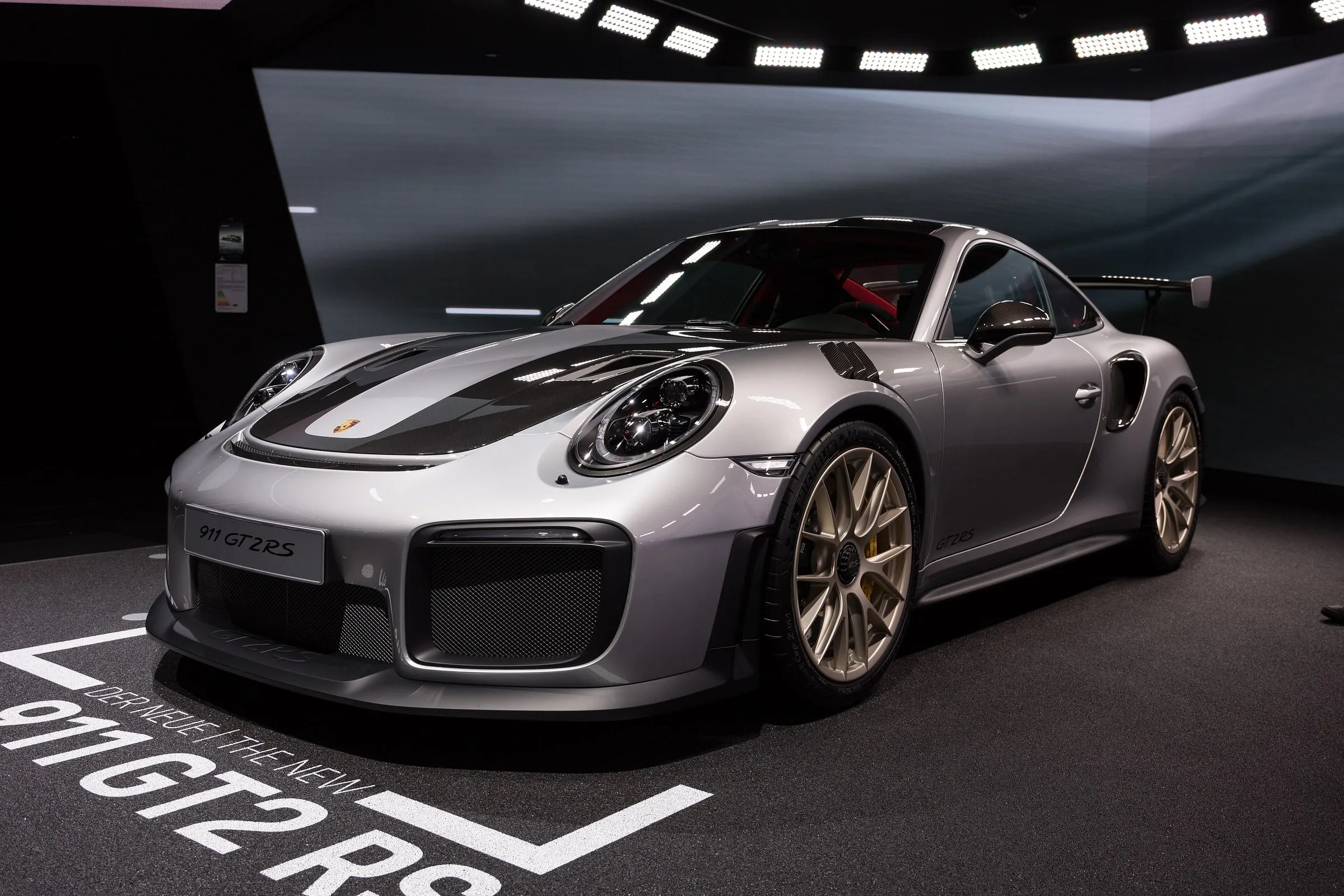 2017 · 991 GT2 RS · 700 PS
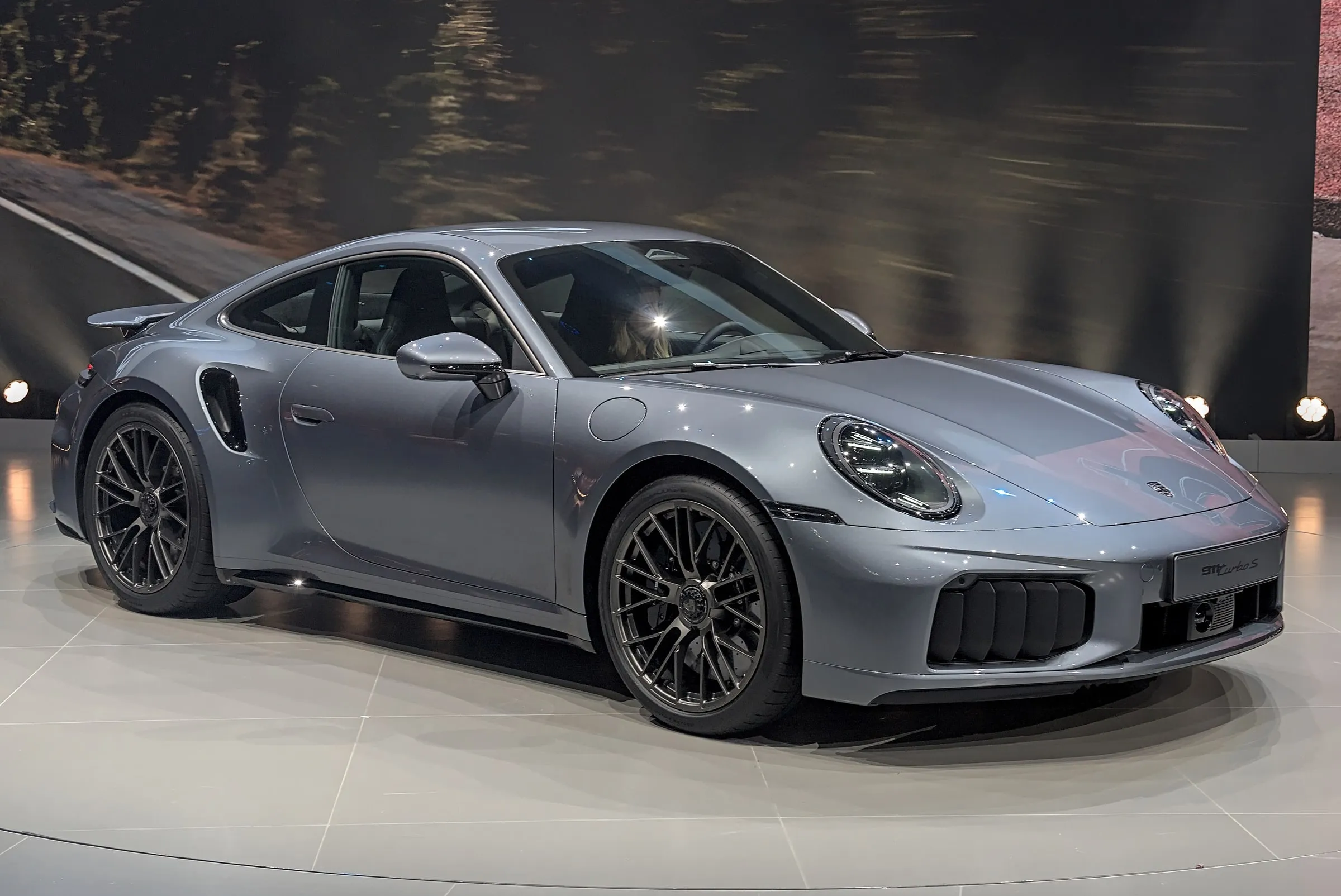 2025 · 992 Turbo S · 711 PS
Tap any car to open it large.
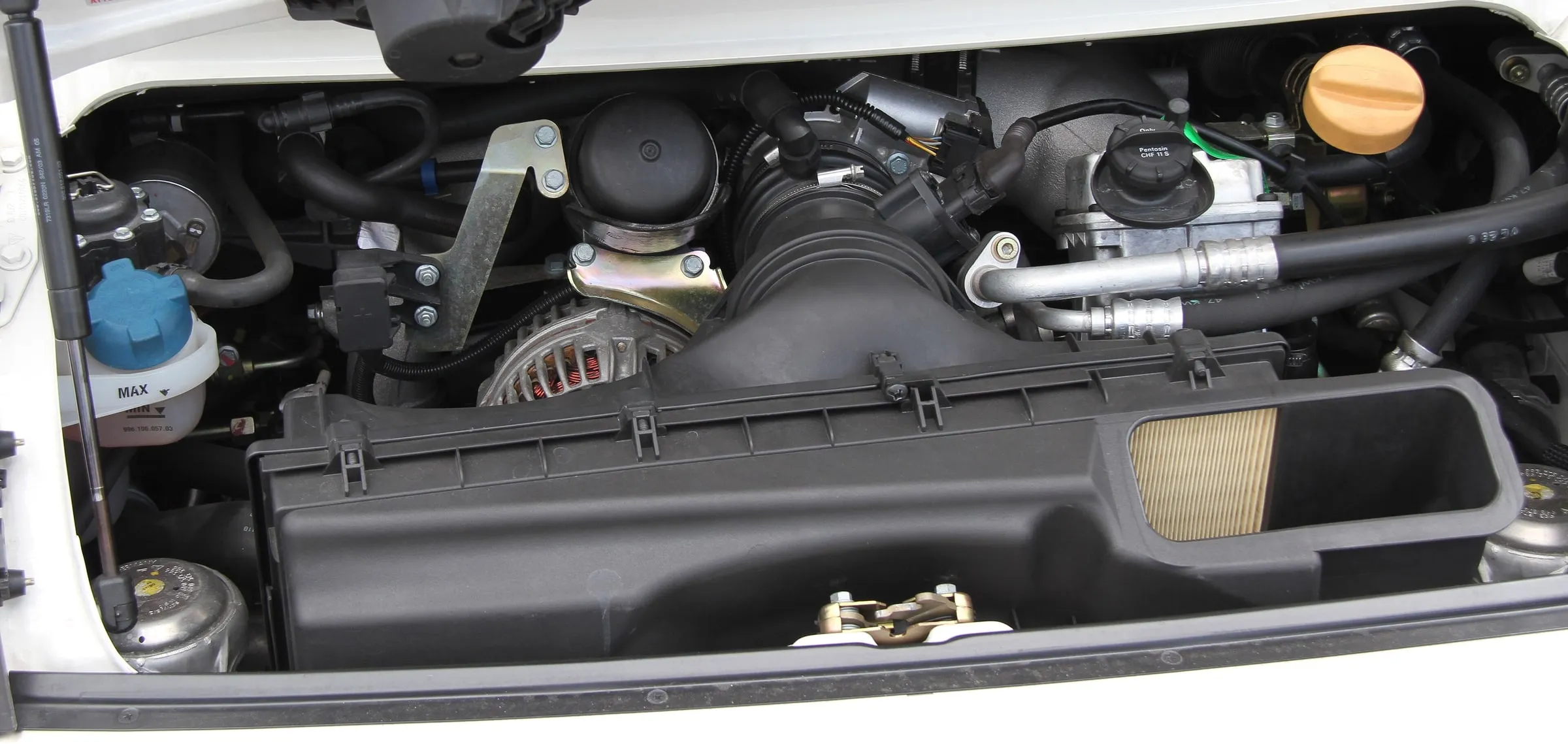
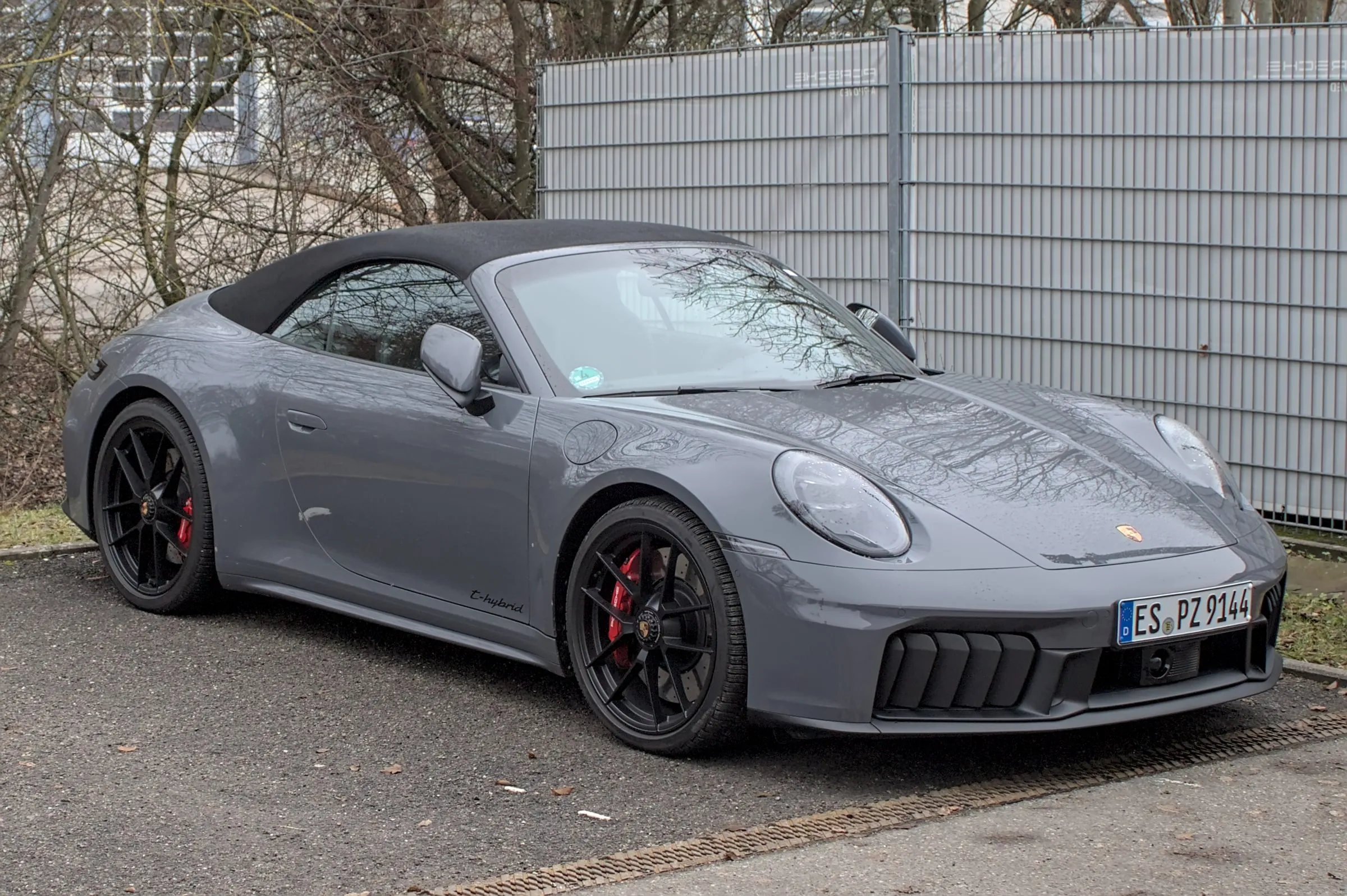
Turbocharging did most of that work. The 911 Turbo arrived in 1974, and every base Carrera has been turbocharged since the 2015 update. Electricity is the newest help. The 2024 Carrera GTS T-Hybrid added an electric motor and an electrically driven turbocharger for 541 PS.
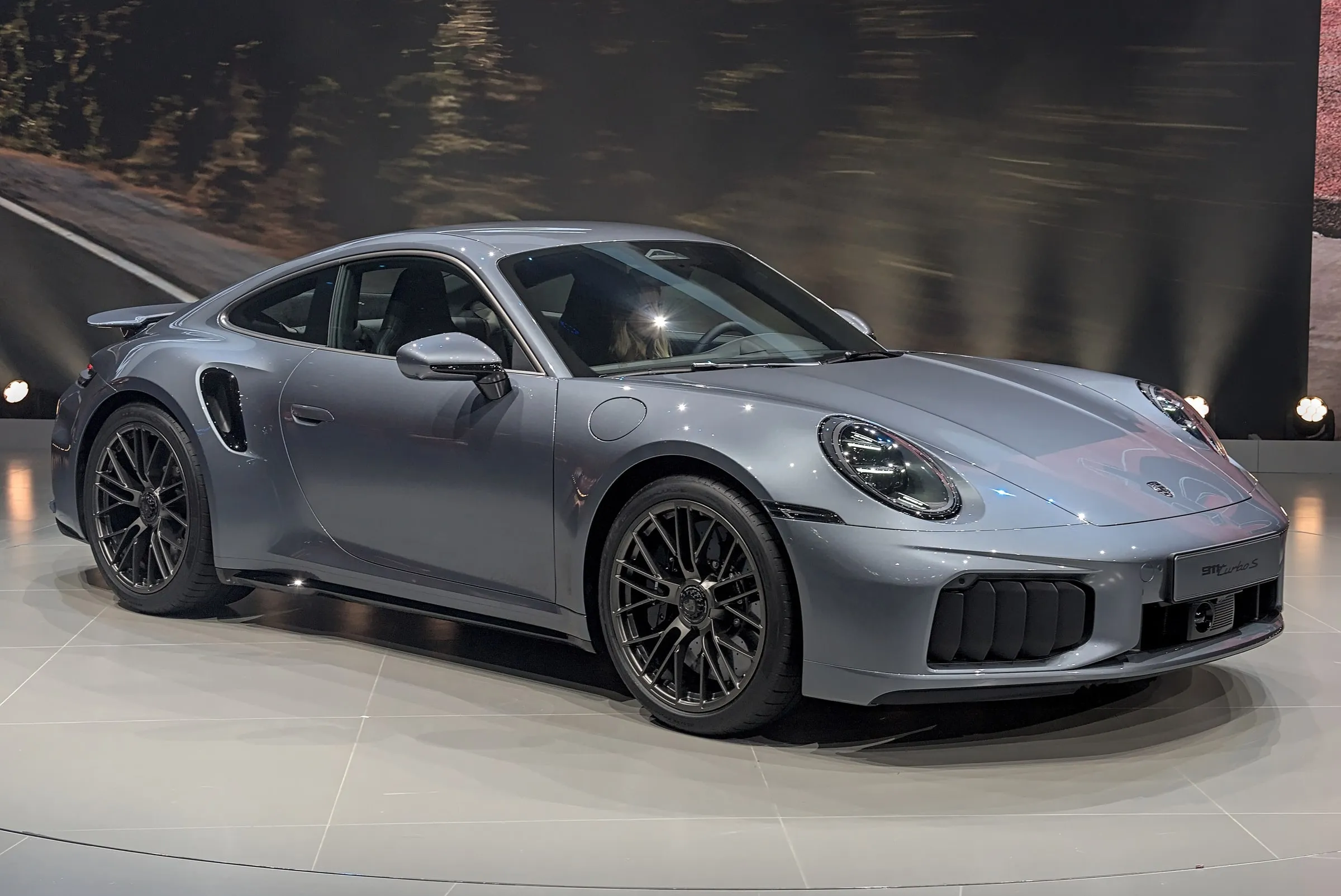
The 2025 Turbo S uses two electric turbochargers and the same kind of motor to reach 711 PS, 11 PS more than the 2017 GT2 RS, which held the record without any electrical help.
2025 · 911 Turbo S
711 PS
05 · Weight
The base 911 weighed 1,080 kg in 1964. Today’s Carrera weighs 1,520 kg, 41 per cent more. Some of that is safety structure, some is equipment, and some is the 996’s switch to water cooling, which added radiators, pumps and coolant, though the 996 itself came in lighter than the 993 it replaced.
The engine stayed behind the rear axle. What cooled it changed in 1997.
Power rose faster. The original carried about 120 PS for every tonne. Today’s Carrera carries 259 PS per tonne, more than twice as much. The biggest jump between generations came with the 964, though much of it built up inside the G-series. The base car went from 150 PS in 1973 to 231 PS in the 1984 Carrera 3.2, and the 964’s 3.6-litre engine took it to 250 PS.
Fig. 3 · Weight
Base coupé at each generation’s launch: kerb weight against power. Dashed lines join points of equal power per tonne.
| Original 911 | 1964 | 1,080 | 130 | 120 |
|---|---|---|---|---|
| G-series | 1973 | 1,075 | 150 | 140 |
| 964 | 1989 | 1,350 | 250 | 185 |
| 993 | 1993 | 1,370 | 272 | 199 |
| 996 | 1997 | 1,320 | 300 | 227 |
| 997 | 2004 | 1,395 | 325 | 233 |
| 991 | 2011 | 1,380 | 350 | 254 |
| 992 | 2019 | 1,505 | 385 | 256 |
| 992.2 | 2024 | 1,520 | 394 | 259 |
06 · Sixty-three years
The first two generations ran for 26 years between them. Since 1988 Porsche has replaced the 911 roughly every six years, and every generation since the 964 has outsold the one before it. The 993 was the final air-cooled 911; the last left the factory at the end of March 1998. The 996 that followed was the first with water cooling, and it sold 175,262 cars, more than twice as many as the 993.
Fig. 4 · Production
Cars built per generation. The 992 is still in production.
| Original | 1963–73 | 81,100 |
|---|---|---|
| G-series | 1973–89 | 198,496 |
| 964 | 1988–94 | 63,762 |
| 993 | 1993–98 | 68,881 |
| 996 | 1997–2005 | 175,262 |
| 997 | 2004–12 | 213,004 |
| 991 | 2011–19 | 233,540 |
The 991 sold best of all, 233,540 cars from 2011 to 2019. The 992 is still in production, and its numbers keep climbing. In 2025 Porsche delivered 51,583 911s worldwide, a record for the model in a year when the company’s total deliveries fell by 10 per cent.
911s delivered in 2025
51,583
The run continued into 2026. In the first nine months, 911 deliveries rose 12 per cent to 42,217 while Porsche’s total fell 16 per cent.
Sixty-three years of the 911, 1963 to 2026
1963
Frankfurt
September 1963, at the Frankfurt motor show. Production began a year later.
1964
The name
Peugeot said it owned three-digit names with a zero in the middle. Eighty-two cars had been built as 901s.
1973
Size
Built for an American 5 mph rule, they made the car 128 mm longer at a stroke.
1974
Power
Turbocharging did most of the work that came after.
1998
Air
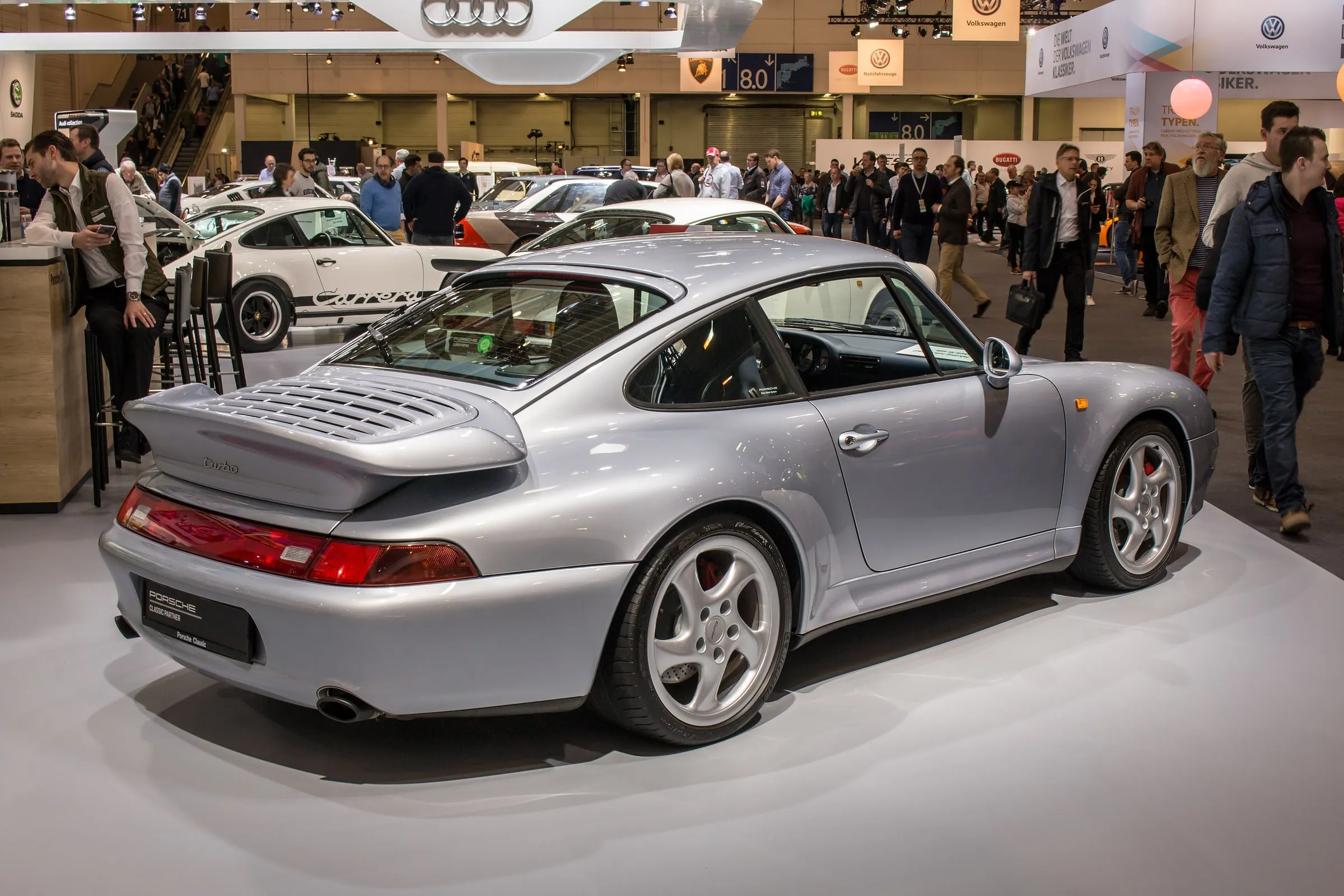
The last 993 left the factory at the end of March 1998.
2015
Power
Every base Carrera has been turbocharged since the 2015 update.
2017
Zuffenhausen
Built on 11 May 2017 and painted Irish Green, one of the first colours offered.
2024
Electricity
The Carrera GTS T-Hybrid: an electric motor and an electric turbocharger, 541 PS.
2025
Power
The Turbo S, with two electric turbochargers and a motor.
2026
Purism
Open-topped, manual only, 510 PS and 9,000 rpm, with no electrical help at all.
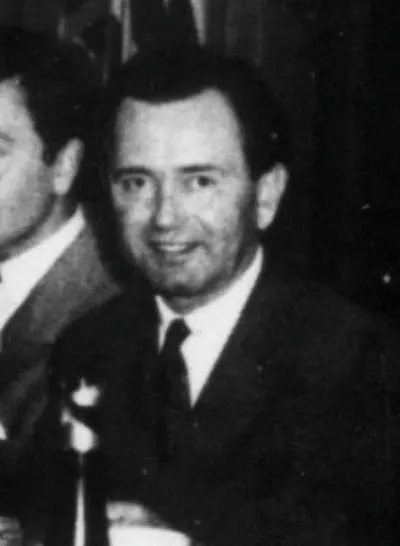
In the beginning, I looked around and could not find quite the car I dreamed of, so I decided to build it myself.
The 911 has not given up on purism. In April 2026 Porsche added the GT3 S/C, an open-top GT3 sold only with a six-speed manual gearbox and a 510 PS engine that revs to 9,000 rpm and has no electrical help at all.
| Original 911 | 1963–73 | 911 2.0 | 130 | 96 | Carrera RS 2.7 | 210 | 1,080 | 4,163 | 1,610 | 1,320 | 2,211 | 81,100 |
|---|---|---|---|---|---|---|---|---|---|---|---|---|
| G-series | 1973–89 | 911 2.7 | 150 | 110 | Turbo 3.3 | 300 | 1,075 | 4,291 | 1,610 | 1,320 | 2,271 | 198,496 |
| 964 | 1988–94 | Carrera 2 | 250 | 184 | Turbo 3.6 | 360 | 1,350 | 4,250 | 1,652 | 1,310 | 2,272 | 63,762 |
| 993 | 1993–98 | Carrera | 272 | 200 | Turbo S | 450 | 1,370 | 4,245 | 1,735 | 1,311 | 2,272 | 68,881 |
| 996 | 1997–2005 | Carrera | 300 | 221 | GT2 | 483 | 1,320 | 4,430 | 1,765 | 1,305 | 2,350 | 175,262 |
| 997 | 2004–12 | Carrera | 325 | 239 | GT2 RS | 620 | 1,395 | 4,427 | 1,808 | 1,310 | 2,350 | 213,004 |
| 991 | 2011–19 | Carrera | 350 | 257 | GT2 RS | 700 | 1,380 | 4,491 | 1,808 | 1,303 | 2,450 | 233,540 |
| 992 | 2019– | Carrera | 385 | 283 | Turbo S | 650 | 1,505 | 4,519 | 1,852 | 1,300 | 2,450 | – |
| 992.2 | 2024– | Carrera | 394 | 290 | Turbo S | 711 | 1,520 | 4,542 | 1,852 | 1,302 | 2,450 | – |
That is how much lower the roof of today’s Carrera is than the first 911’s, after sixty years, eight generations, water cooling, turbochargers and a hybrid. Everything under the line changed. The line stayed.
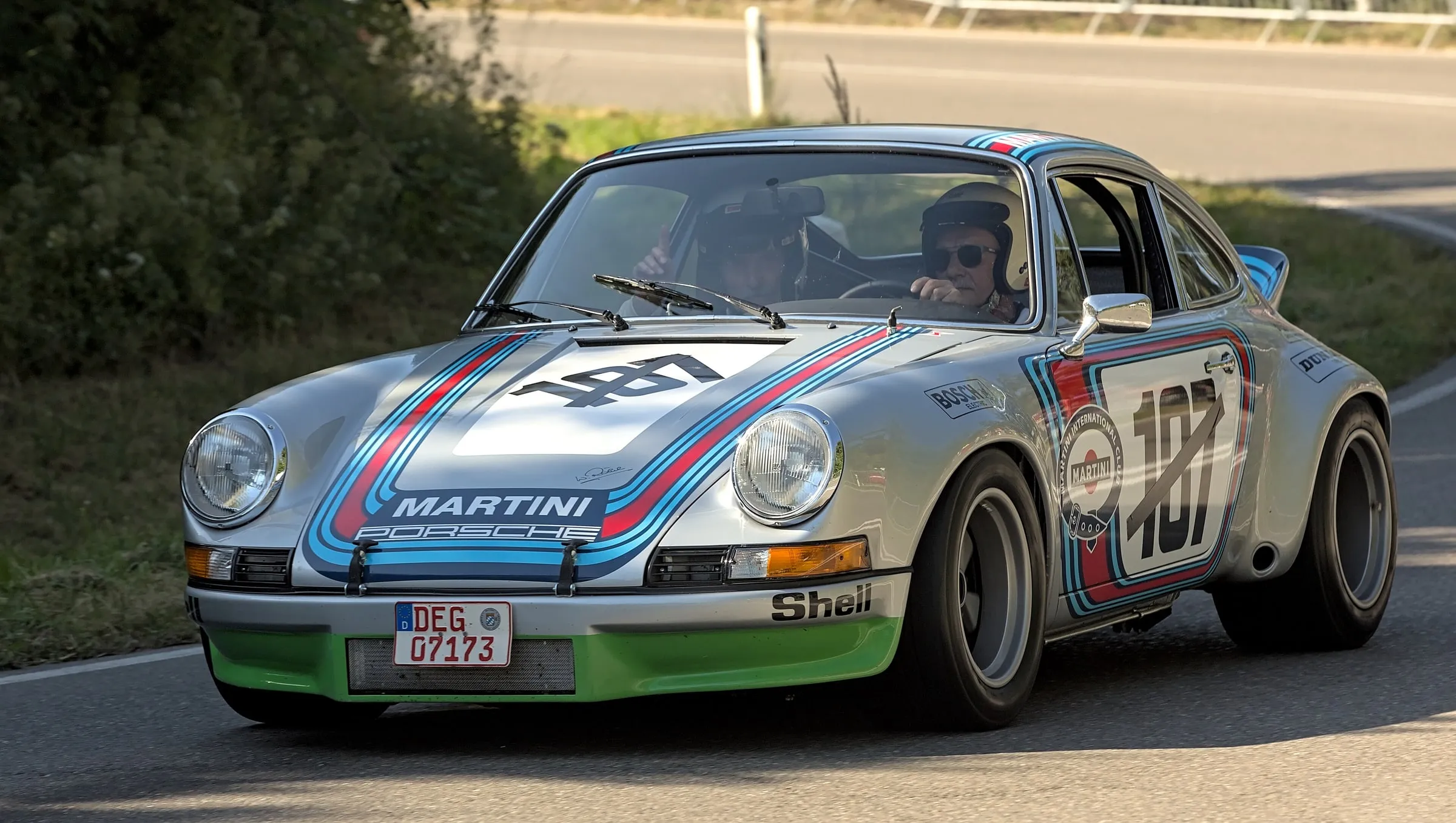
Carrera RSR, Solitude Revival 2022. Alexander Migl / CC BY-SA 4.0
Cite this
The Studio (2026). “The Line That Stayed.” No. 009, published 2 November 2026. thestudio.nz/drops/porsche-911
Older
003TechTesla
Tesla has shown nine vehicles with a date attached. We measured each one against the first date it was promised, then did the same for eleven years of self-driving forecasts.
Newer
 005
MoneyPokémon
In February 2026 one Pikachu card sold for US$16.5m, more than the next two biggest Pokémon card sales put together. Here are the record sales, drawn to scale, and the two booms behind them.
The list
New stories land on Mondays. No noise in between, and you can leave whenever you like.
The list opens soon.
Until then, follow along with the RSS feed, or write to [email protected] and we will add you on day one.