 010
CultureFilm
Down the Barrel
Twenty-five Eon Bond films, six actors and 59 years, measured in today’s money. Skyfall still leads, Thunderball runs it close, and Sean Connery’s six films out-earned Daniel Craig’s five.
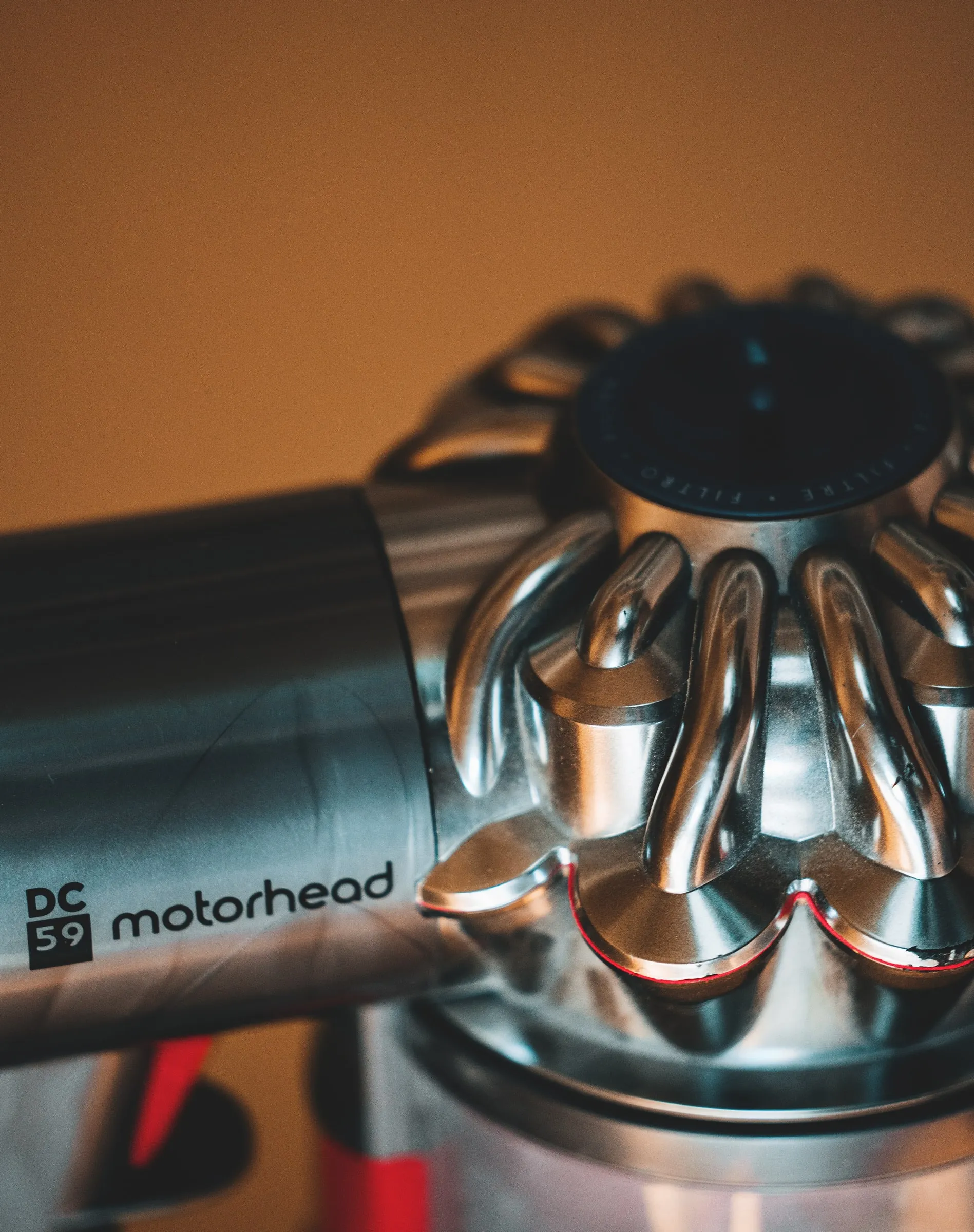
No. 012 · Dyson
One vacuum cleaner, five years in a coach house, and the two ideas that have been in almost every Dyson since.
Tony Webster / CC BY 2.0
James Dyson built 5,127 versions of one vacuum cleaner before he had one that worked. Since then his company has put the same two ideas, a cyclone and a very fast motor, into almost everything that moves air: fans, heaters, purifiers, hair dryers, hand dryers, headphones and, for a while, a car.
1 dot = 1 prototypeNo. 5,127 worked
1979
1979–1984
No. 5,127
01 · 1978 to 1993
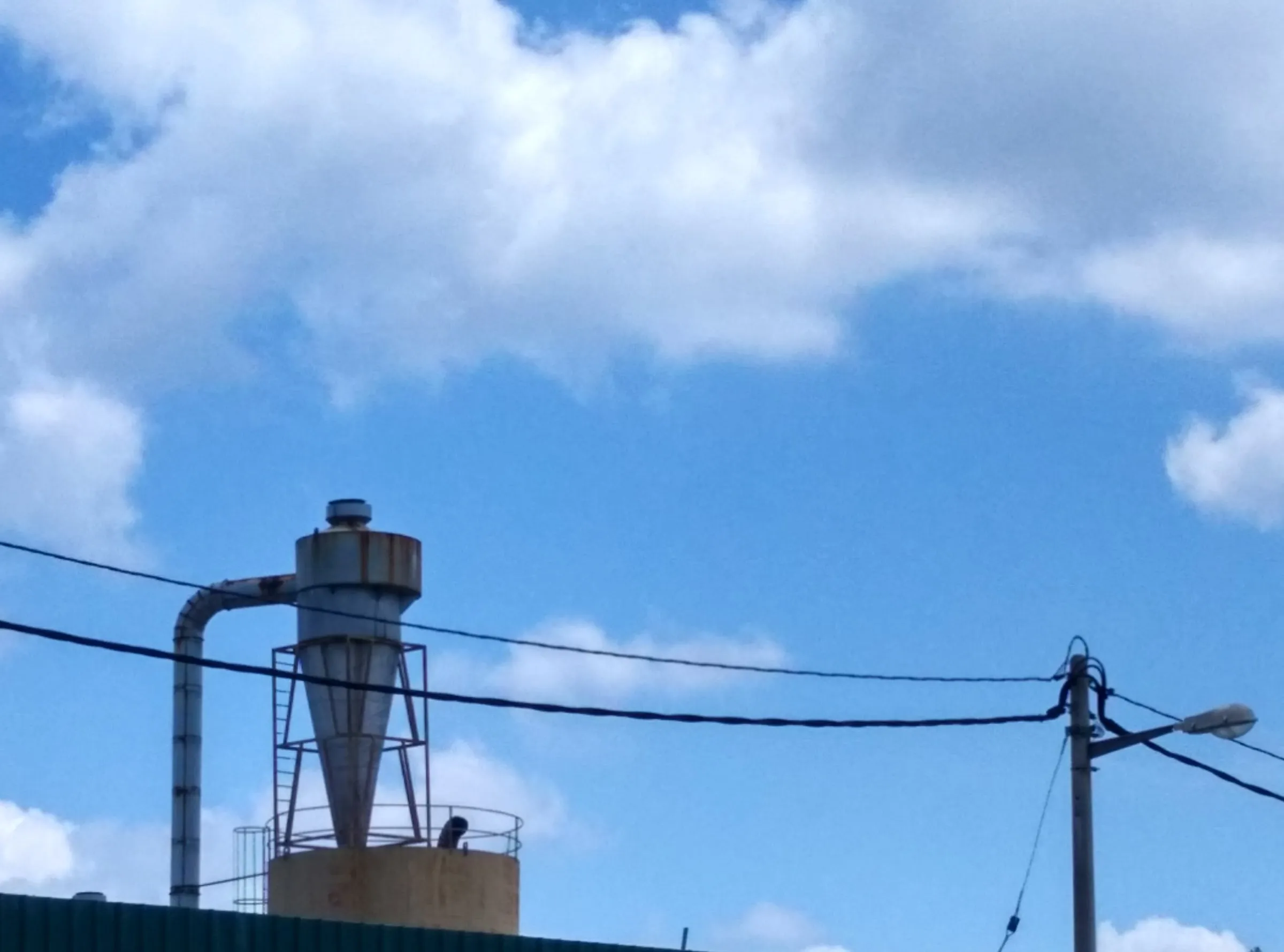
A sawmill cyclone. Encik Tekateki / CC BY 4.0
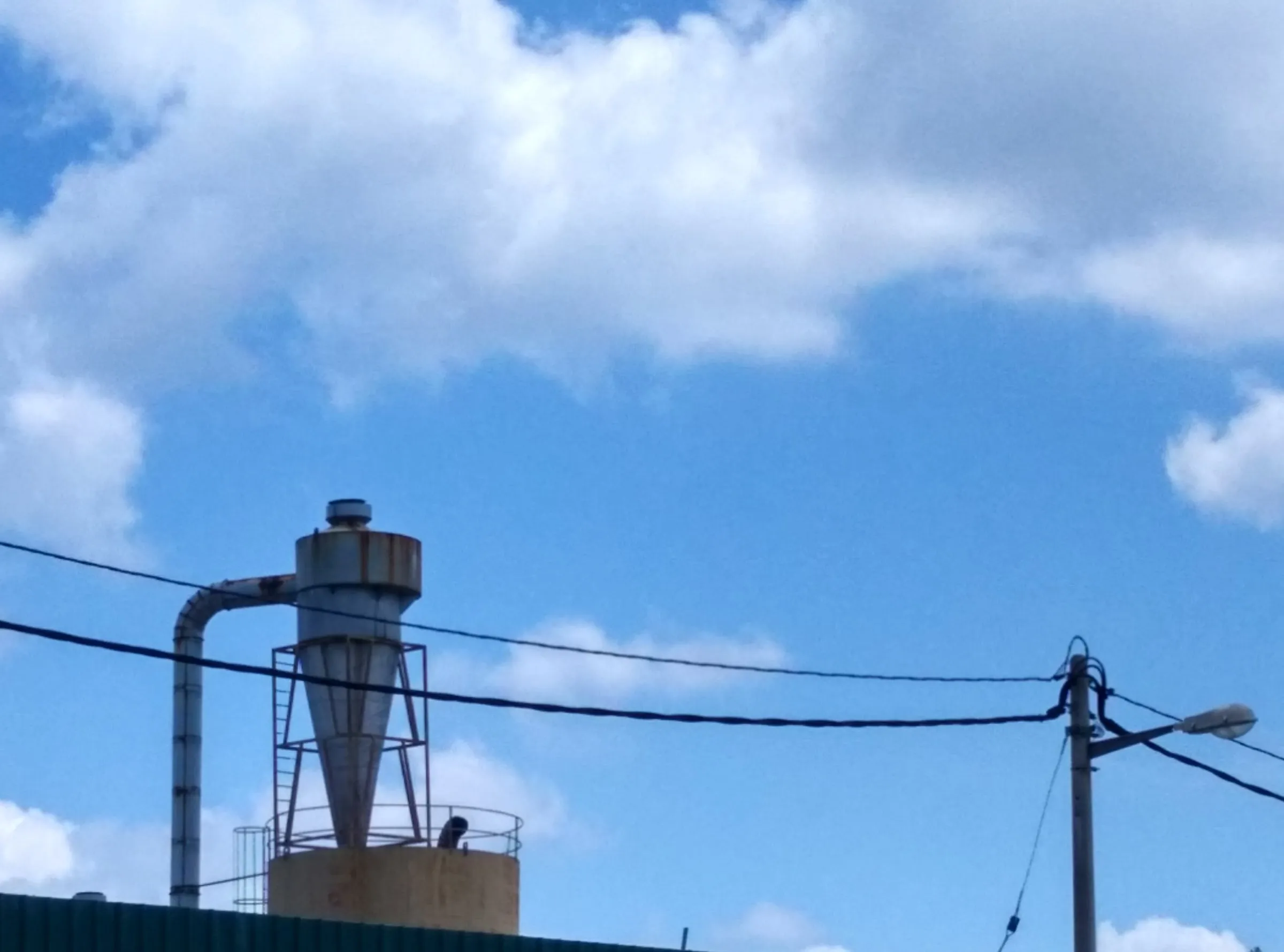
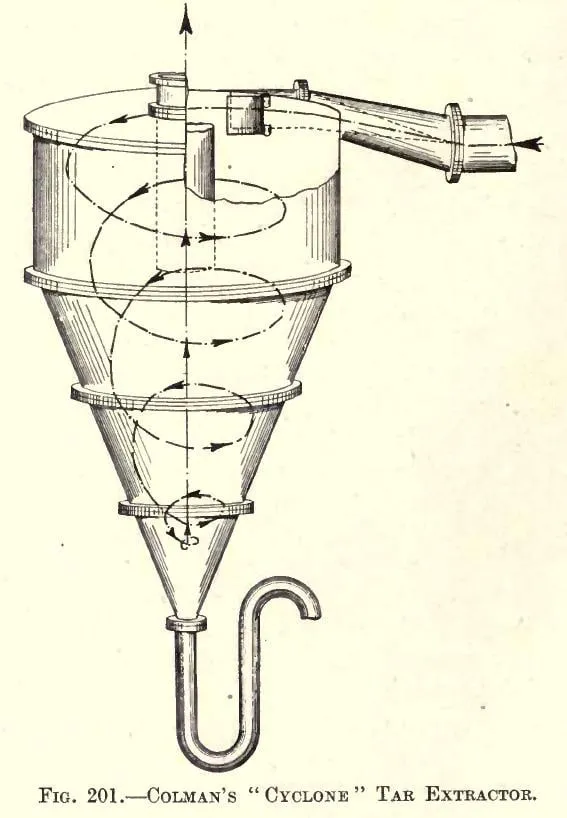
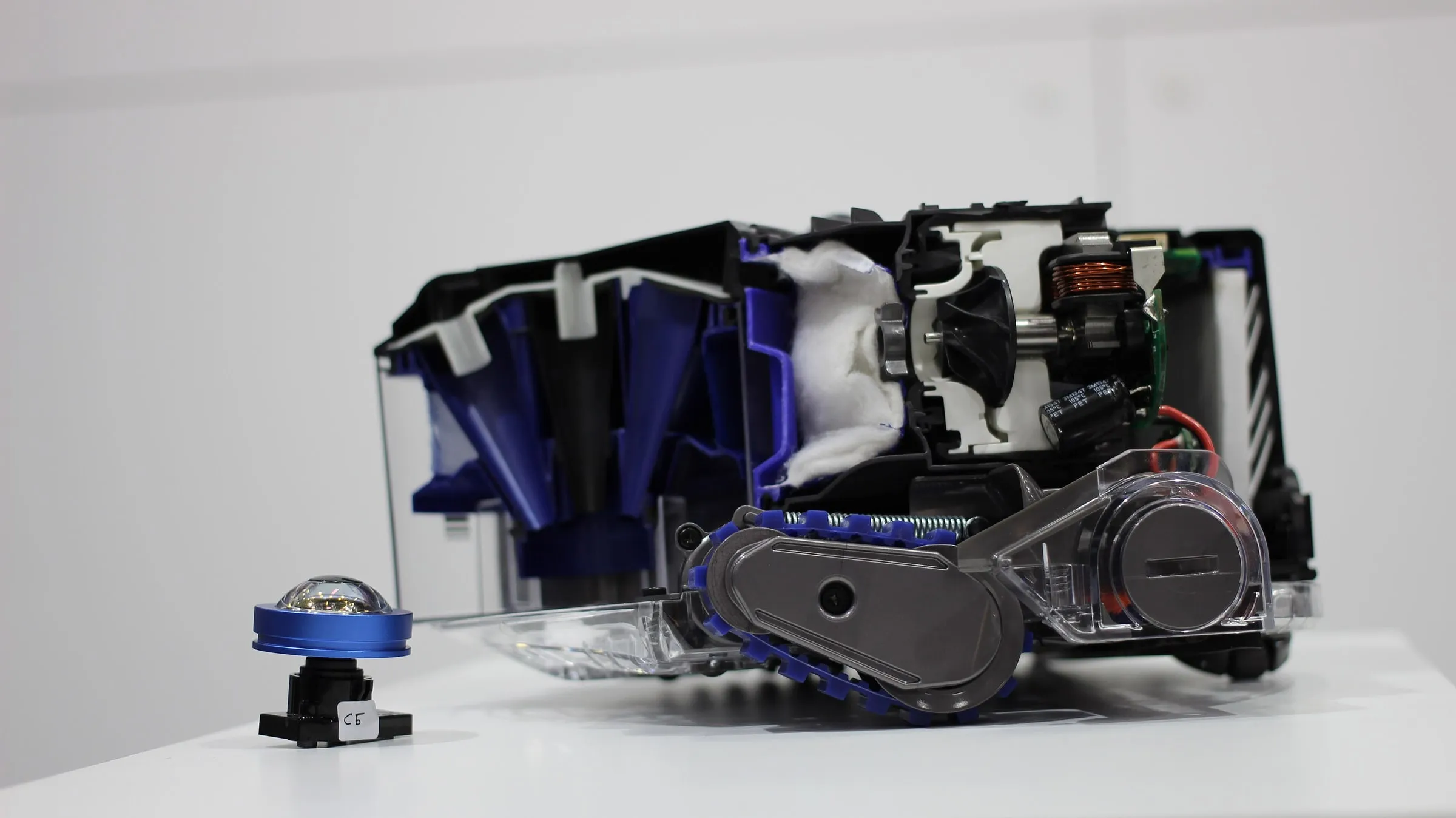
The idea came from annoyance. In 1978 James Dyson noticed that his Hoover Junior lost suction as its bag filled, because the pores of the bag clogged with dust. At a sawmill he had seen a cyclone, a tall cone that spins air so fast the dust is flung out and drops away. He wondered if a small one could replace the bag.
A cyclone needs no filter bag: the dust is thrown to the wall of the cone and falls out of the airflow.
He spent the next five years finding out. Working in the coach house behind his home, partly on his wife Deirdre’s salary as an art teacher, he made 5,127 prototypes between 1979 and 1984.
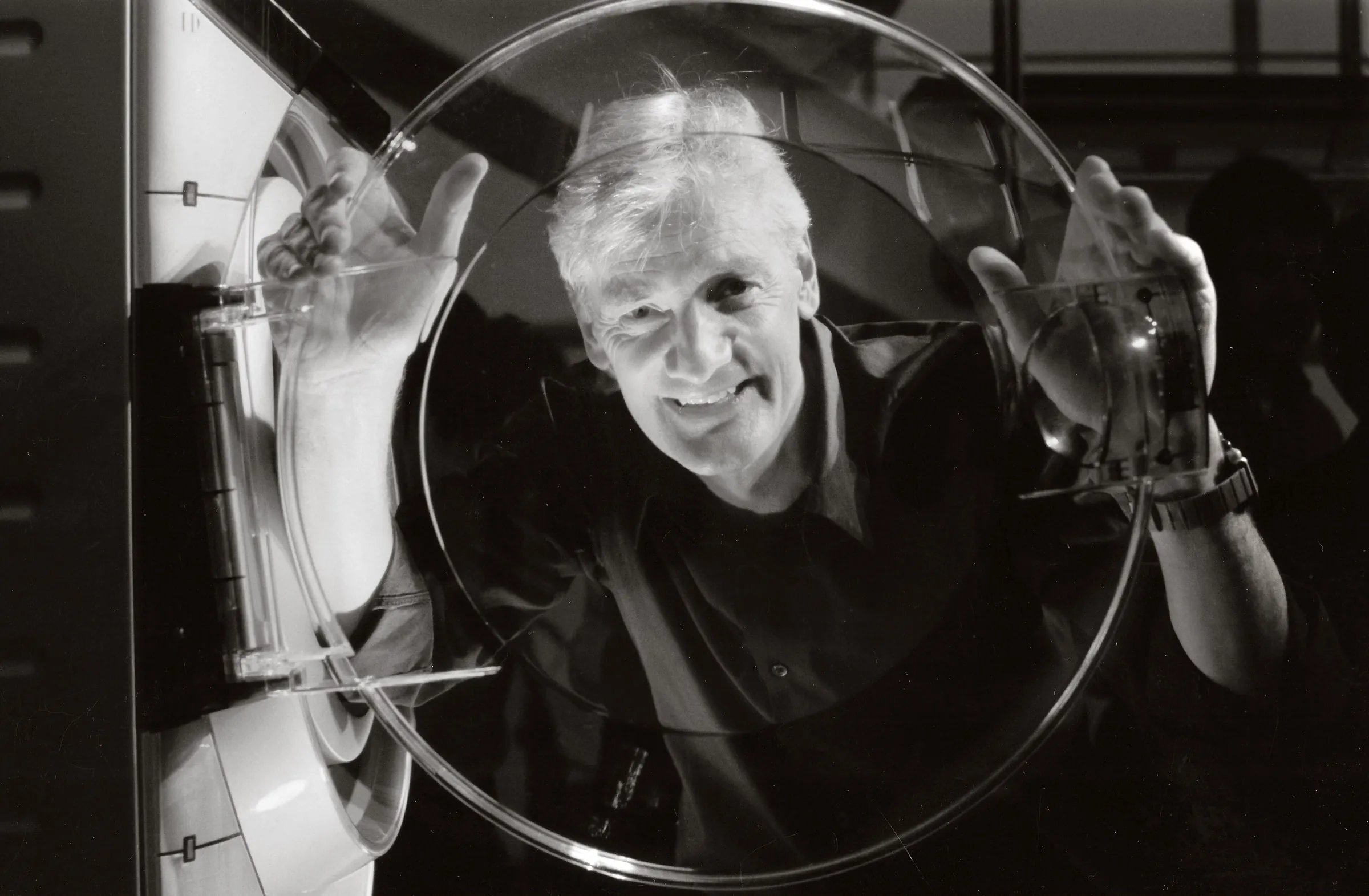
There were 5,126 failures. But I learned from each one.
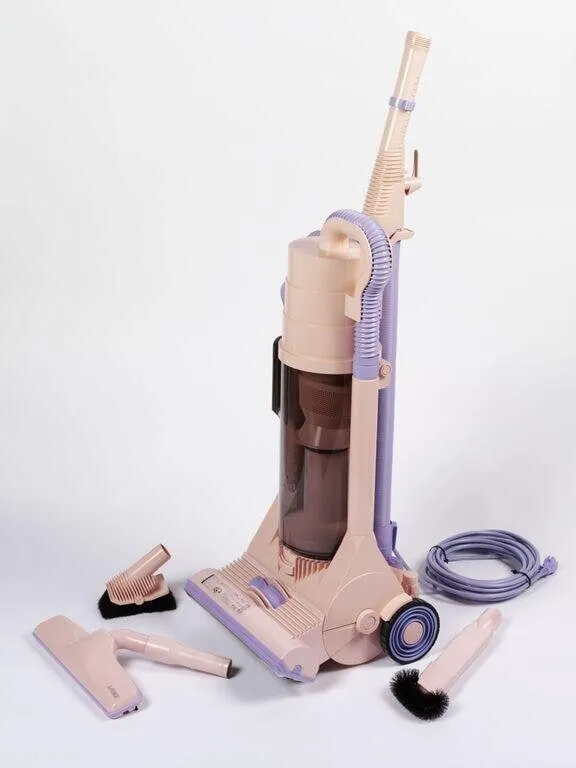
No established manufacturer in Britain would take it on. The first machine to reach a shop was the G-Force, made under licence in Japan from 1986 and finished in pale pink. It cost about ¥200,000.
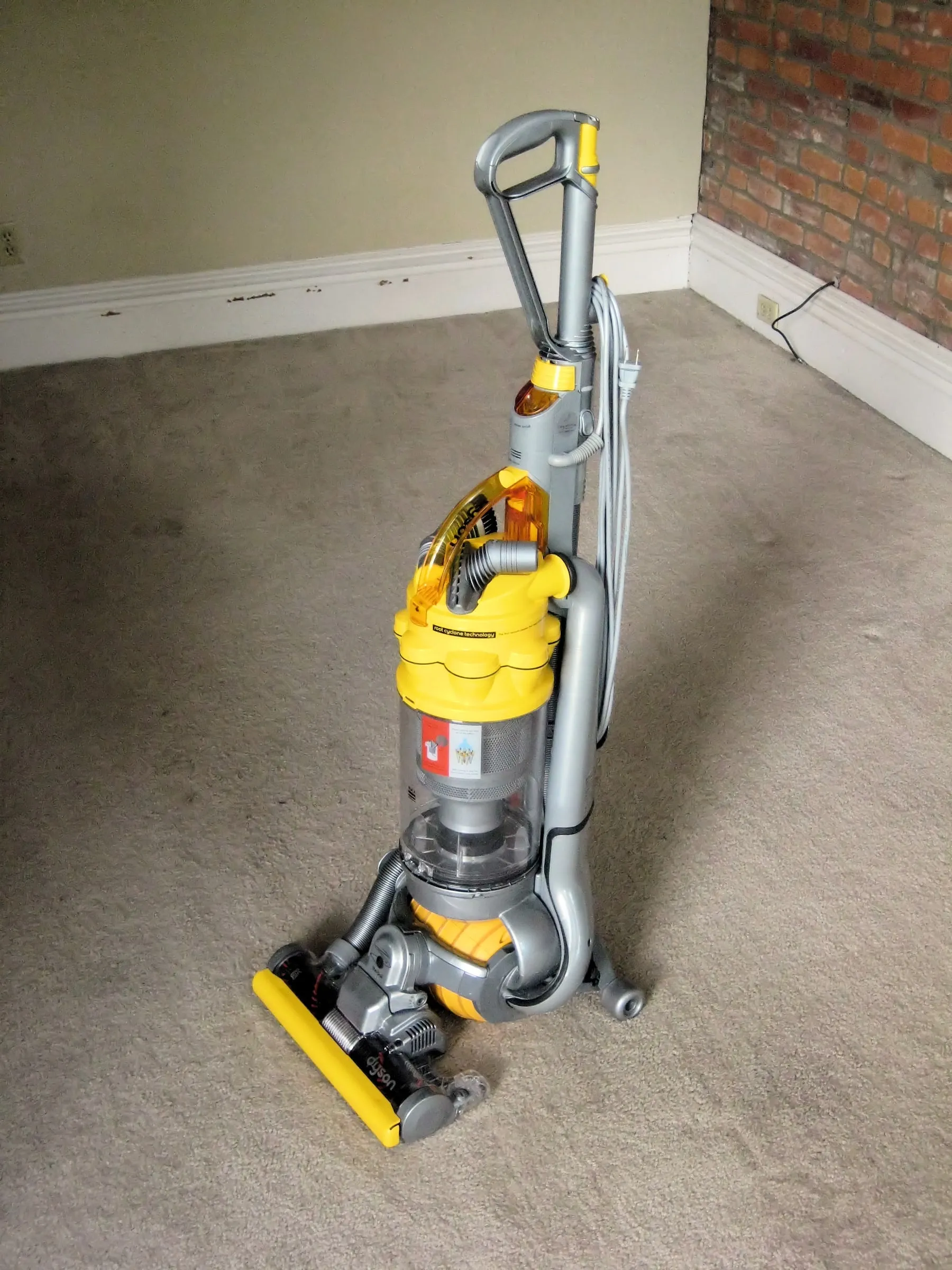
The licence fees paid for Dyson to set up on his own, and in 1993 the DC01 went on sale in Britain at about £200, roughly twice the price of a bagged rival. Within a few years it was the best-selling vacuum cleaner in the country.
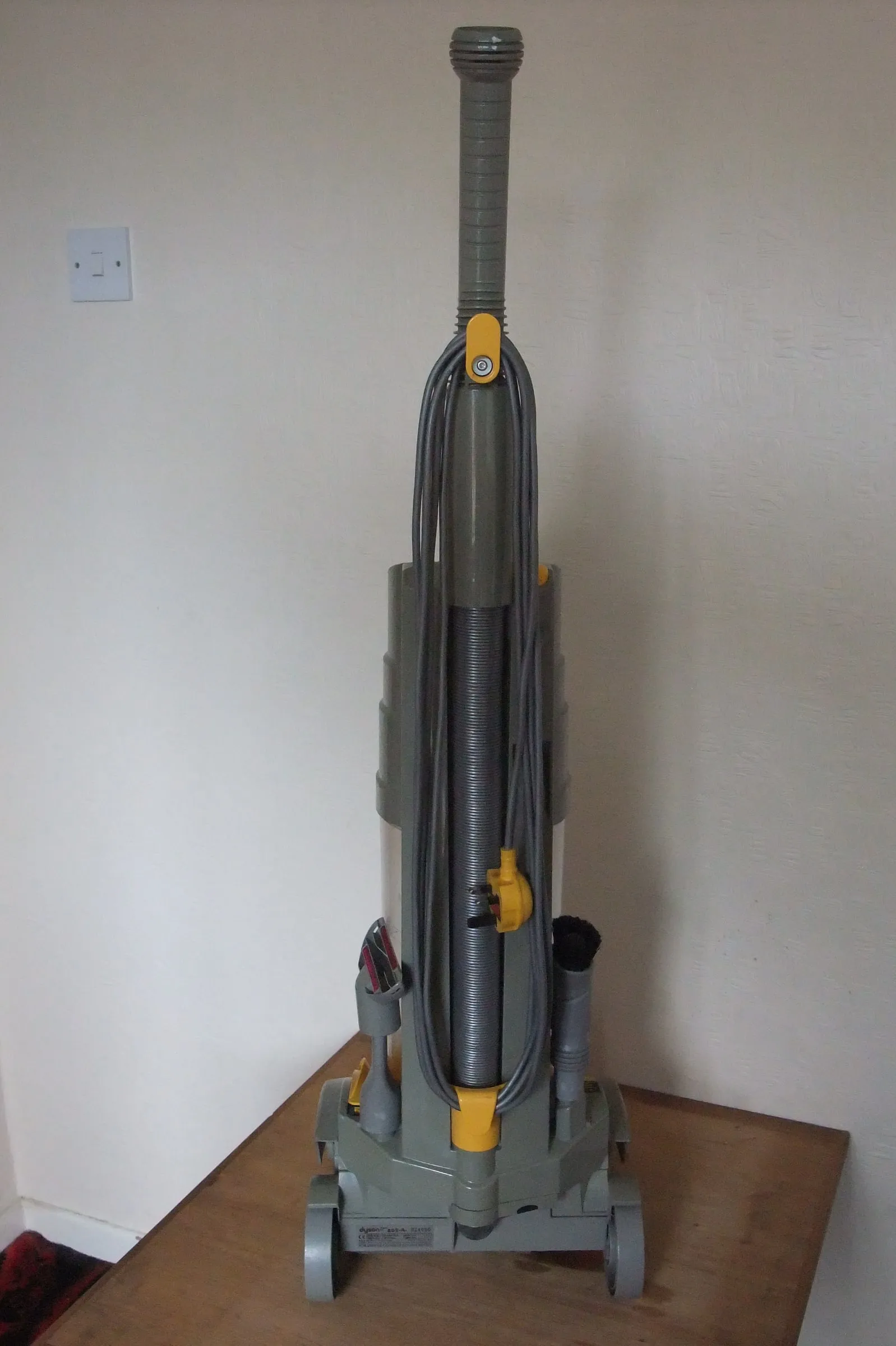
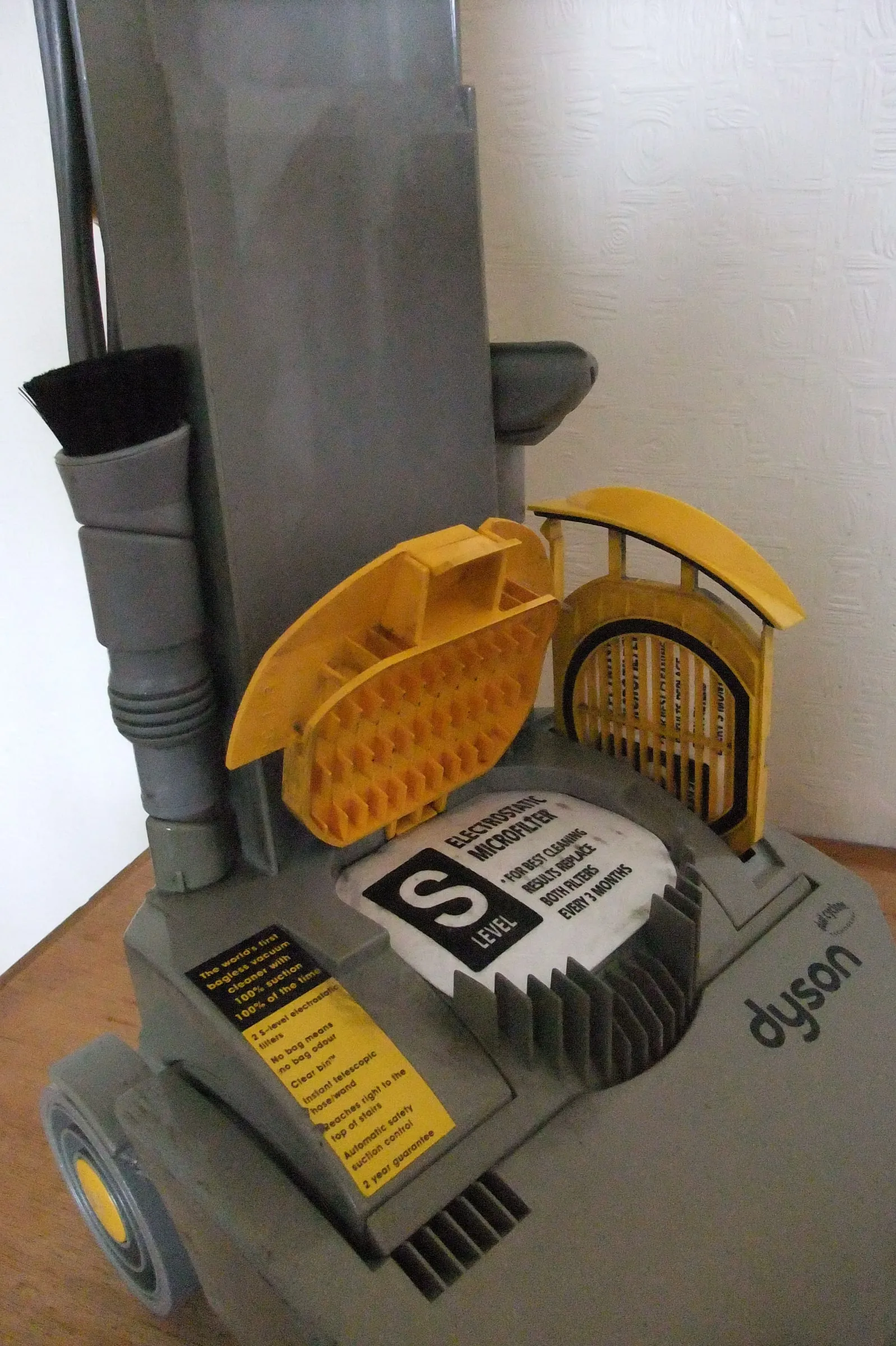
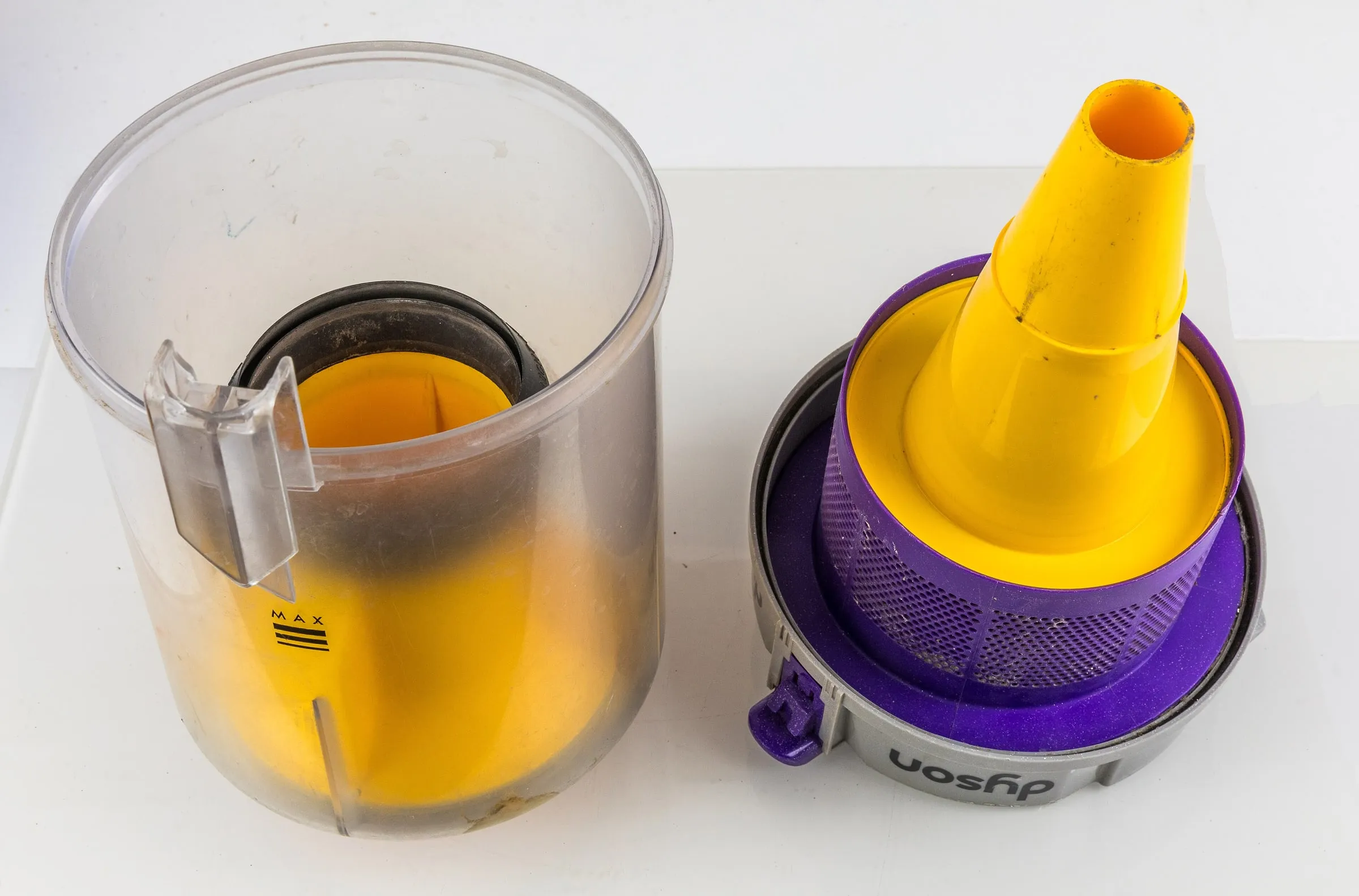
DC01, 1993.
02 · The product wall
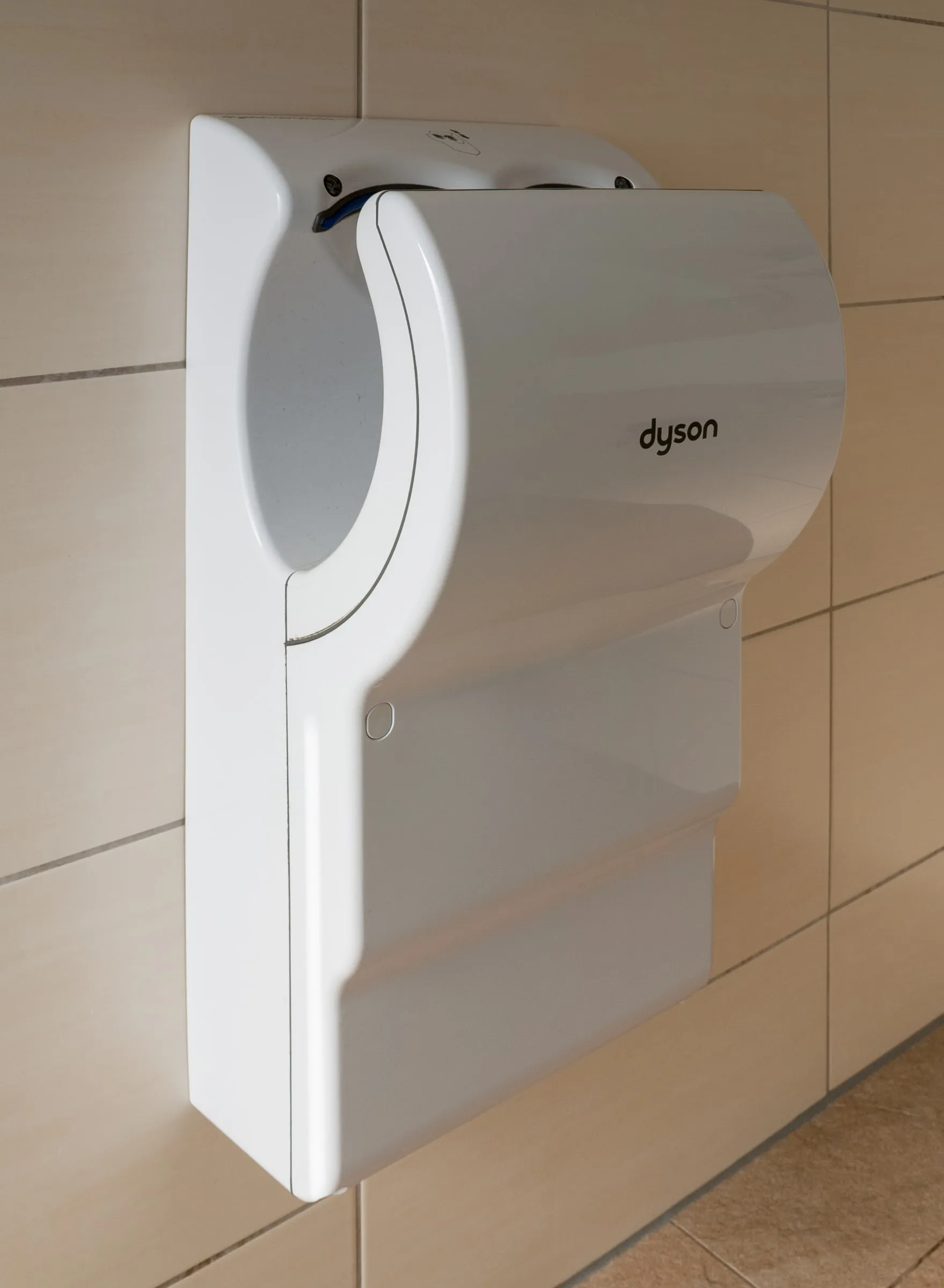
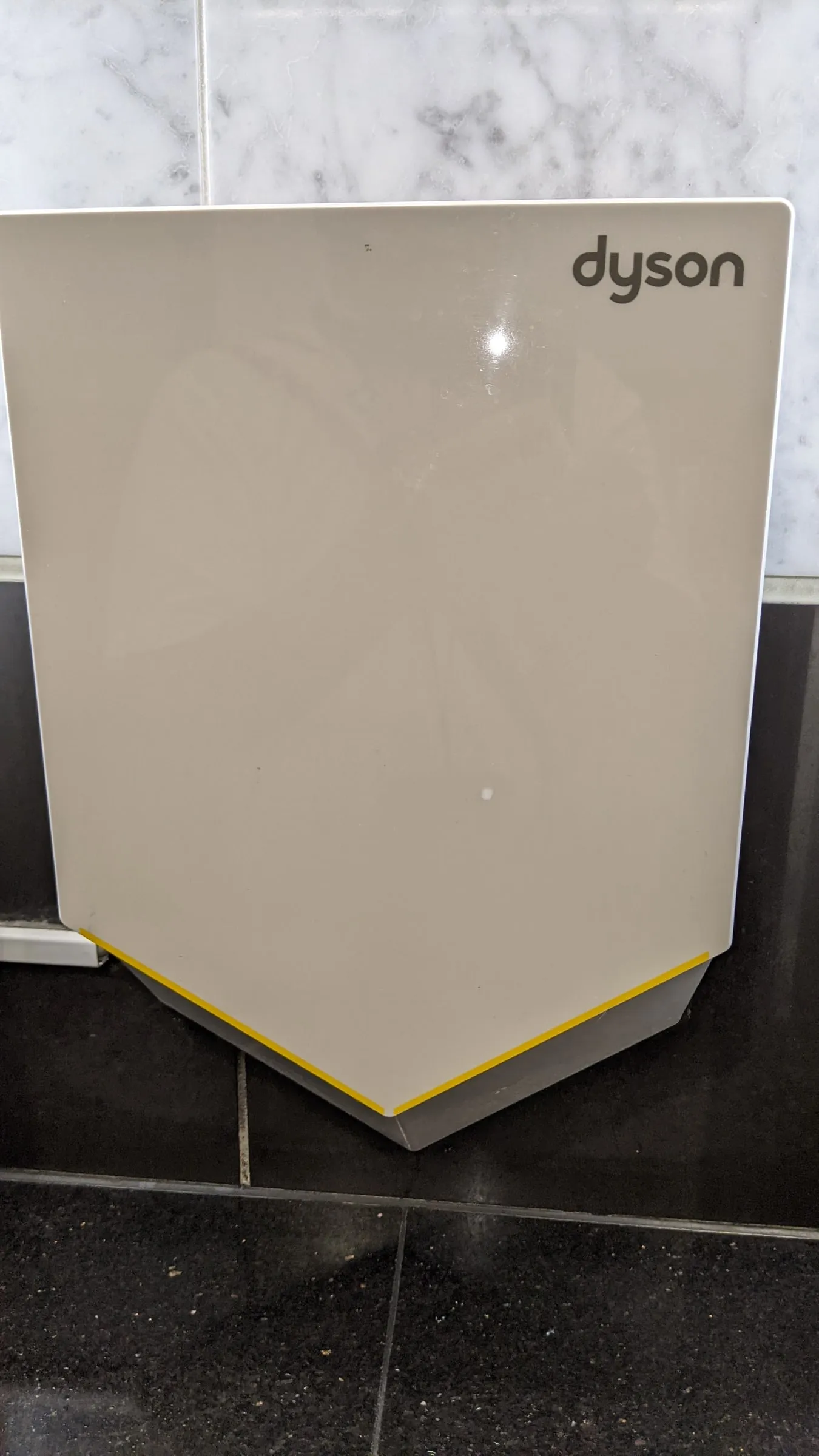
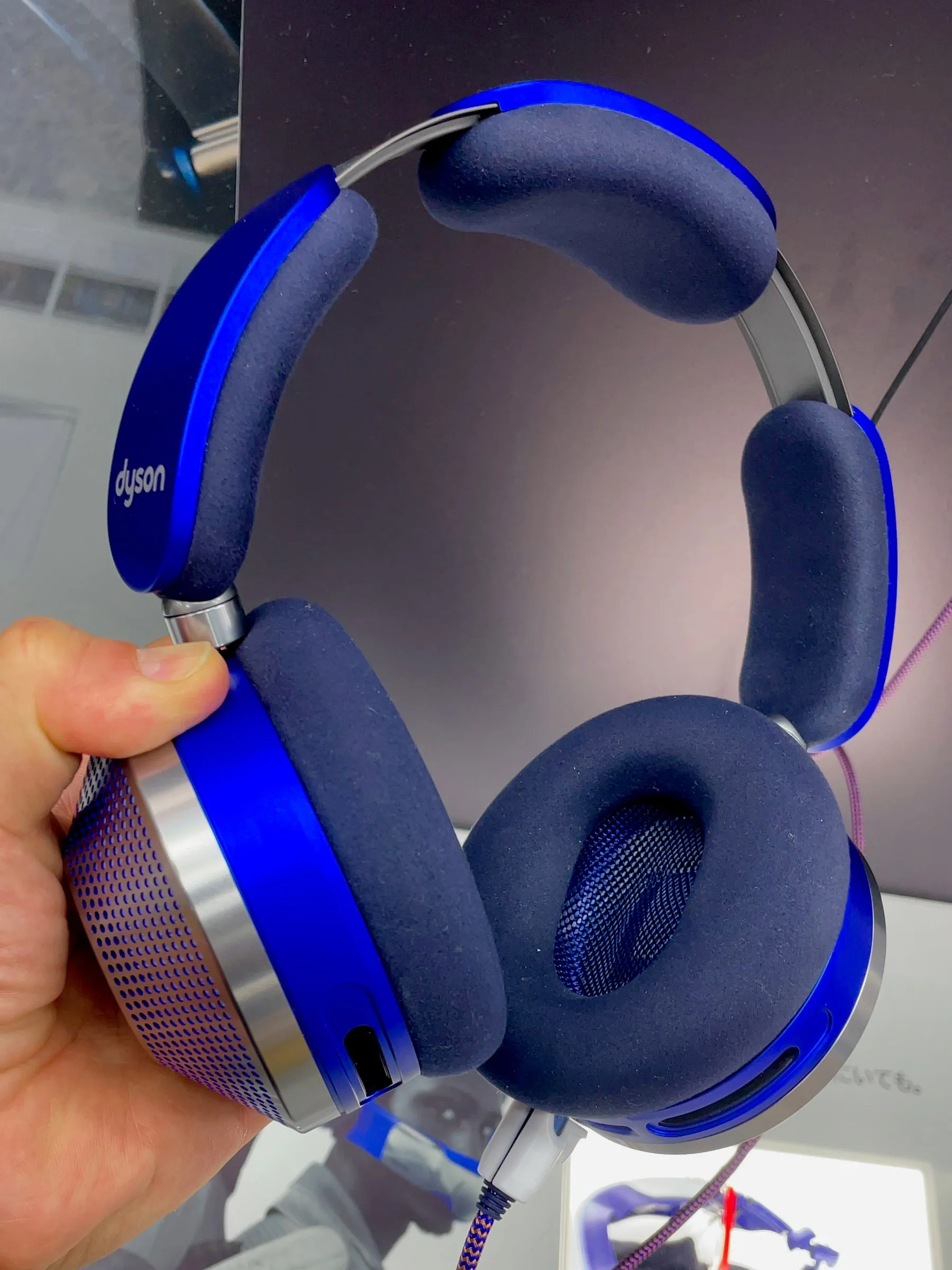
For the next 13 years Dyson sold vacuum cleaners and one washing machine. Then, in 2006, it put a small, very fast motor into a hand dryer, and the range began to spread. A fan with no blades followed in 2009, a hair dryer in 2016, headphones in 2022.
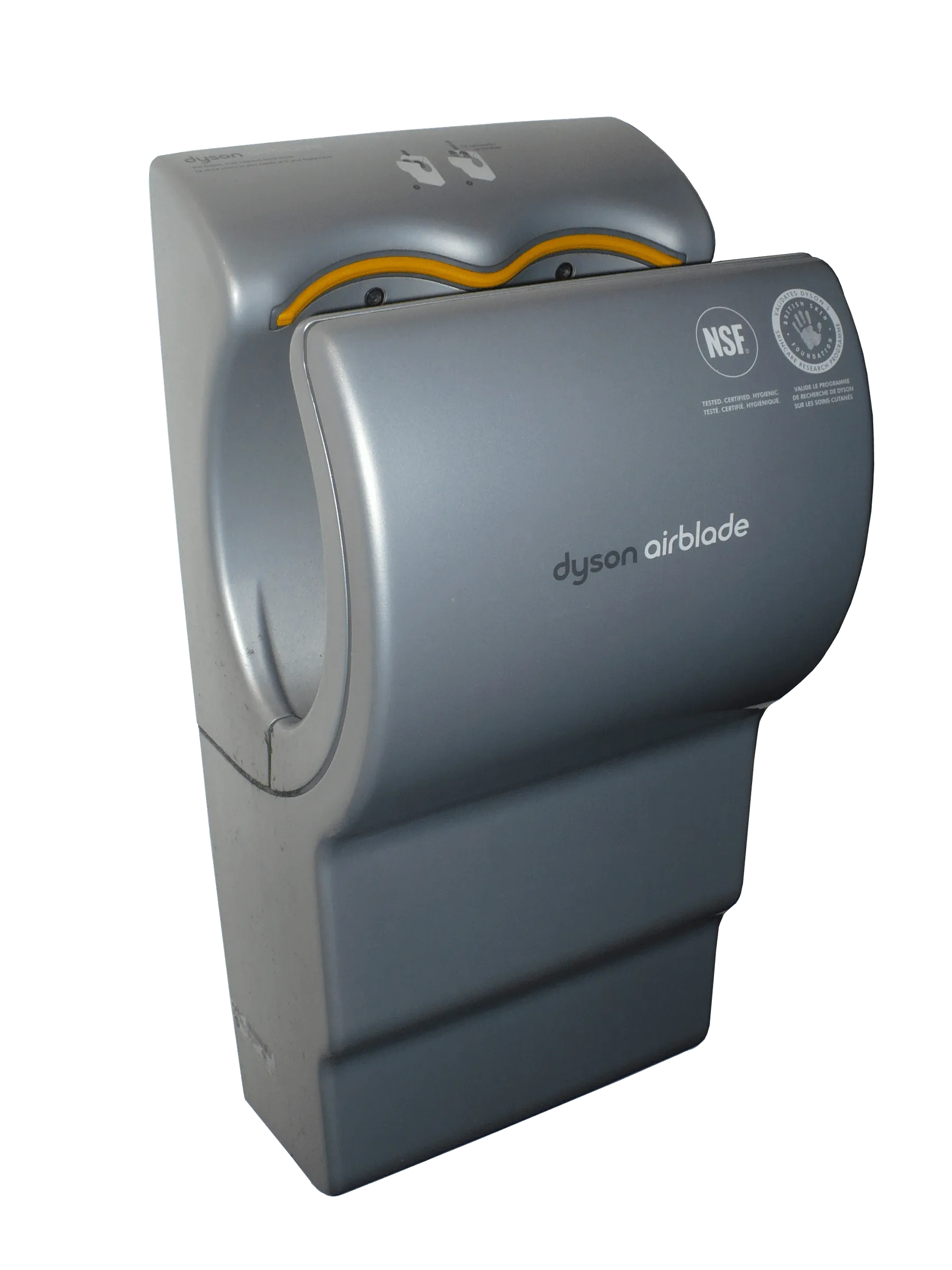
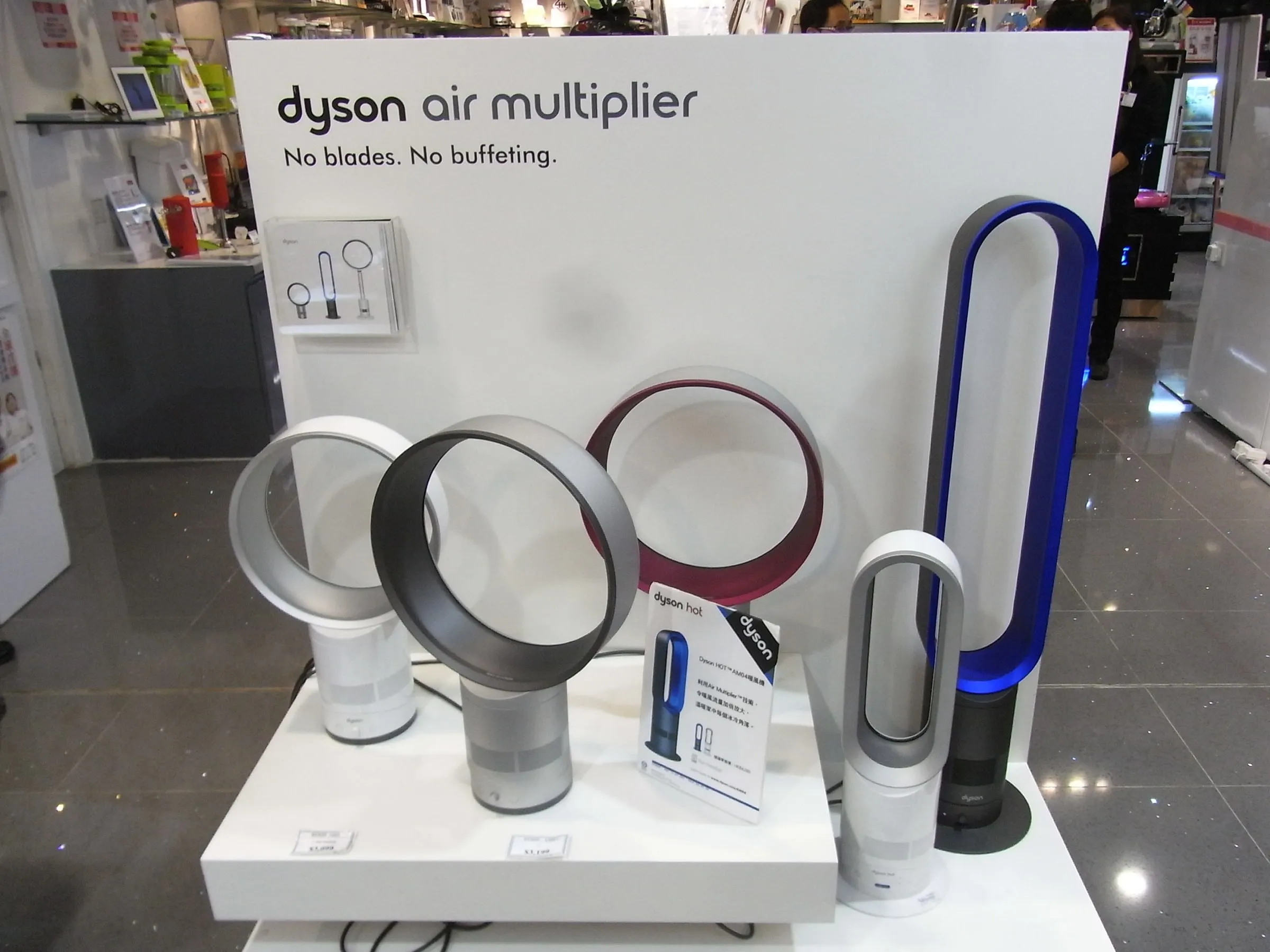
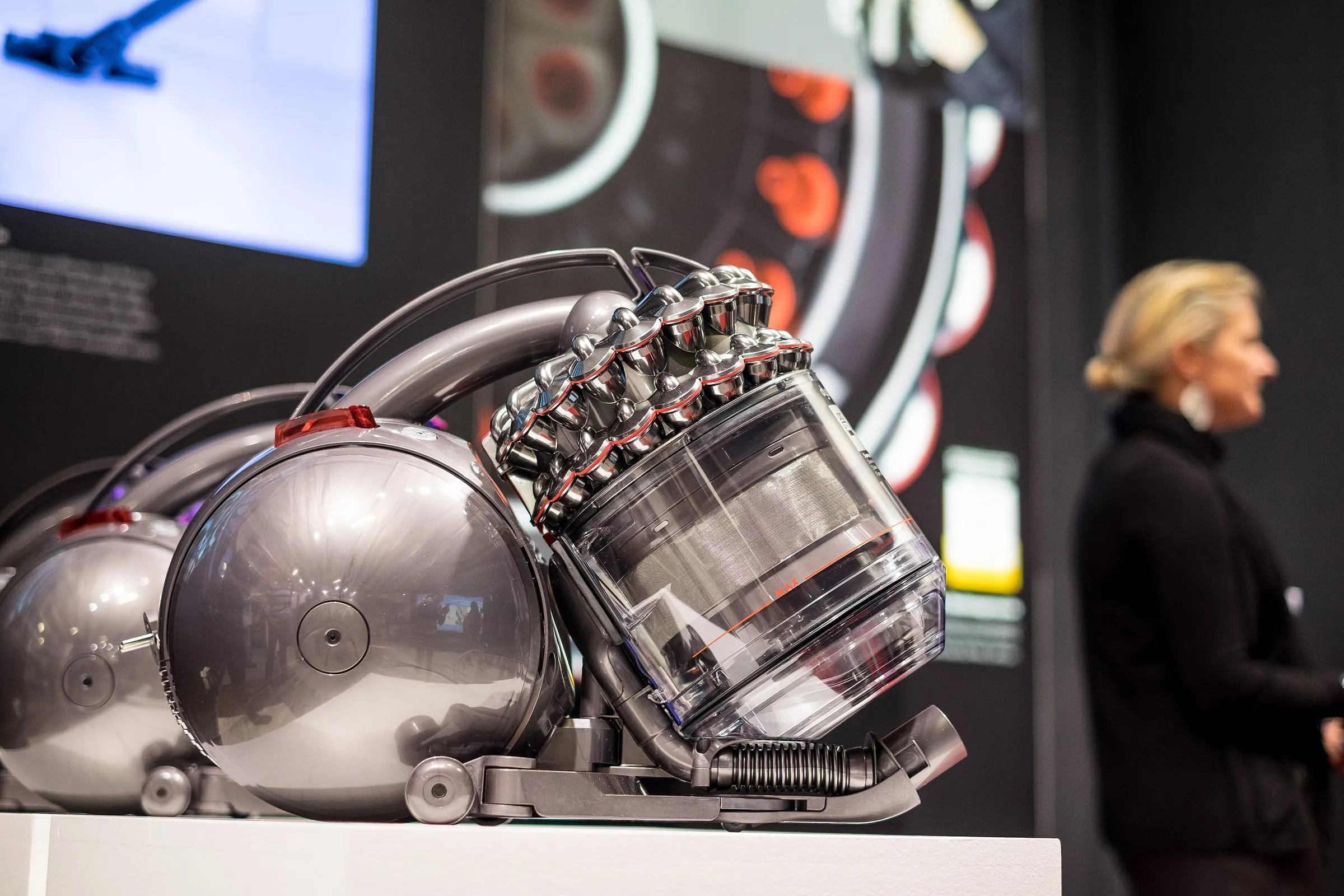
Nearly all of them are ways of moving air. The vacuums spin it to separate dirt. The fans, heaters, purifiers, hair tools and hand dryers pull it through a motor and push it out through a narrow slot, where it drags more air along with it.
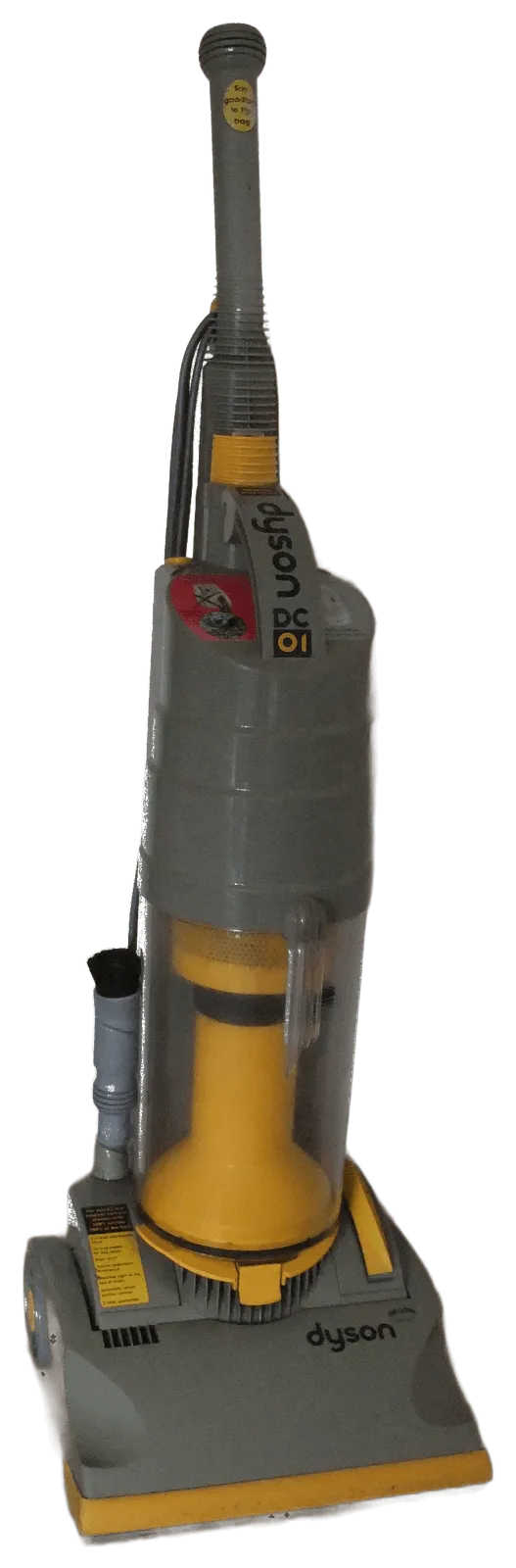
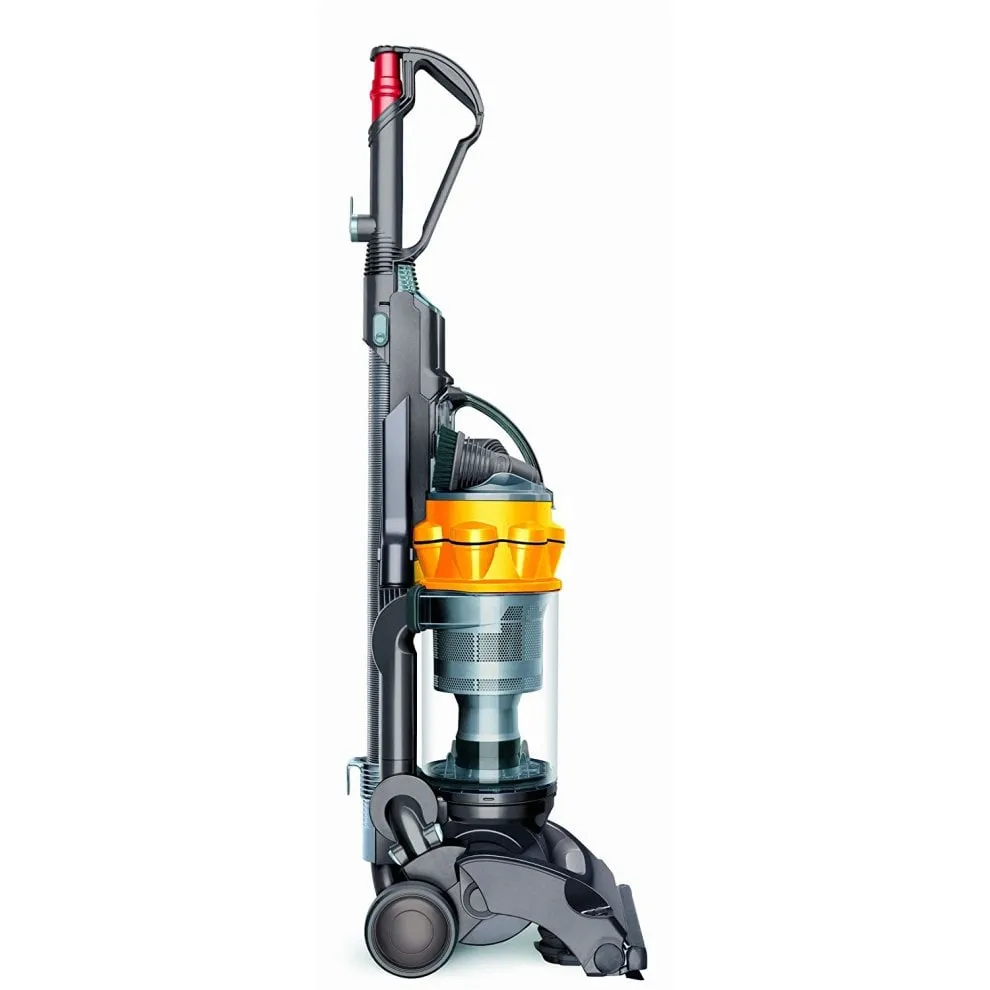
DC01 · corded upright
The first dual-cyclone vacuum sold as a Dyson. About £200, roughly twice the price of a bagged rival.
Lankyrider / CC BY-SA 4.0
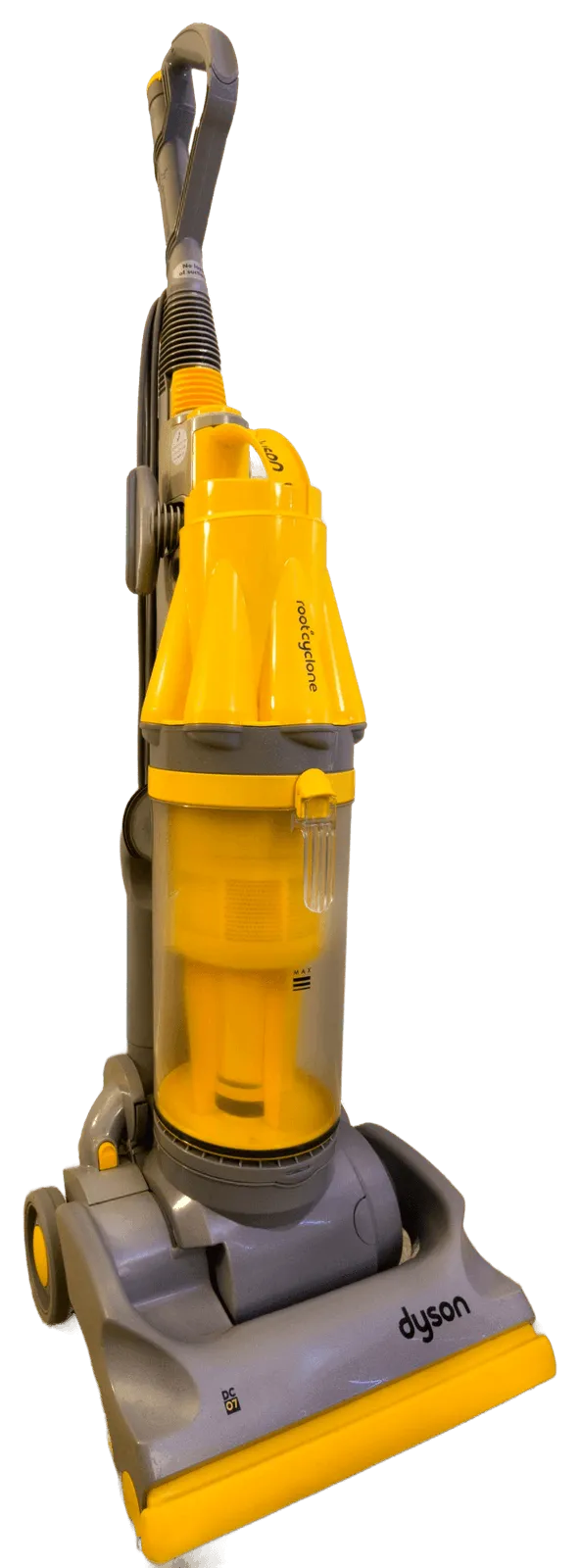
DC07 · Root Cyclone
A Root Cyclone upright, and the machine Dyson took to the United States in 2002.
F. Duten / CC BY-SA 3.0
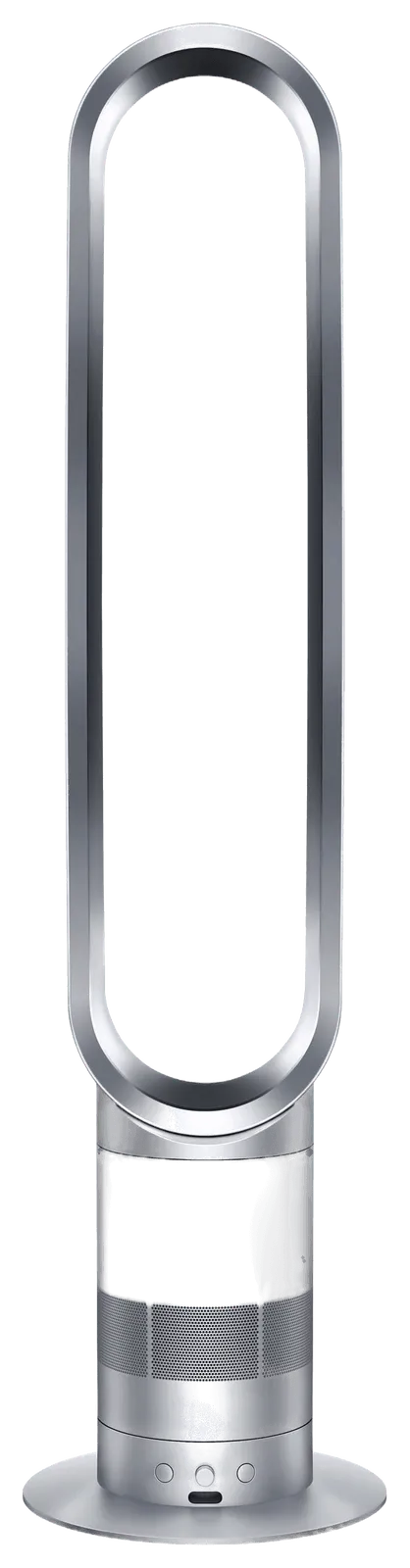
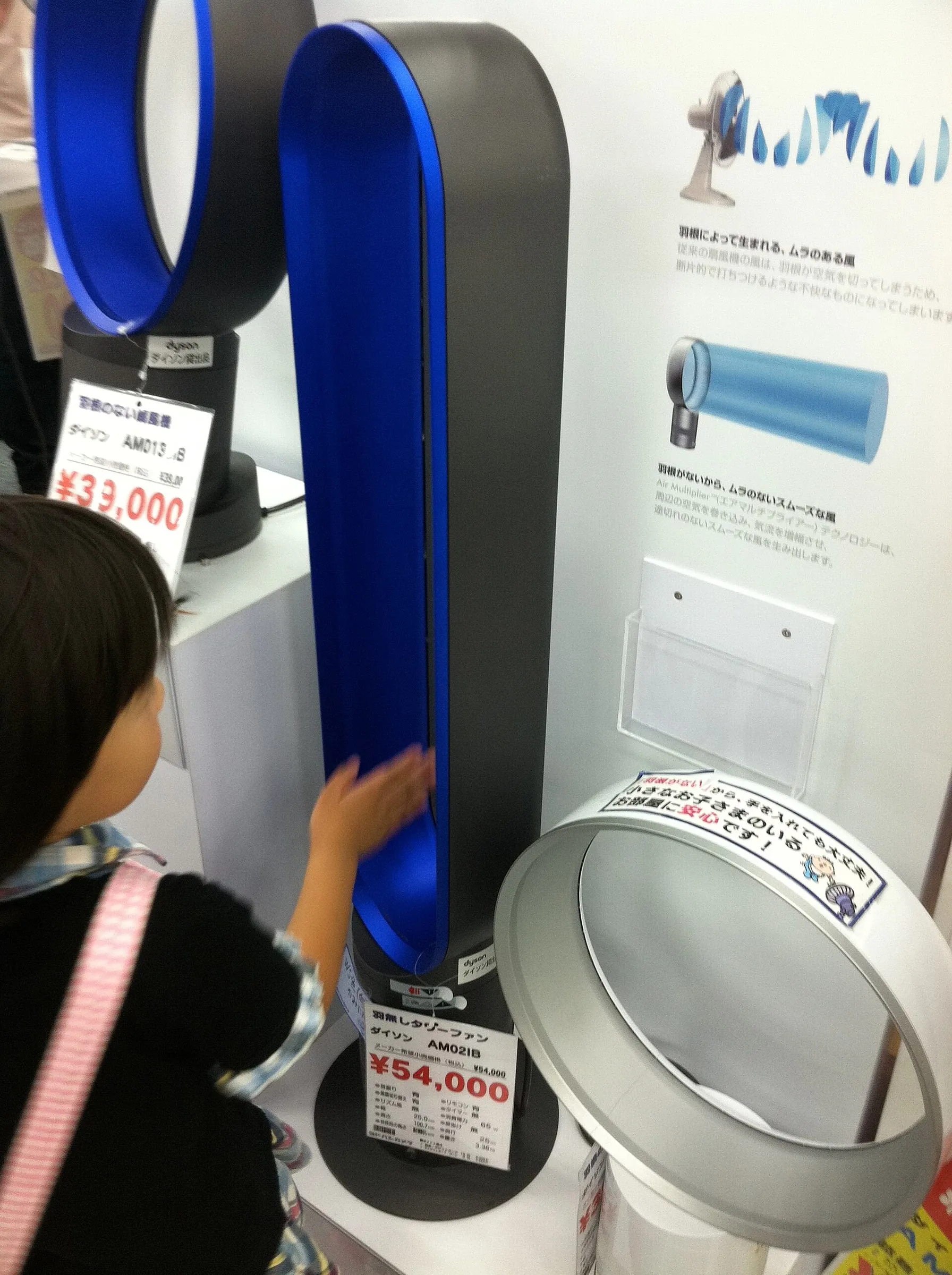
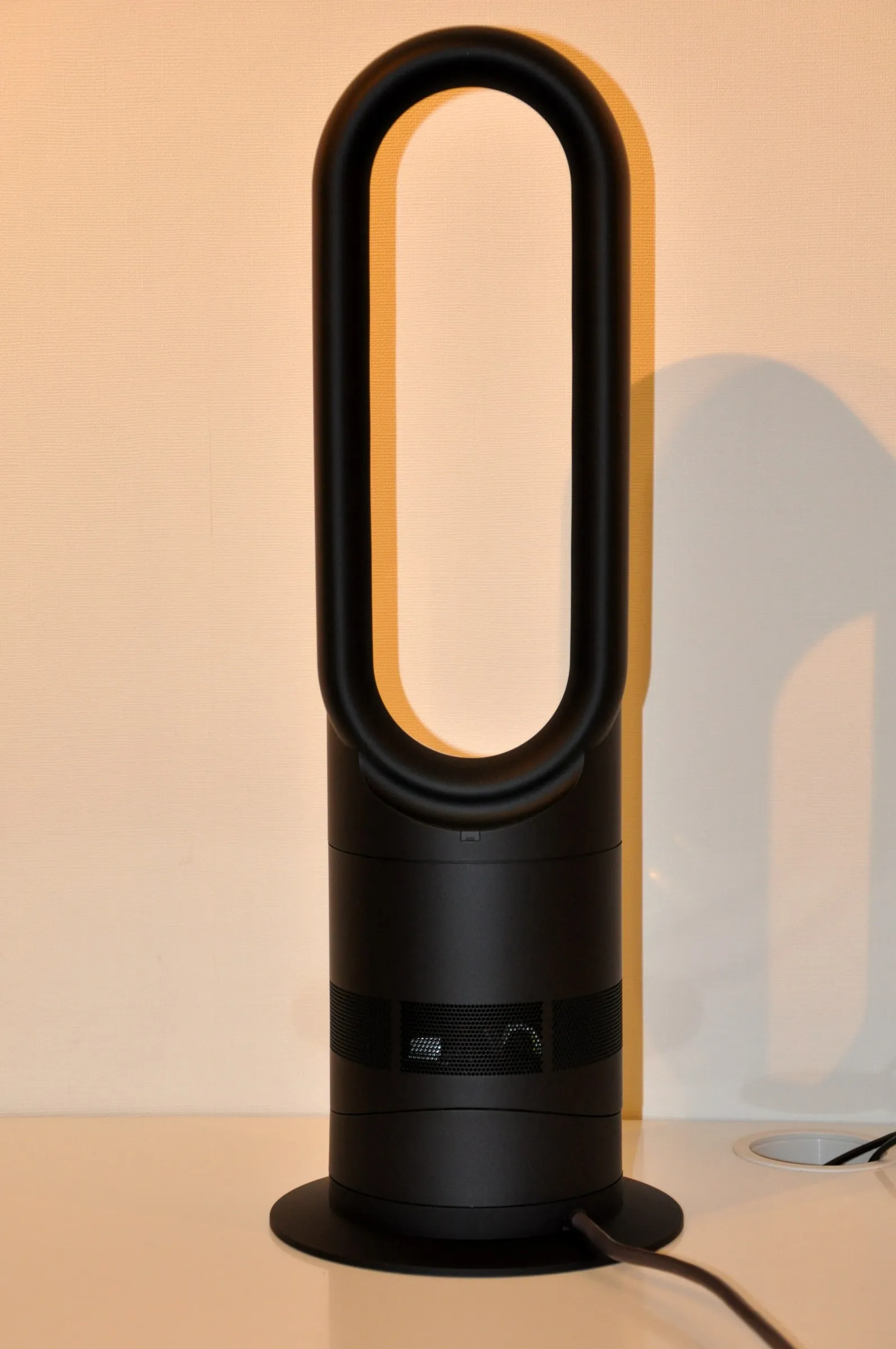
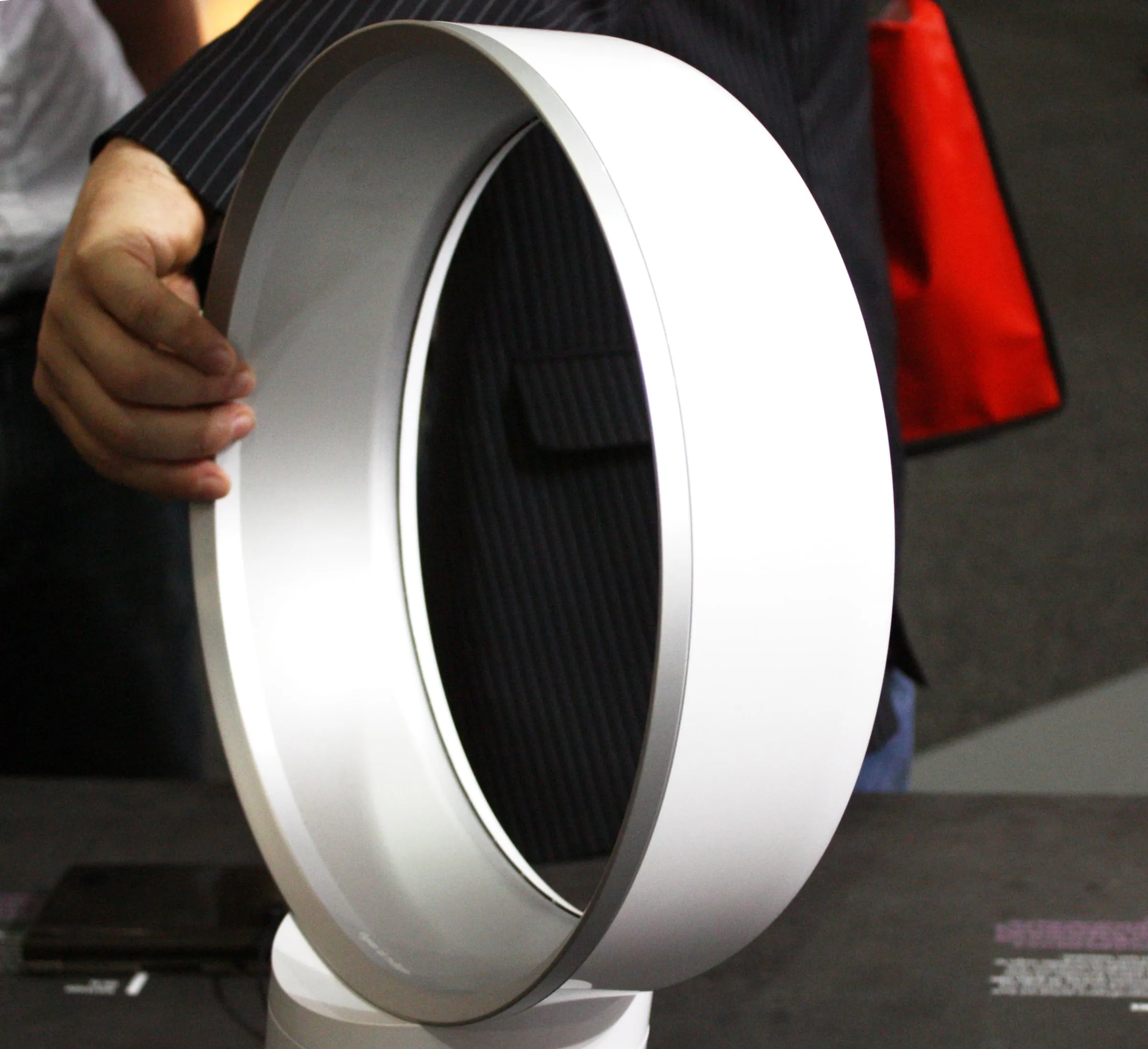
Air Multiplier · fan
Air pushed out through a narrow slot in the ring drags more air along with it.
компания Dyson / CC BY-SA 3.0
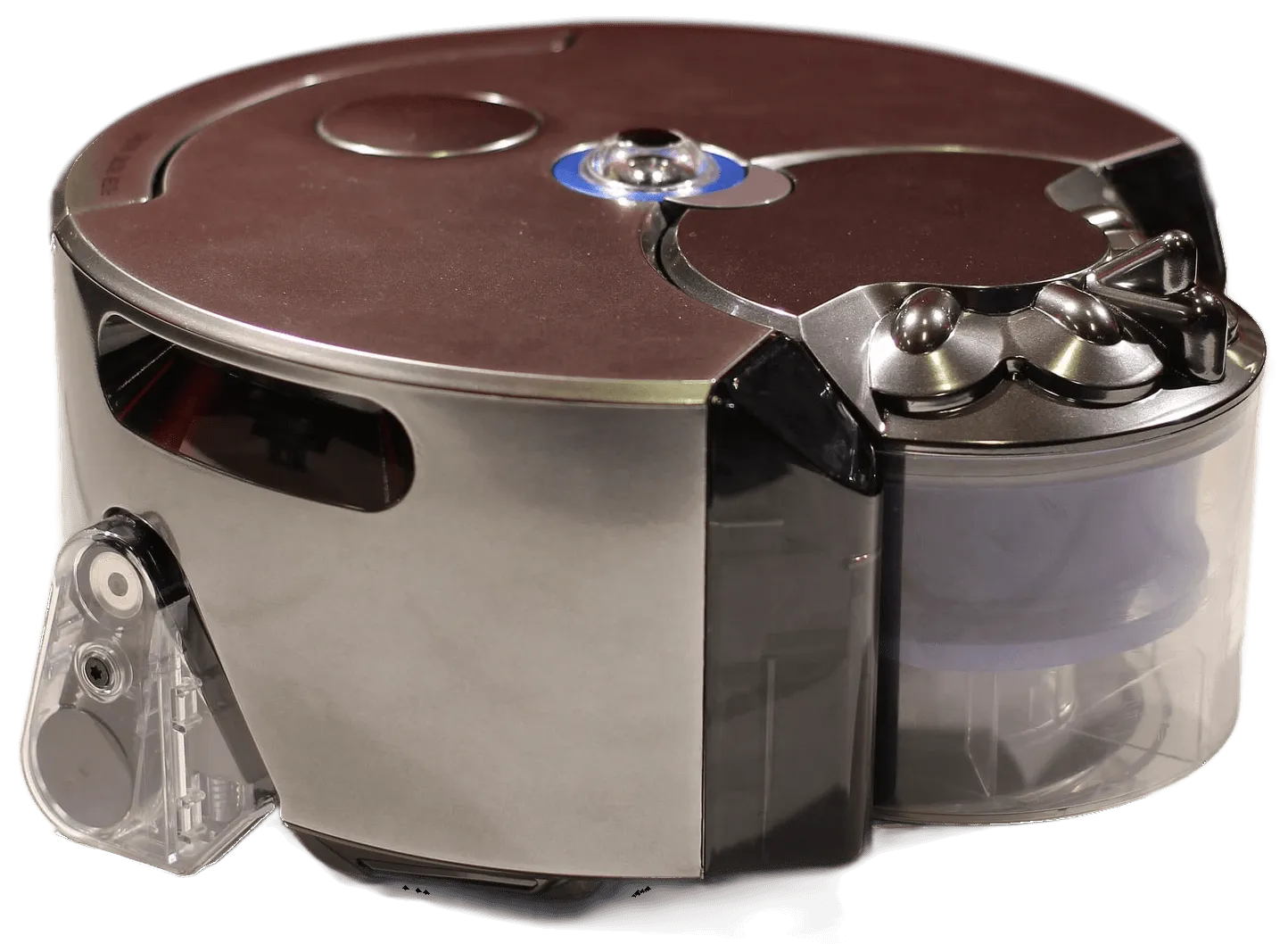
360 Eye · robot
Shown in 2014, on sale in Japan in October 2015.
Maurizio Pesce / CC BY 2.0
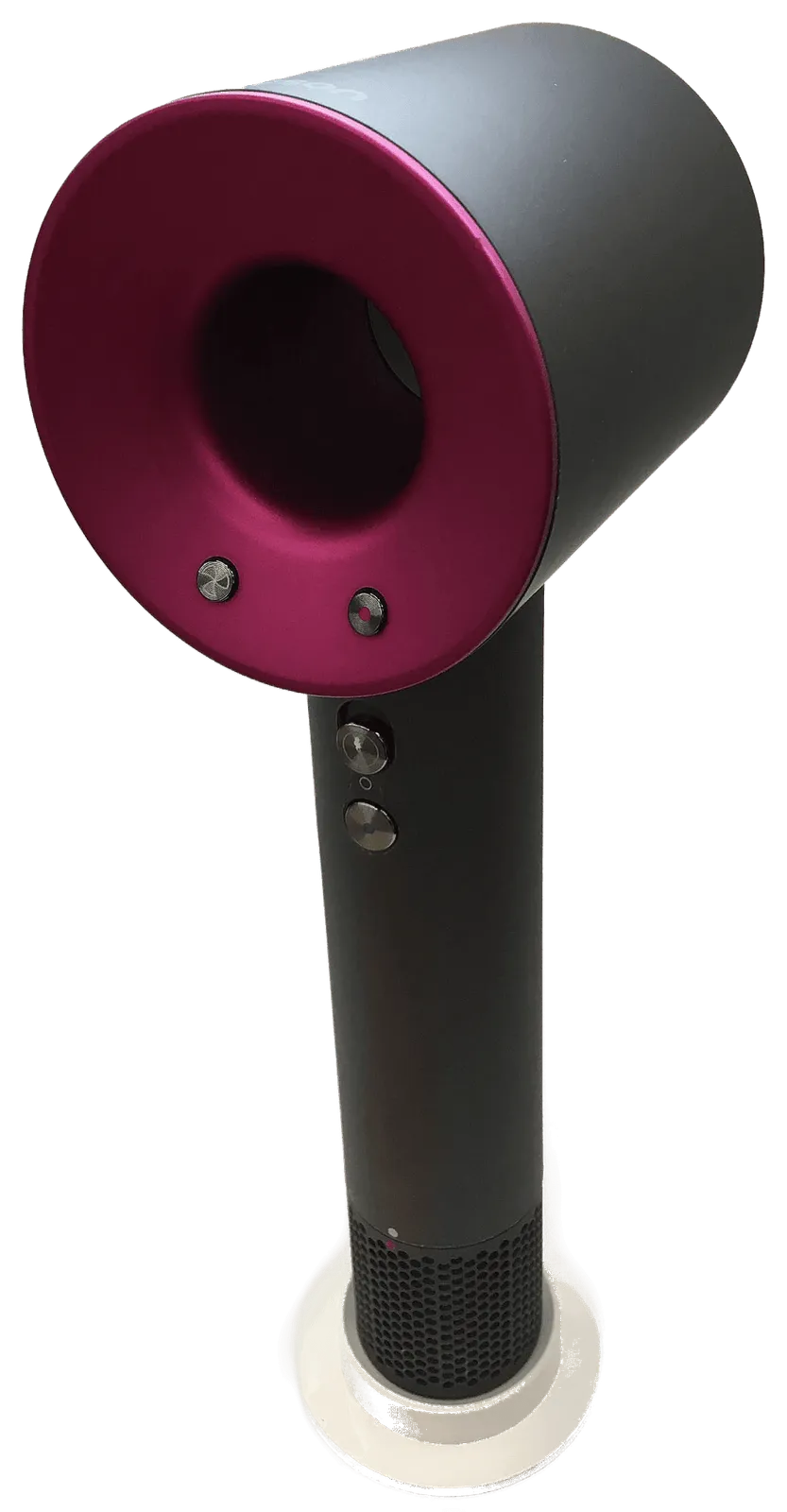
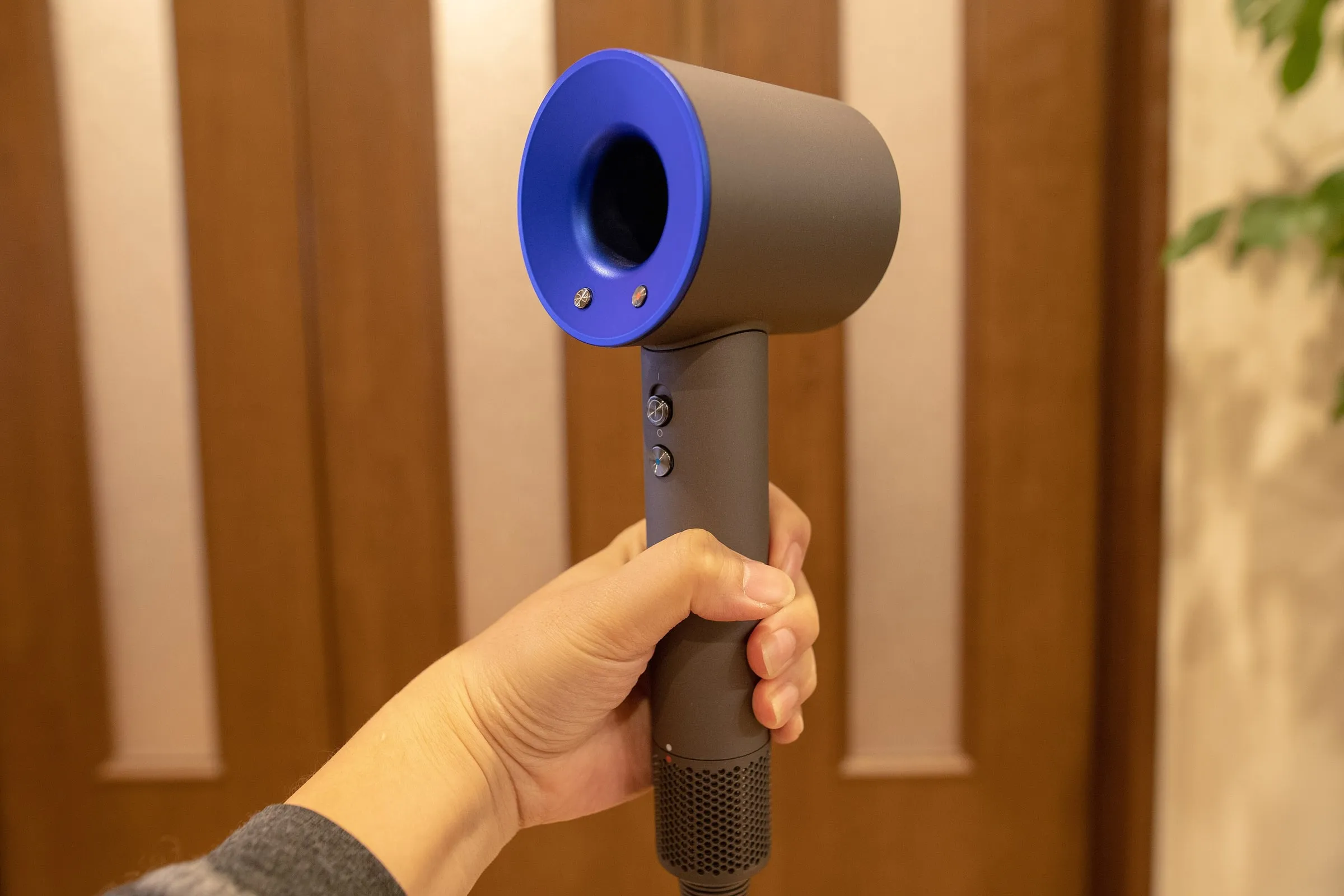
Supersonic · hair dryer
A V9 motor, 27 millimetres across and spinning at 110,000 rpm, sits in the handle.
FASTILY / CC BY-SA 4.0
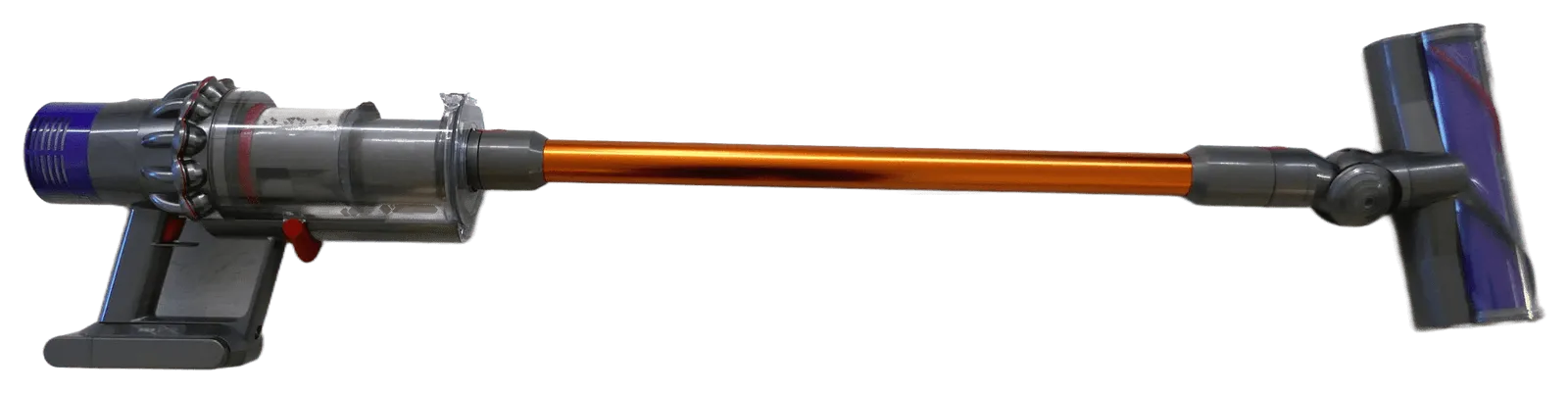
Cyclone V10 · cordless
At its launch James Dyson said the company would stop developing corded vacuum cleaners.
MattClayt / CC BY-SA 4.0
The wall below draws each major machine as a glyph, placed by launch year.
Fig. 1 · The wall
Major products by year of first launch in any market, 1986 to 2026. Hollow glyphs were built but never sold.
| G-Force | 1986 | Corded vacuums | about ¥200,000 (Japan) | Dyson’s design, made under licence in Japan. Finished in pink. | – |
|---|---|---|---|---|---|
| DC01 | 1993 | Corded vacuums | about £200 (UK) | First dual-cyclone vacuum sold under the Dyson name. | – |
| DC02 | 1995 | Corded vacuums | – | First Dyson cylinder vacuum. | – |
| Contrarotator | 2000 | Everything else | about £1,000 (UK) | Two-drum washing machine; dropped in 2005. | – |
| DC07 | 2001 | Corded vacuums | – | Root Cyclone upright; Dyson’s US debut in 2002. | – |
| DC06 | 2001 | Robot vacuums | – | Robot vacuum taken to home trials, never sold. | Never sold |
| DC12 | 2004 | Corded vacuums | – | Compact cylinder for Japan, with Dyson’s first digital motor. | – |
| DC15 The Ball | 2005 | Corded vacuums | – | Rides on a ball for steering. | – |
| DC16 | 2006 | Cordless vacuums | AU$299 (Australia) | Handheld with Root Cyclone and a lithium-ion battery. | – |
| Airblade | 2006 | Hand dryers | – | Hand dryer; UK first, US late 2007. | – |
| Air Multiplier | 2009 | Fans & purifiers | about US$300 (US) | The bladeless fan: air pushed through a slot in a ring. | – |
| DC35 Digital Slim | 2011 | Cordless vacuums | €269 (Austria) | First stick with a digital motor: 104,000 rpm, 15 min. | – |
| Hot AM04 | 2011 | Fans & purifiers | US$399 (US) | Air Multiplier with a heater. | – |
| DC59 | 2013 | Cordless vacuums | US$500 (US, 2014) | V6 motor; 100 AW on boost; 2.1 kg; 20 min. | – |
| Airblade Tap | 2013 | Hand dryers | £999.99 (UK) | Tap and hand dryer in one. | – |
| Airblade V | 2013 | Hand dryers | £499.99 (UK) | Compact wall dryer. | – |
| 360 Eye | 2015 | Robot vacuums | ¥138,000 (Japan, before tax) | Shown in 2014; on sale in Japan, October 2015. | – |
| Pure Cool | 2015 | Fans & purifiers | – | First Dyson purifier fan. | – |
| V8 | 2016 | Cordless vacuums | ¥76,800 (Japan, entry model) | 115 AW; 2.6 kg; 40 min. | – |
| Pure Cool Link | 2016 | Fans & purifiers | US$499.99 (US) | First Dyson machine with an app. | – |
| Supersonic | 2016 | Hair tools | £299 (UK) | V9 motor, 110,000 rpm, in the handle. | – |
| Cyclone V10 | 2018 | Cordless vacuums | – | 150 AW; 125,000 rpm; 60 min. Dyson stops developing corded vacuums. | – |
| Airwrap | 2018 | Hair tools | from about £400 (UK) | Curls hair with air rather than heat alone. | – |
| V11 | 2019 | Cordless vacuums | £599 (UK) | 185 AW; 3.05 kg; 60 min. | – |
| 360 Heurist | 2019 | Robot vacuums | ¥118,800 (Japan, incl. tax) | Second-generation robot. | – |
| Airblade 9kJ | 2019 | Hand dryers | – | Dries hands in 10 seconds, says Dyson. | – |
| Lightcycle | 2019 | Everything else | US$600 (US) | Task lamp that tracks daylight colour. | – |
| N526 car | 2019 | Everything else | – | Seven-seat electric SUV, cancelled October 2019 after about £500m. | Never sold |
| Corrale | 2020 | Hair tools | £399.99 (UK) | Cordless straightener with flexing plates. | – |
| V15 Detect | 2021 | Cordless vacuums | – | 230 AW; laser dust detection; about 3.1 kg; 60 min. | – |
| V12 Detect Slim | 2021 | Cordless vacuums | – | 150 AW; 2.2 kg; 60 min. | – |
| Gen5detect | 2022 | Cordless vacuums | US$949.99 (US) | 262 AW; 135,000 rpm; 3.5 kg; 70 min. | – |
| Zone | 2022 | Everything else | US$949 (US) | Headphones with an air-purifying visor. | – |
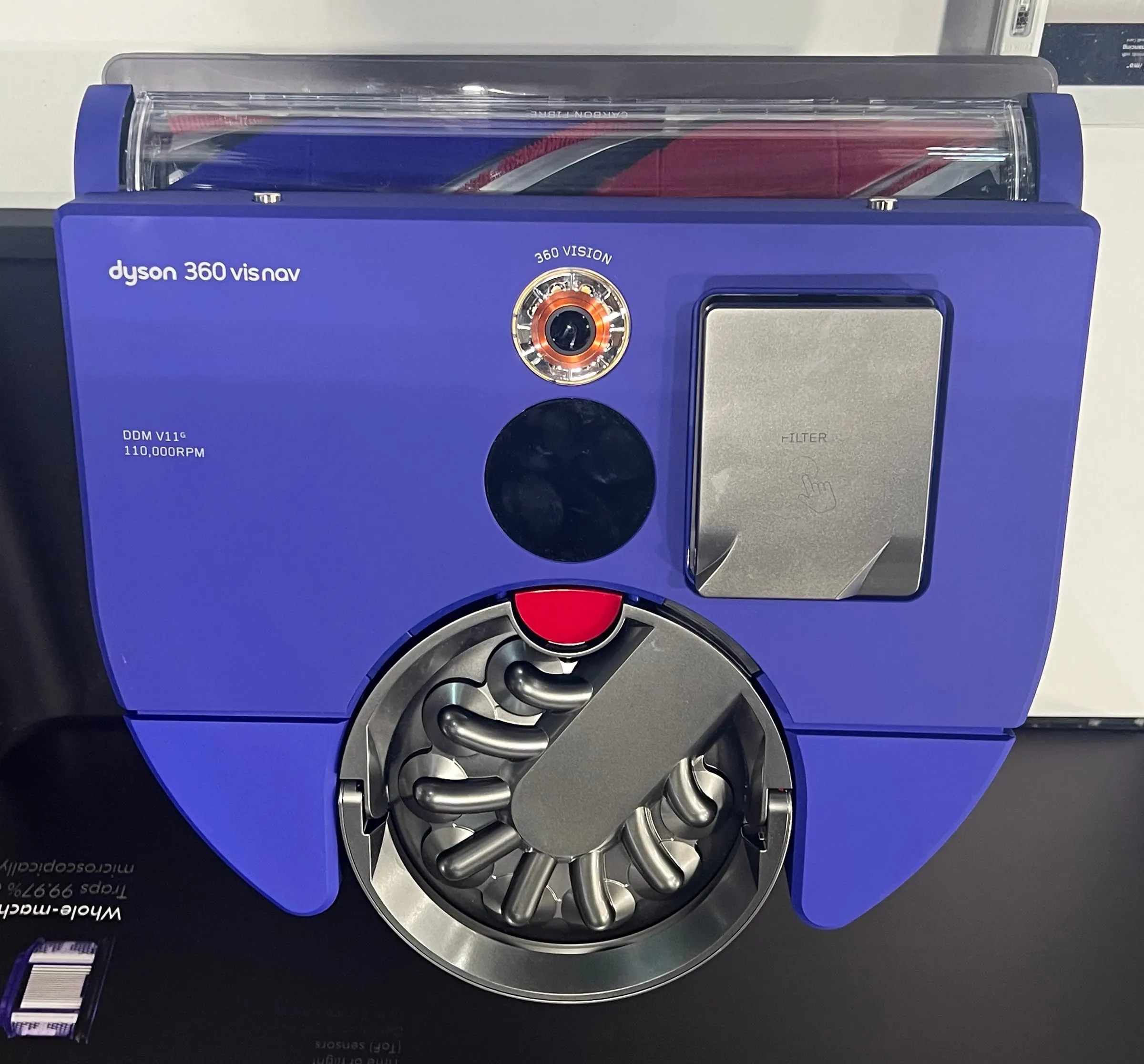
| 360 Vis Nav | 2023 | Robot vacuums | £1,399.99 (UK) | Third-generation robot. | – |
| Airstrait | 2023 | Hair tools | US$499.99 (US) | Straightens wet hair with air. | – |
| WashG1 | 2024 | Wet floor | – | Dyson’s first dedicated wet floor cleaner. | – |
| Supersonic Nural | 2024 | Hair tools | £399.99 (UK) | Hair dryer with a distance sensor. | – |
| OnTrac | 2024 | Everything else | US$499.99 (US) | Noise-cancelling headphones. | – |
| V16 Piston Animal | 2025 | Cordless vacuums | £749.99 (UK) | 315 AW; 3.46 kg; 70 min. | – |
| PencilVac | 2025 | Cordless vacuums | – | 55 AW; 140,000 rpm, 28 mm motor; 1.8 kg; 38 mm handle. Japan first. | – |
| Spot+Scrub Ai | 2025 | Robot vacuums | – | Robot that vacuums and mops, and re-cleans stains. | – |
| HushJet Compact | 2025 | Fans & purifiers | – | Compact purifier with a quieter nozzle. | – |
| Airwrap Co-anda2x | 2025 | Hair tools | – | Hyperdymium 2 motor. | – |
| Nurovi range | 2026 | Robot vacuums | from £499.99 (UK) · US$549 (US) | Three robots shown in Berlin, September 2026; the top model is due in 2027. | – |
| PencilWash | 2026 | Wet floor | £299.99 (UK) | 2.2 kg wet cleaner on a 38 mm handle. | – |
| HushJet range | 2026 | Fans & purifiers | – | Three HushJet purifiers, one with a heater, shown in Berlin, September 2026. | – |
| Airsmooth | 2026 | Hair tools | £199.99 (UK) | Dyson’s first dedicated hot-air brush. | – |
| Corrale CoolShine | 2026 | Hair tools | £249.99 (UK) | Straightener with a water-cooled attachment. | – |
Fans, heaters, hand dryers, a hair dryer and a pair of headphones: the machines that blow air at you.
03 · The motor
Each generation of Dyson’s own motor has spun at least as fast as the last.
The spread was made possible by the motor. Conventional brushed motors were big, heavy and slow, so Dyson designed its own: brushless, electronically switched, and small enough to sit in a hand dryer or a hair dryer handle. The company calls them digital motors.
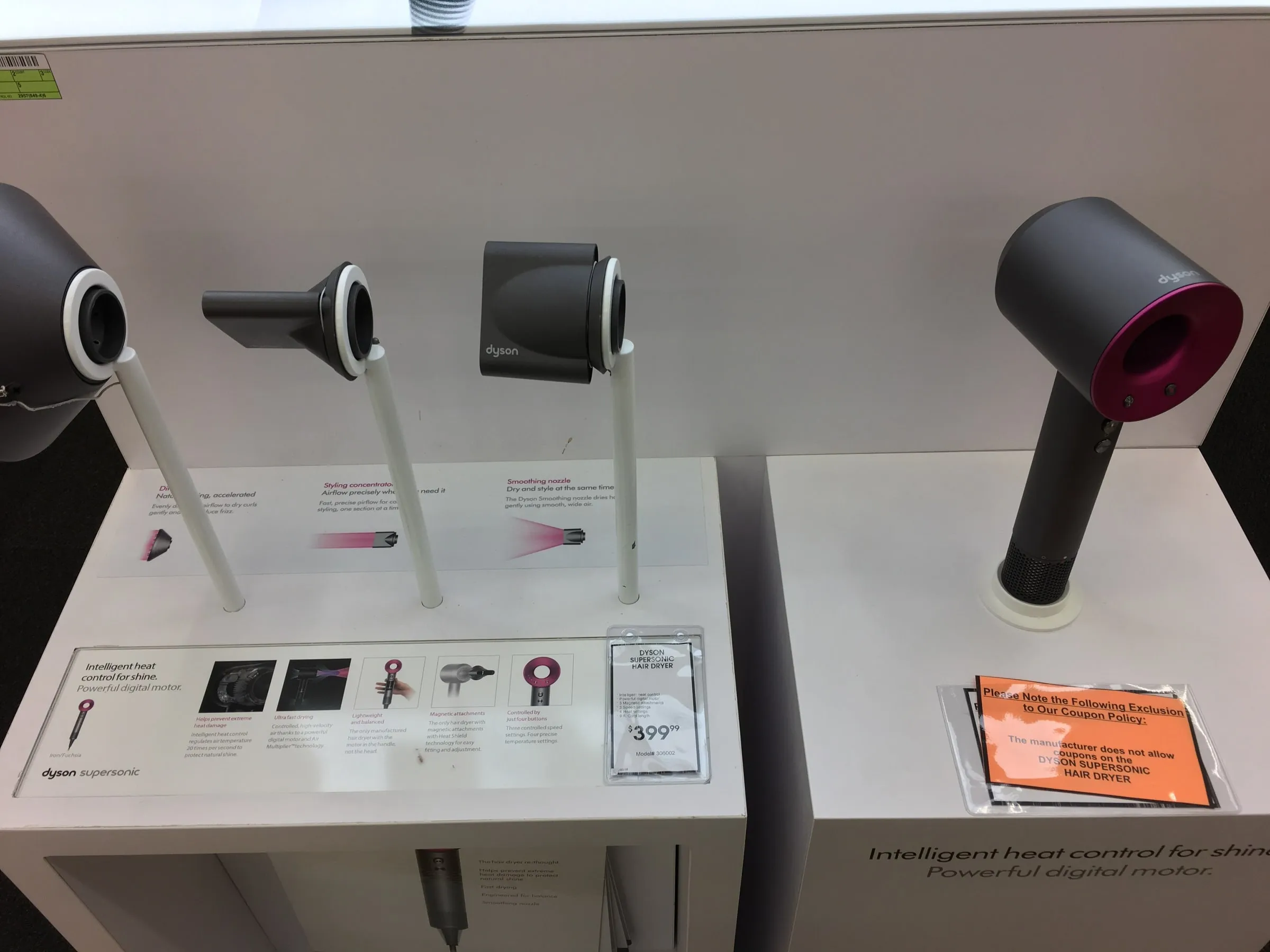
The first stick vacuum built around one, the DC35 of 2011, spun at 104,000 rpm. The Supersonic hair dryer of 2016 put a 27-millimetre motor running at 110,000 rpm in its handle. The Gen5detect of 2022 reached 135,000 rpm, up to nine times faster than a Formula One engine, Dyson says. The PencilVac, unveiled in 2025, fits a 28-millimetre, 140,000 rpm motor inside a 38-millimetre handle.
Fig. 2 · Motors
Top speed of Dyson’s digital motors, revolutions per minute, by year of the first product to use each one.
| DC35 (V2) | 2011 | vacuum | 104,000 |
|---|---|---|---|
| DC59 (V6) | 2013 | vacuum | 107,000 |
| V8 | 2016 | vacuum | 110,000 |
| Supersonic (V9) | 2016 | hair | 110,000 |
| Cyclone V10 | 2018 | vacuum | 125,000 |
| Gen5detect | 2022 | vacuum | 135,000 |
| PencilVac | 2025 | vacuum | 140,000 |
2025 · PencilVac · revolutions per minute
140,000
04 · Cordless
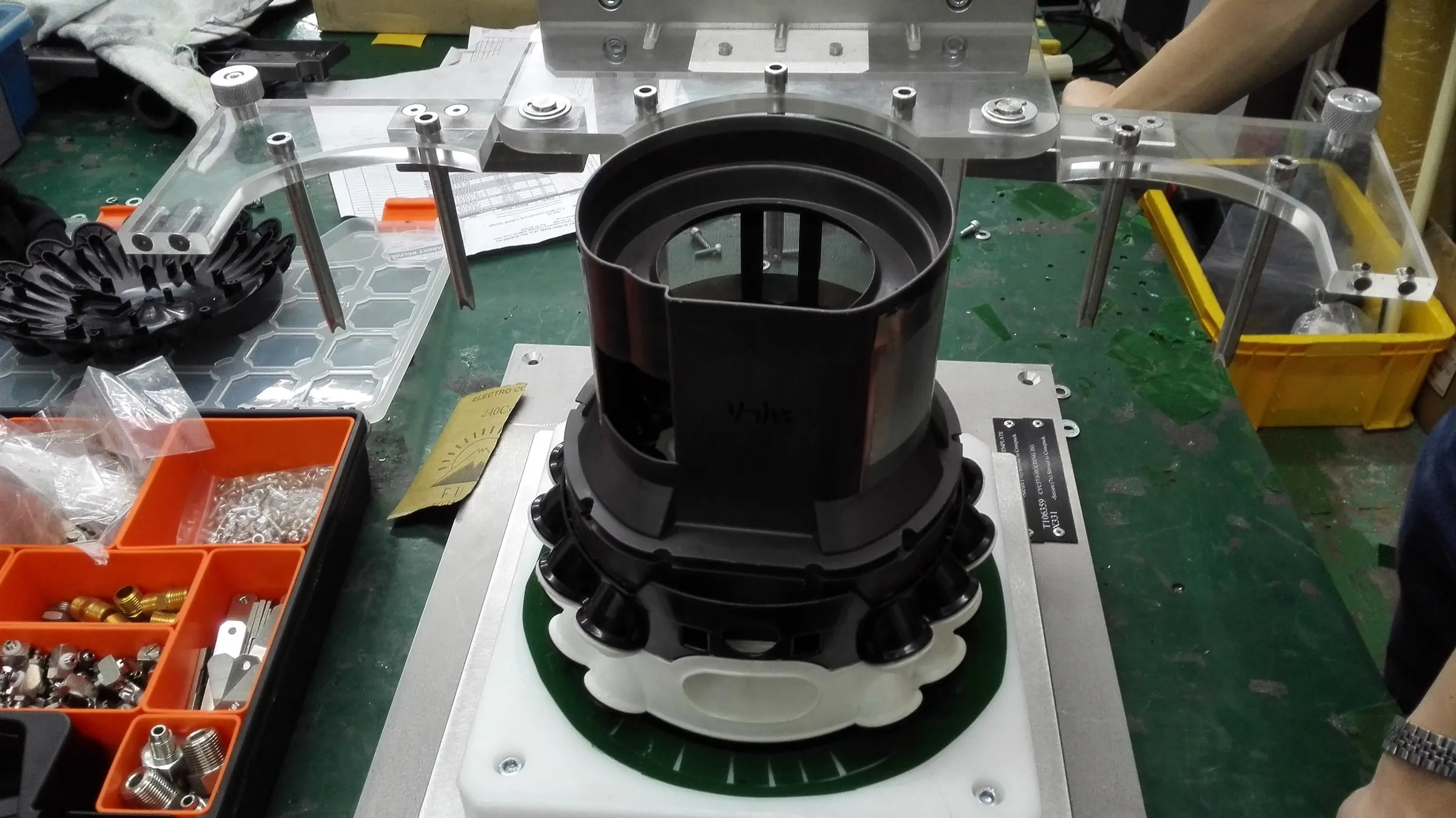
The faster motors went first into cordless stick vacuums, and those took over the business. In 2018, launching the Cyclone V10, James Dyson said the company would stop developing corded vacuum cleaners.
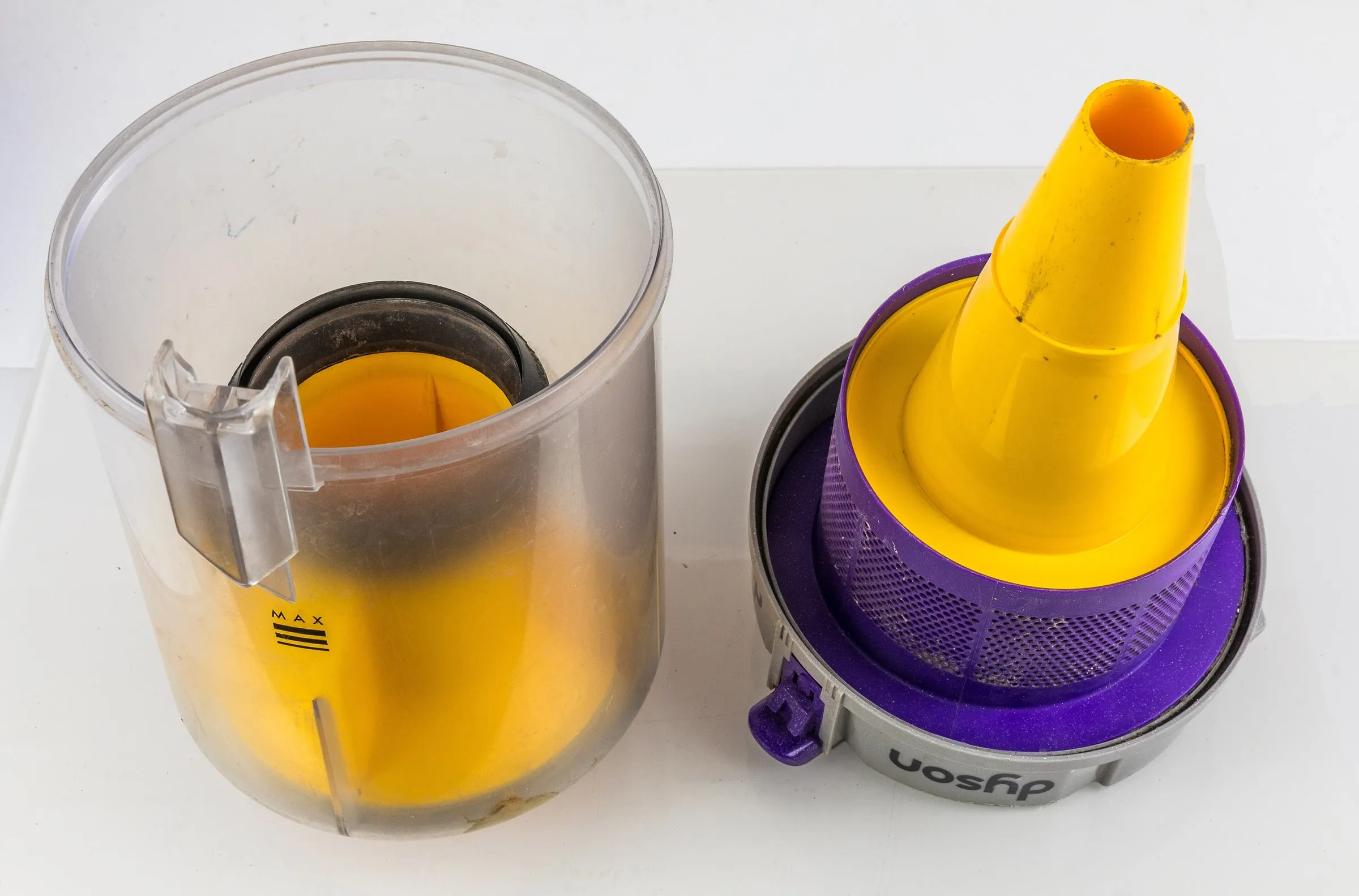
From a handheld to the whole vacuum: the cyclone, the motor and the battery in one body.
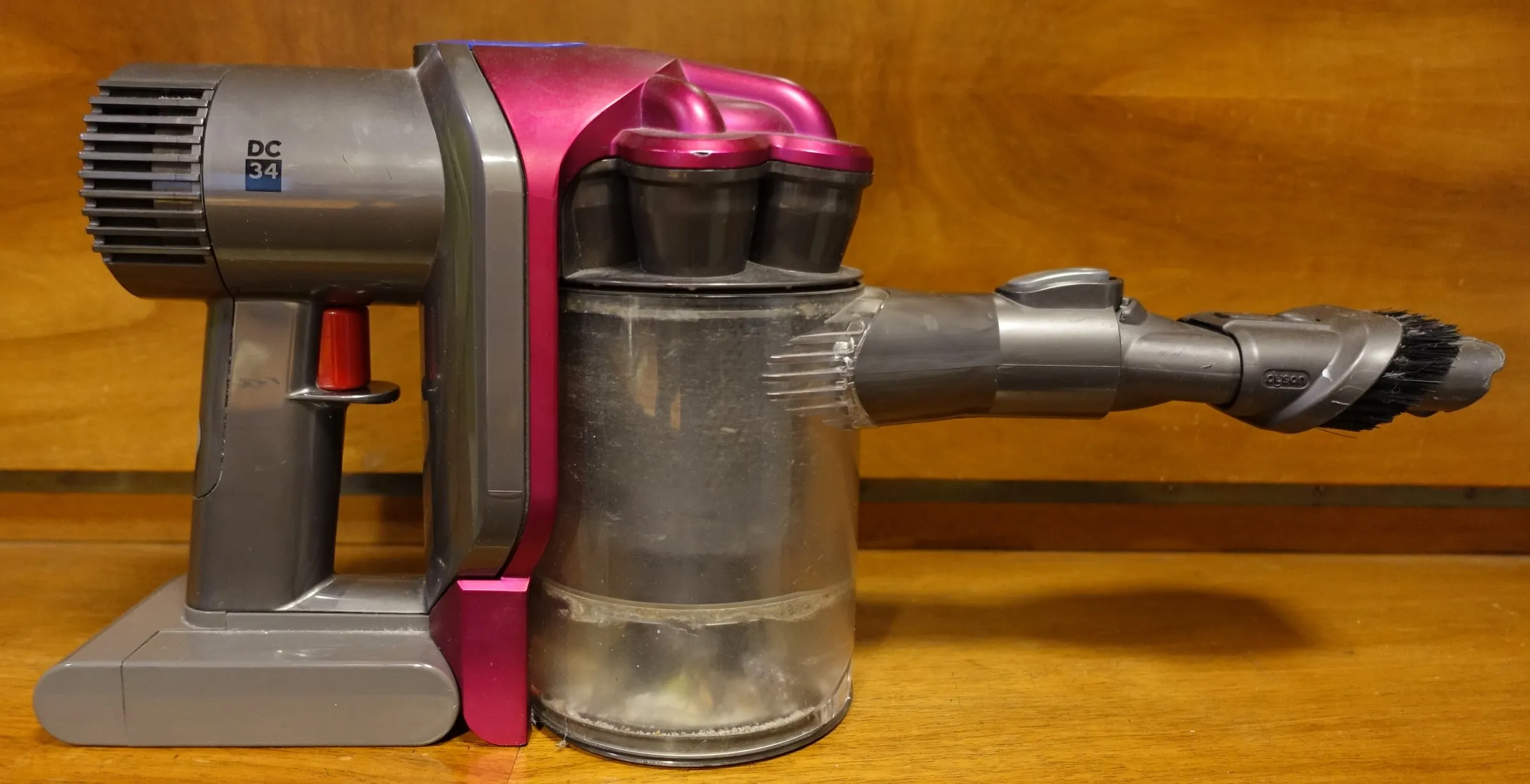
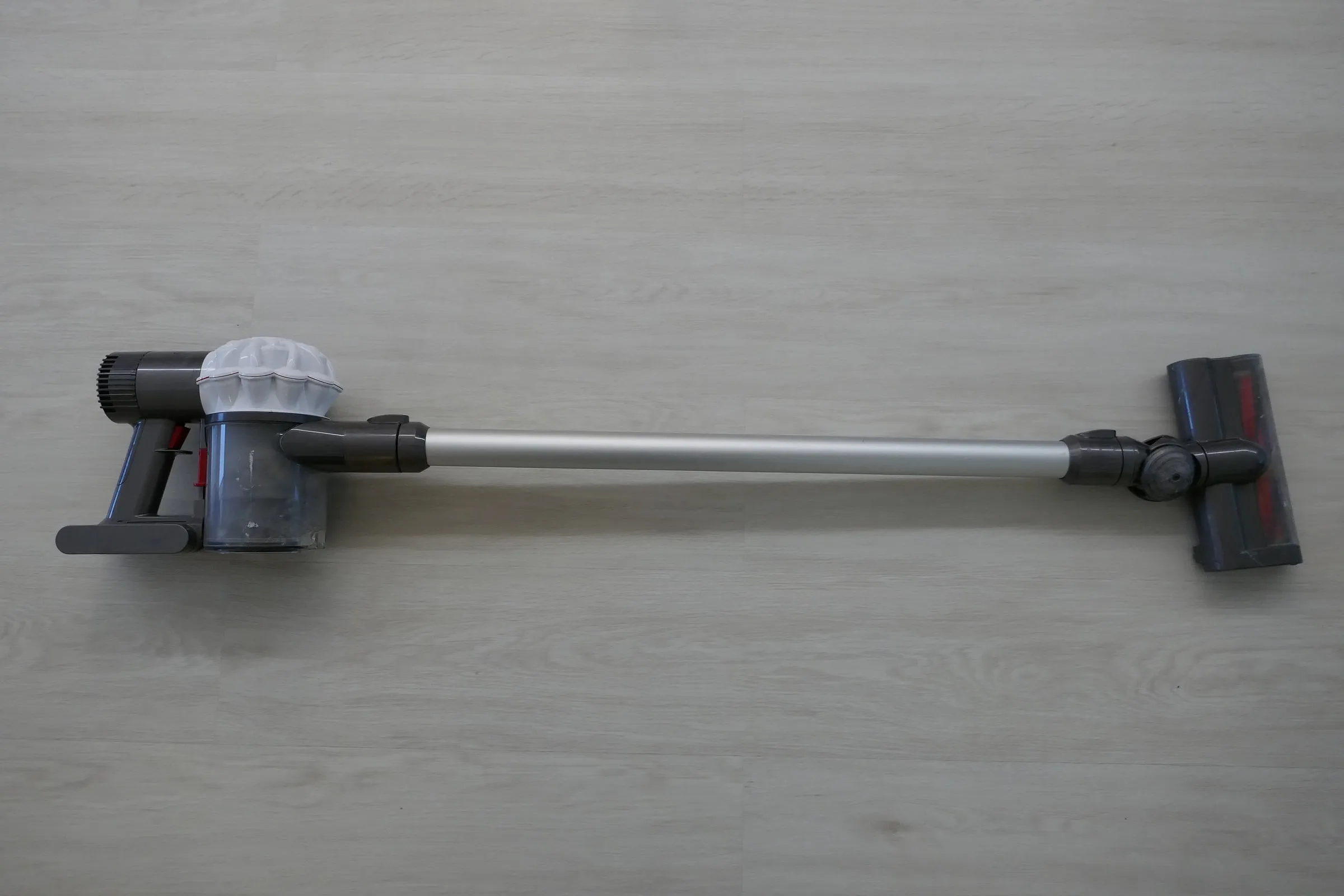
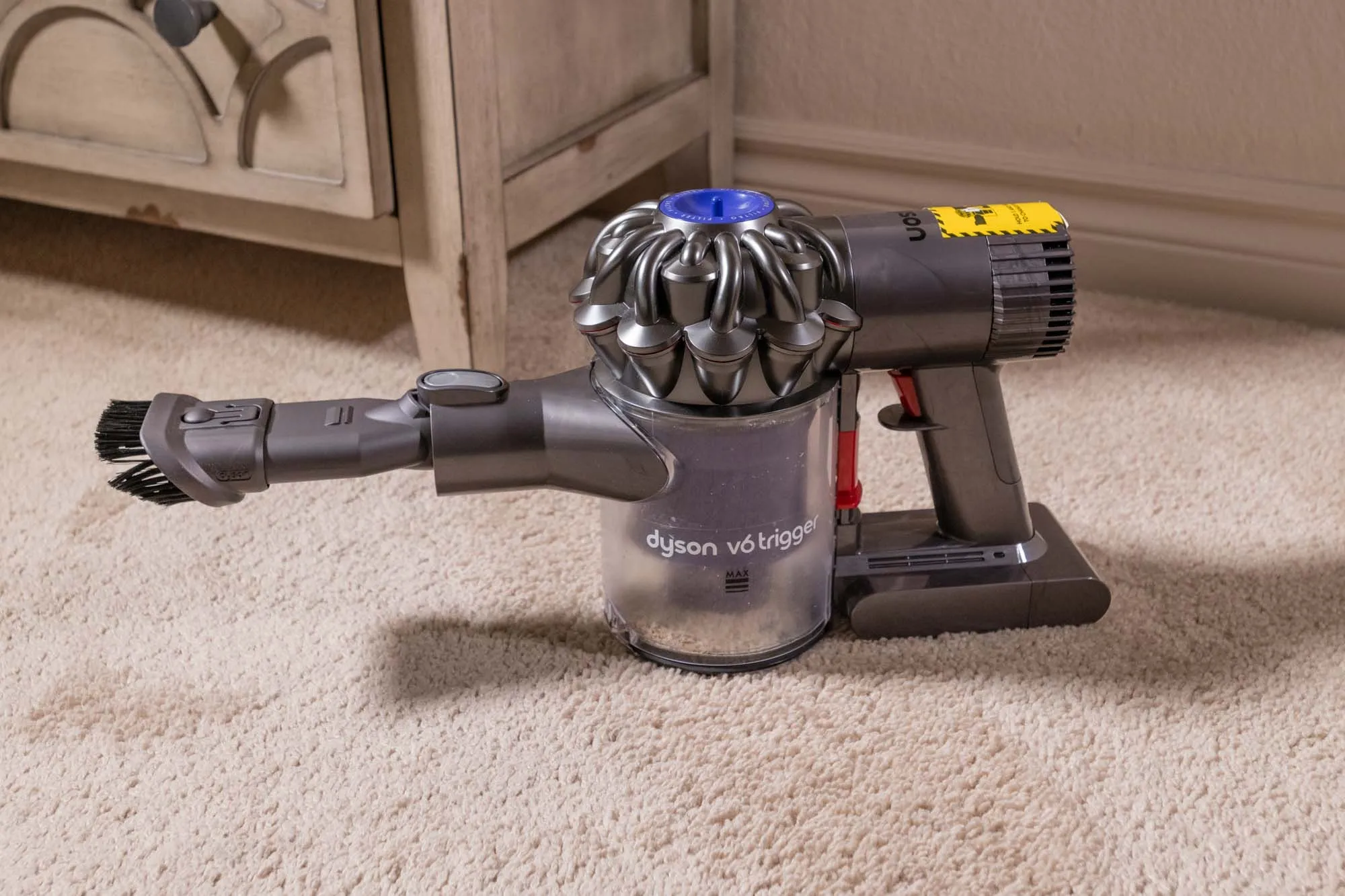
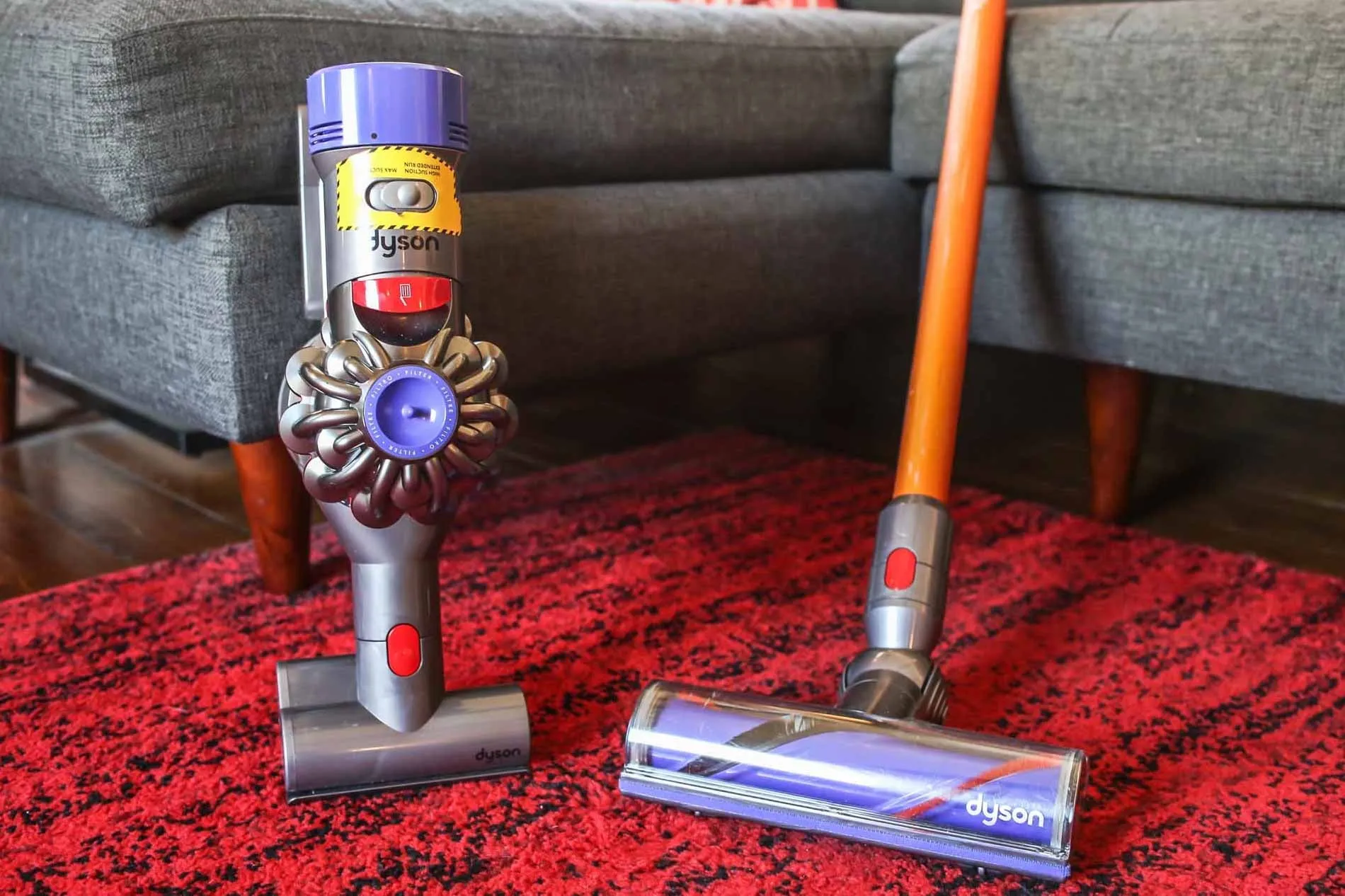
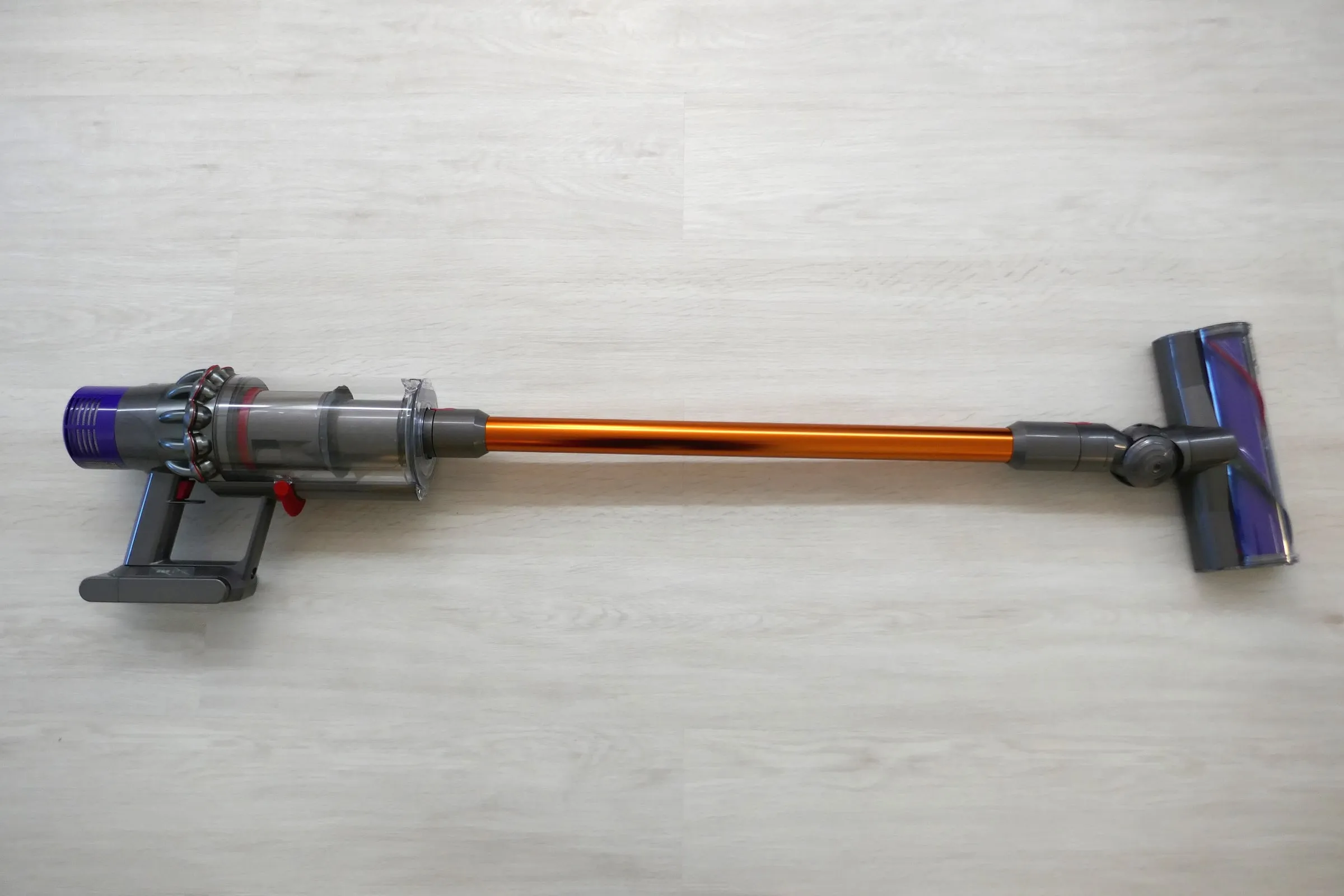
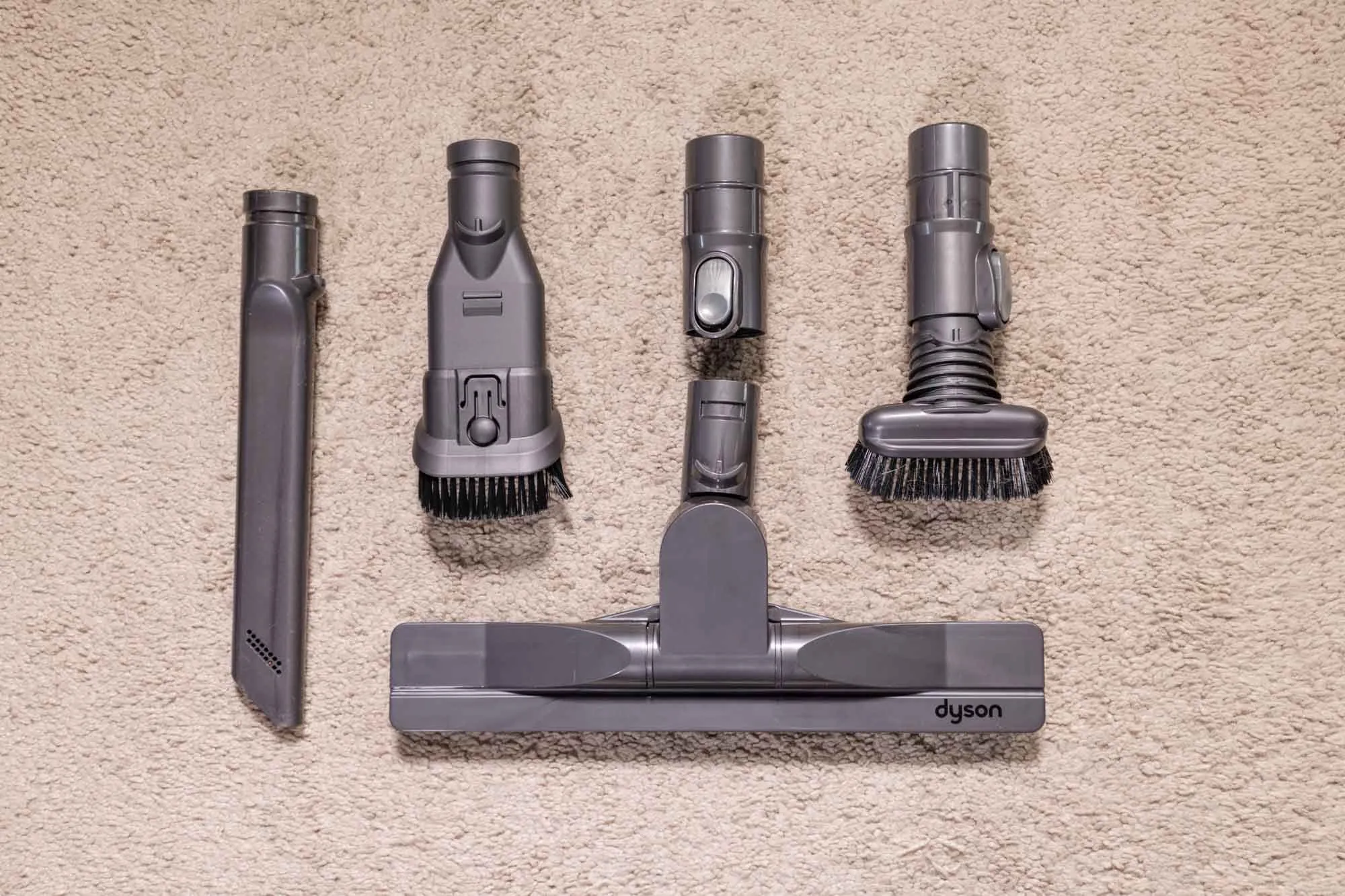
Each flagship has pulled harder than the last. Dyson rates suction in air watts, a measure of airflow and pressure together. The DC59 of 2013 managed 100 air watts on boost; the V16 Piston Animal of 2025 claims 315. Run time went from 20 minutes to 70. The cost was weight. The flagship grew from 2.1 kilograms to nearly 3.5.
DC59 (2013) against V16 Piston Animal (2025)
Lately Dyson has started a second line going the other way. The V12 Detect Slim (2021) gave up some suction to weigh 2.2 kg. The PencilVac, at 1.8 kg, gives up most of it: 55 air watts, about half what the DC59 managed on boost a decade earlier.
Fig. 3 · Cordless
Dyson cordless stick vacuums at launch: weight in kilograms against suction, run time or suction per kilogram. Flagships are joined in order of release.
| DC59 | 2013 | Flagship | 100 | 2.11 | 20 | 107,000 |
|---|---|---|---|---|---|---|
| V8 | 2016 | Flagship | 115 | 2.61 | 40 | 110,000 |
| V10 | 2018 | Flagship | 150 | 2.61 | 60 | 125,000 |
| V11 | 2019 | Flagship | 185 | 3.05 | 60 | 125,000 |
| V15 Detect | 2021 | Flagship | 230 | about 3.1 | 60 | 125,000 |
| Gen5detect | 2022 | Flagship | 262 | 3.5 | 70 | 135,000 |
| V16 Piston Animal | 2025 | Flagship | 315 | 3.46 | 70 | – |
| V12 Detect Slim | 2021 | Slim | 150 | 2.2 | 60 | – |
| PencilVac | 2025 | Slim | 55 | 1.8 | 30 | 140,000 |
05 · The business
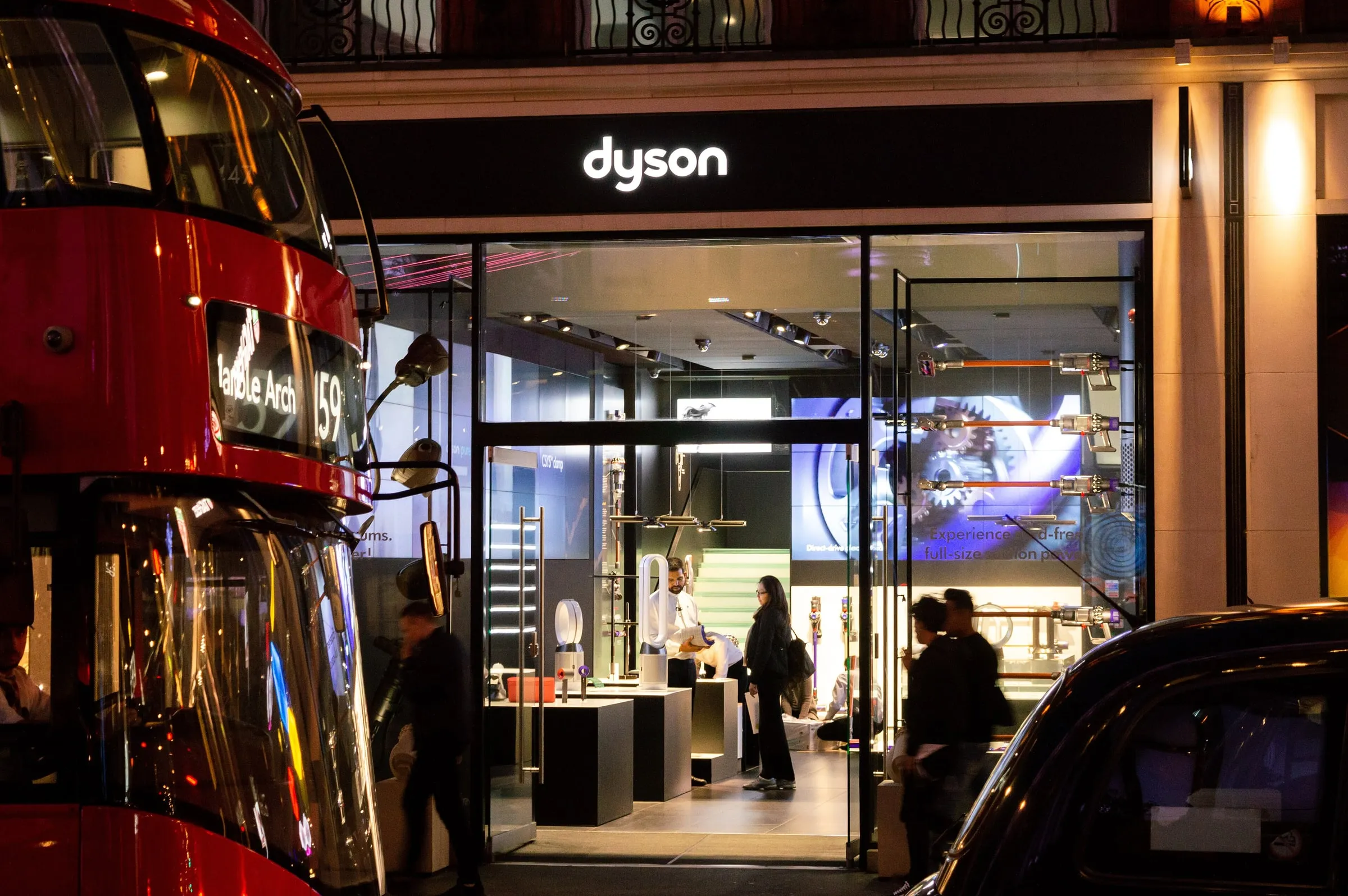
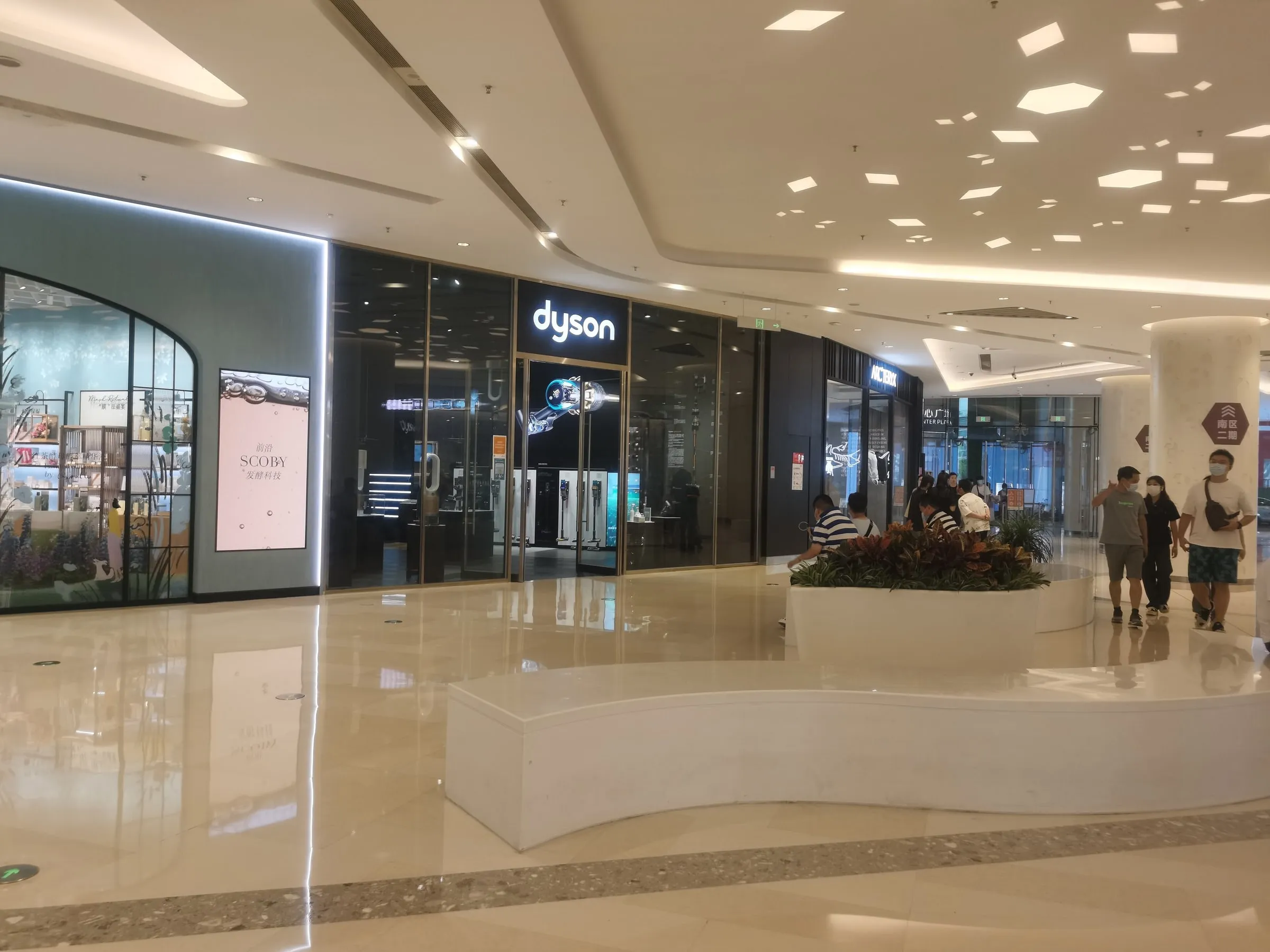
A Dyson demo store, London. Tristan Surtel / CC BY-SA 4.0
Dyson is owned by the Dyson family, but it publishes headline results once a year. Turnover passed £1 billion for the first time in 2011. It reached £4.4 billion in 2018, a year when profit topped £1 billion for the first time, helped by the Supersonic hair dryer, and peaked at £7.1 billion in 2023.
Fig. 4 · Money
Dyson global revenue and profit (EBITDA), £ billion, nominal, as first announced for each year.
| 2011 | 1 | – |
|---|---|---|
| 2012 | 1.2 | – |
| 2013 | 1.3 | – |
| 2014 | 1.4 | – |
| 2015 | 1.7 | – |
| 2016 | 2.5 | 0.63 |
| 2017 | 3.5 | 0.8 |
| 2018 | 4.4 | 1.1 |
| 2019 | 5.4 | – |
| 2020 | 5.7 | 1.3 |
| 2021 | 6 | 1.5 |
| 2022 | 6.5 | 1.3 |
| 2023 | 7.1 | 1.4 |
| 2024 | 6.57 | 0.94 |
| 2025 | 6.13 | 1.11 |
Not every idea paid. In 2017 Dyson said it would build an electric car. About 400 engineers worked on a seven-seat SUV, codenamed N526, at a former airfield in Wiltshire. In October 2019 the company cancelled it, saying the car was not commercially viable. James Dyson later said he had spent £500 million on it.
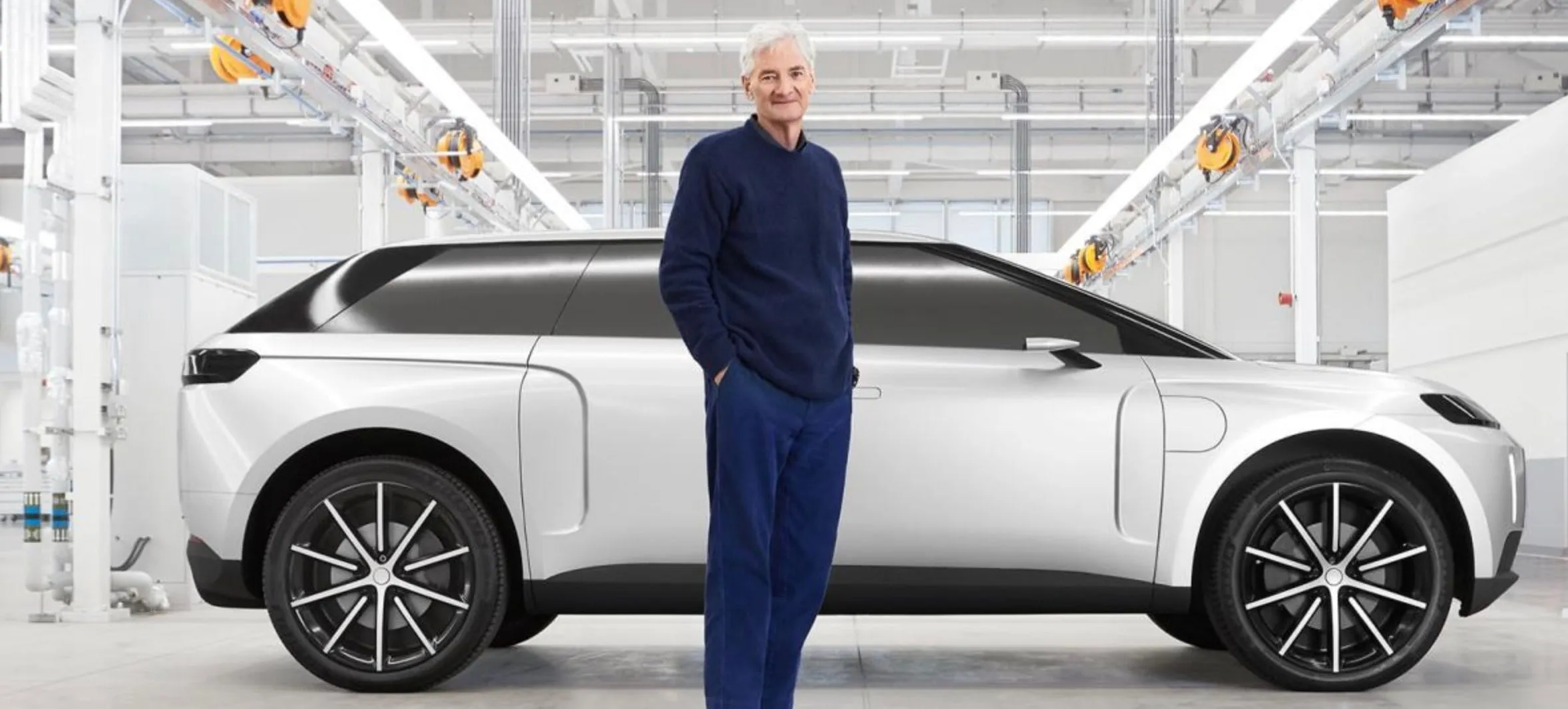
The past two years have been harder. Revenue fell to £6.6 billion in 2024 and £6.1 billion in 2025, when Dyson blamed US tariffs and currency movements. In July 2024 it said it would cut about 1,000 of its 3,500 jobs in Britain. Profit recovered some ground. EBITDA rose 18% in 2025, to £1.11 billion, in a year Dyson launched 13 new products.
The business

06 · 2026
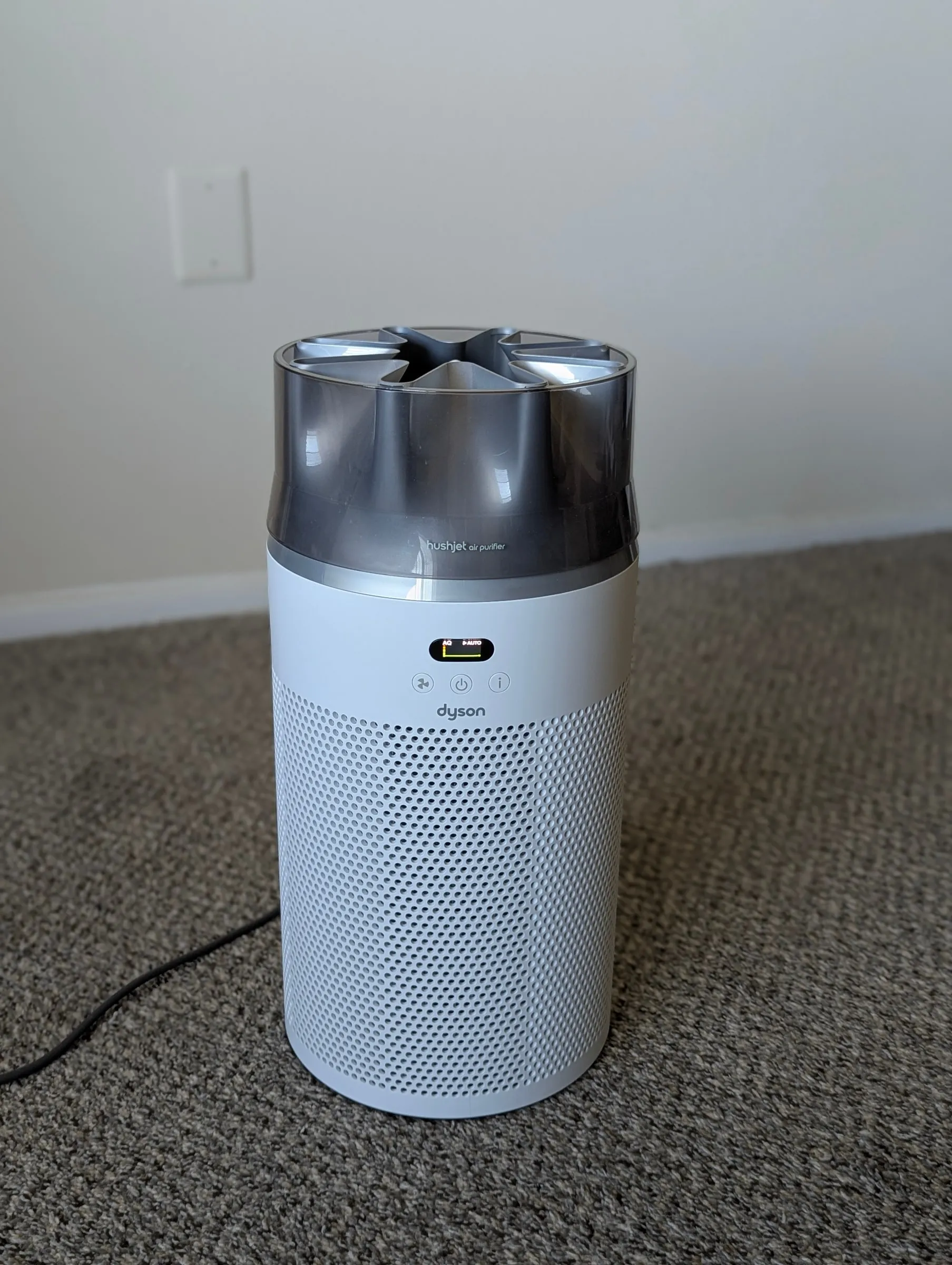
The wall is not finished. In February 2026 the PencilWash, a 2.2 kg wet floor cleaner on the same 38 mm handle as the PencilVac, went on sale in Britain at £299.99. In September, at an event in Berlin during IFA, Dyson showed three Nurovi robot vacuums, the cheapest £499.99 in Britain, and three HushJet purifiers. It also launched its first dedicated hot-air brush, the £199.99 Airsmooth, and the £249.99 Corrale CoolShine, a straightener with a water-cooled attachment.
Floor cleaners, from the DC15, which rides on a ball for steering, to the 360 Vis Nav robot.
Almost all of them are, once again, ways of moving air very fast through a small space.
The coach house count stands at 5,127. The company does not say how many prototypes it builds now.
Tony Webster / CC BY 2.0
Cite this
The Studio (2026). “5,127 Prototypes.” No. 012, published 2 November 2026. thestudio.nz/drops/dyson
Older
010CultureFilm
Twenty-five Eon Bond films, six actors and 59 years, measured in today’s money. Skyfall still leads, Thunderball runs it close, and Sean Connery’s six films out-earned Daniel Craig’s five.
Newer
 013
PlayGaming
Forty-two games consoles from 1972 to 2026, drawn by maker, sales and price. Nintendo has sold the most machines, Sony has the biggest single hit, and since 2025 consoles have been getting dearer as they age.
The list
New stories land on Mondays. No noise in between, and you can leave whenever you like.
The list opens soon.
Until then, follow along with the RSS feed, or write to [email protected] and we will add you on day one.